Hello there, and welcome to another edition
of Foodgasm – a five-course meal for your
inbox.
It’s that time of the year again when
Bengalis – a group that is wont to worship
anyone with a thick beard – channel their
inner Marx and become largely unproductive.
Whether they are in Gurugram or Vietnam,
Bengalis rise up against the yoke of
capitalism to go home, only to battle the
indignities of indigestion, so much so that
they have an entire A-Z lexicon to
describe the uphill battle.
Today is Mahalaya, when all Bengalis get up
at an ungodly hour to listen to a divine
rendition of Mahisasuramardini by
Birendra Krishna Bhadra.
|
In fact, in 1976, an attempt to replace that
rendition with Uttam Kumar and Co proved as
unsuccessful as Coke’s new recipe and was
considered so blasphemous that it even spawned a
cinema. Mind you, Uttam Kumar was
Bengal’s greatest superstar in that day and
age.
So, to welcome the beloved mother home,
let’s kick off Durga Puja by revisiting the
dishes that make every Bengali – nibashi or
probashi – reach for an antacid to ensure
that they don’t have to go to Jewish hell
(also known as acid reflux).
PS: If you still haven’t signed up for this
newsletter, click here.
|
|
|
Rabi
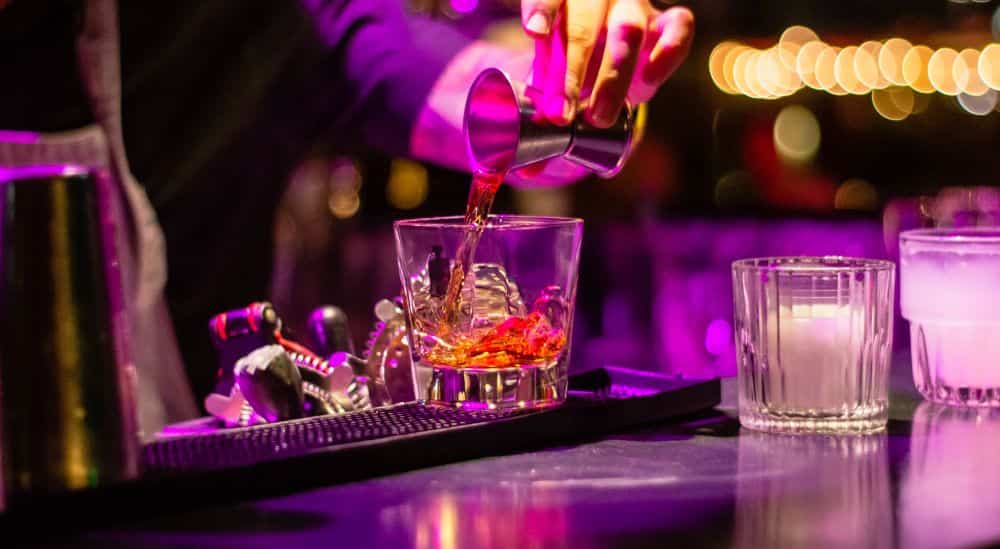
Thakur’s Whisky
Lullaby
|
(Source: Unsplash)
There are a billion ways to be deemed a
Bengali apostate, but none are more effective
than even mildly criticising
Rabindranath Tagore, or as non-anglicised Bongs refer to him –
Rabi Thakur.
One
of the basic traits to be considered Bengali
– along with a passion for pisciculture
(which will impress all pishis) and
supporting Brazil during the World Cup – is
singing out-of-tune Rabindrasangeet to
irritate your neighbours.
|
But jokes apart, the depth and breadth of
Tagore’s range, made even the extremely
prolific Bob Dylan look like a dilettante
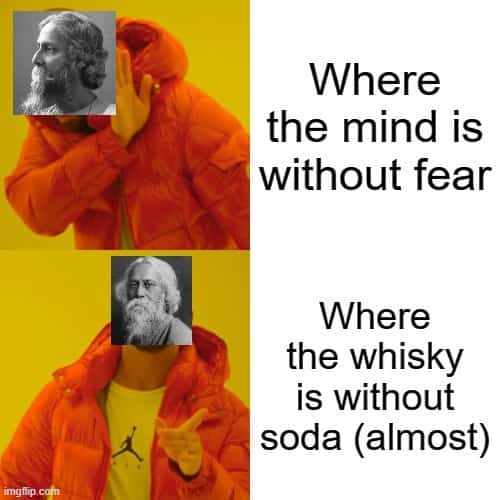
songwriter. In fact, Rabi Thakur even wrote
the original Whisky Lullaby, long before
country sensation Brad Paisley was born.
Now Tagore’s venerated image amongst
Bengalis is that of an amalgamation of
Shakespeare, Dylan, and Tolstoy, but before
he wrote songs inspired by the Upanishads
and Bhakti cult or ponderous (critics would
say sonorous) essays about nationalism,
religion and culture, he was a fun-loving
youth who wrote comedy songs, imagining a
nation where the whisky is without soda
(almost).
Many years later it was used in a farce he
wrote - Chirakumar Sabha - a comic play
about a gaggle of bachelors -- and the
conspiracy to get them married. The song
goes: “If you ask what is my wish, I would
ask for 60 ml soda water in 700 ml whisky.”
Now, since life isn’t a Tagore poem, we
recommend sticking to a 2:1 soda-whisky
ratio.
Check out the ol’ school
recipe on Slurrp.
|
|
|
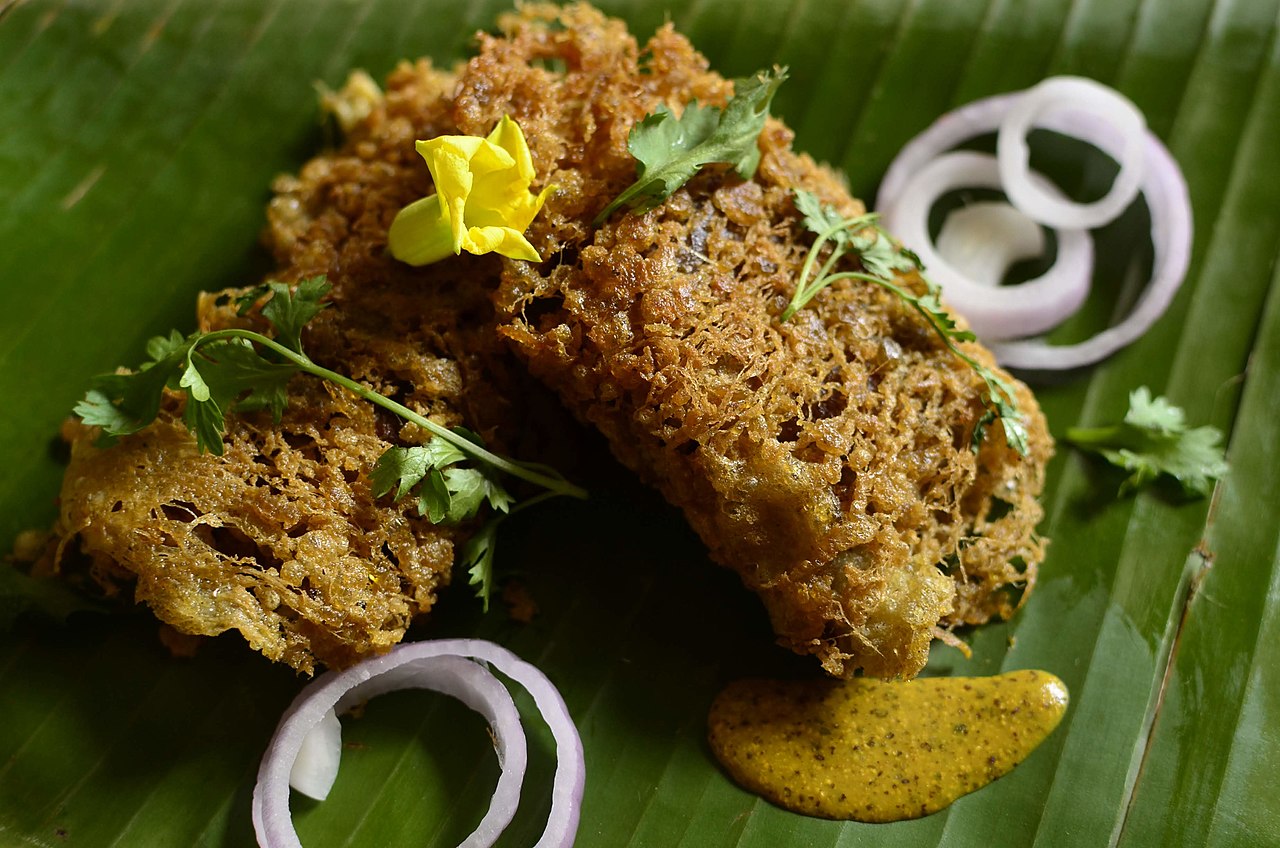
(Source: Wiki Commons)
What do you get when you replace breadcrumbs
with a beaten egg? A Kabiraji Cutlet with a
delightfully lacey exterior.
For the uninitiated, Kabiraji is a cutlet of
chicken, mutton, or fish. A firm favourite,
the cutlet, like Batman’s Joker, has various
origin stories.
The first involves Rabindranath, who pulled a Djokovic
and allegedly said he didn’t care for
breadcrumbs on his cutlet. So, the chef of
Basanta Cabin, an old Kolkata establishment,
made a cutlet using whipped egg as batter,
which the poet relished. Since the Bengali
for poet is “Kabi” and “Raji” in Bengali
means to agree, the dish was called Kabiraji
Cutlet.
The second story involves British officers
of the Raj era living in dak bungalows who
asked their bawarchis to recreate some
dishes from back home. One of them was a
cutlet covered with egg chiffonade, known as
covered or coverage cutlet. Coverage was
bastardised to Kabiraji (much like “There
was a brown crow” was the order to close a
door) and the officers had a dish, which
didn’t taste like anything back home but was
still loved and relished. As Shakespeare
might have said: “What’s in a name as long
as it's tasty."
Check out the full recipe
on Slurrp.
|
|
|
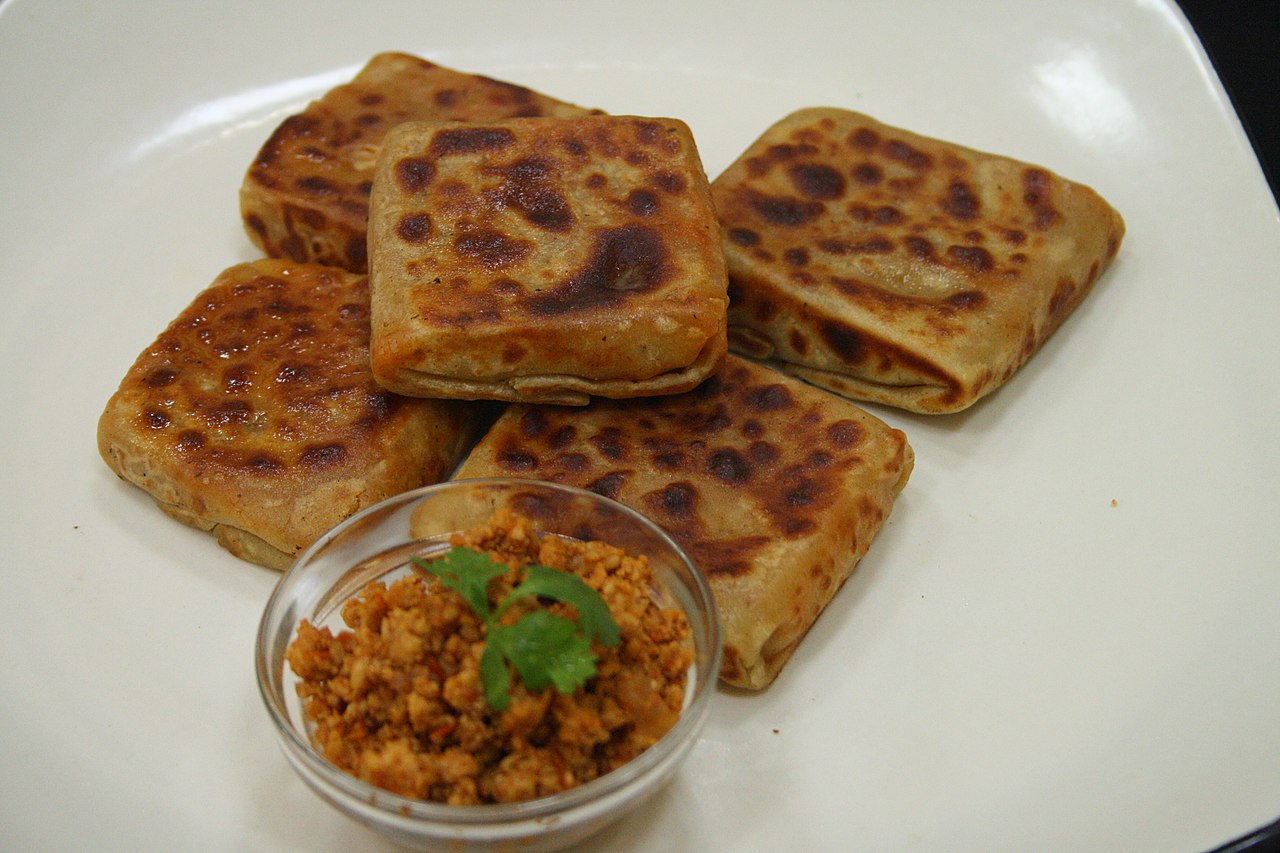
(Source: Wiki Commons)
Every part of India thinks they have the
best form of parathas. Mallus swear by their
parottas (with beef fry), North
Indians think the alu paratha is the
most superior submission but there really is
no better iteration of that particular
flatbread than the Mughlai Paratha of
Bengal. Or to borrow the words of Iranian
writer Ali Disti before he turned
vegetarian: “Calcutta’s Mughlai parathas are
just celestial. I’ve never tasted anything
better than this.”
According to this article in The Hindu,
the modern iteration of that divine dish
originated during Jahangir’s time, who was
fed up with being fed keema parathas. Given
10 days to cook up something new, his chef
Adil Hafiz Usman made a dish he called
zabir-fala (anda roti). Jahangir was so
awestruck that he gave Usman 1,001 gold
coins.
Now
Usman, a wily operator from Burdwan, didn’t
teach the recipe to anyone else, barring his
son Farogh and barred him from working in
other parts of the Mughal empire like Avadh
or Delhi. In fact, the dish’s secret
remained with the Farogh’s seven sons, and
the dish remained in West Bengal, loved by
gourmands of all ilk.
You
couldn’t even keep doctors away from it and
West Bengal’s first CM Dr BC Roy had one
Mughlai paratha a day. Today, every local
streetside joint sells the Mughlai paratha
which has conquered the hearts, minds and
digestive systems of every Durga Puja
enthusiast.
|
|
|
(Source: Slurrp)
It’s hard to pick just one sweet from Bengal
– a state so famous for its sweetmeats –
that even its tourism ad’s tagline
goes: Bengal – the sweetest part of
India. But with apologies to chom chom, rasgulla, shondesh and malpua enthusiasts,
the sweet that makes the cut is Ledikeni,
one which has a unique shape and origin
story.
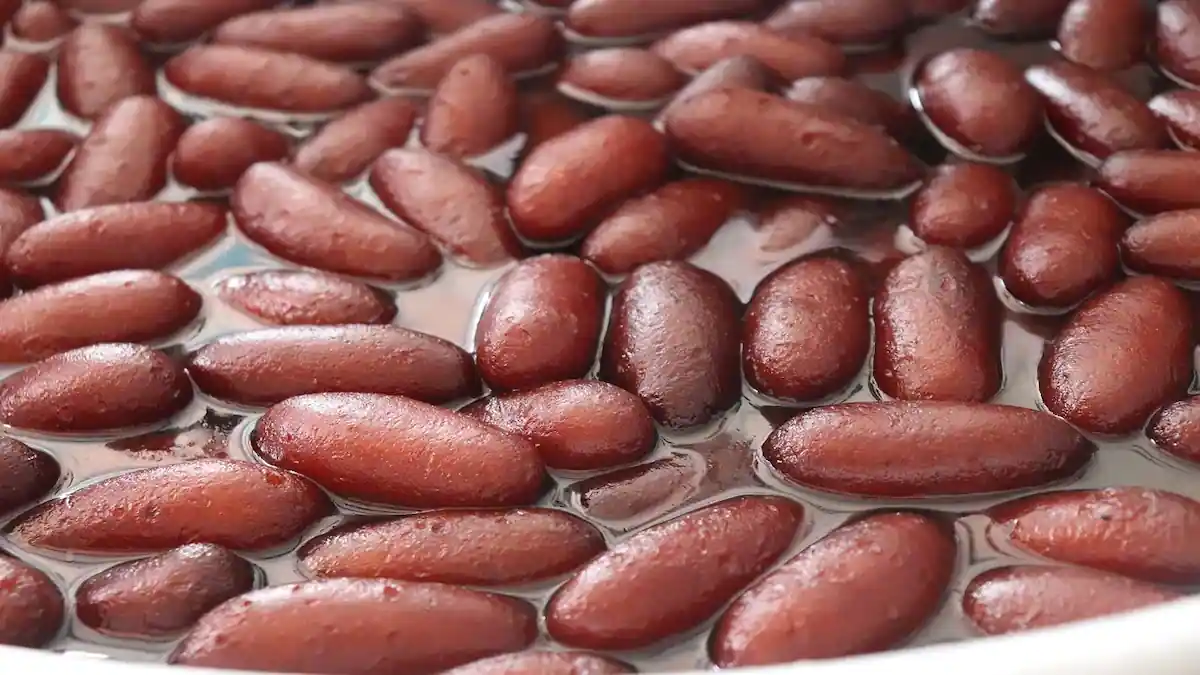
This unique version of gulab jamun
originated in the mid-19th Century and is
credited to Bhim Chandra Nag who made it in
honour of Lady Canning, the better half of
Charles Canning, the last Governor-General
and first Viceroy of India. While gulab jamun is made
using khoya, ledikeni is made by frying
chenna and flour mounds in oil and ghee.
Lady Kenny, like Game of Thrones'
Queen Margaret, was a frequent traveller and
popular with the natives. While some claim
the dish was made to welcome the Cannings to
India, others state that it was made for her
birthday in 1858. She loved it so much that
it was named Lady Canning, which became Lady
Kenny and finally became ledikeni. Either
way, it’s one of the sweetest things from
the state.
|
|
|
(Source: Wiki Commons)
Did the egg come first or the chicken? Even
an intellectual Bengali – who can spend
hours discussing Hegel vs Marx or Maradona
vs Pele – would tell you that particular
question is redundant as long as both
chicken and egg find their way into a
delectable kathi roll. No trip to Kolkata
during Durga Puja is complete without
binging on these delectable amalgamations of
paratha and meat.
In fact, the first thing any probashi
Bengali does – even before handing over
duty-free Black Label to his relatives – is
to head to Nizam’s on Park Street for an
egg-and-chicken roll.
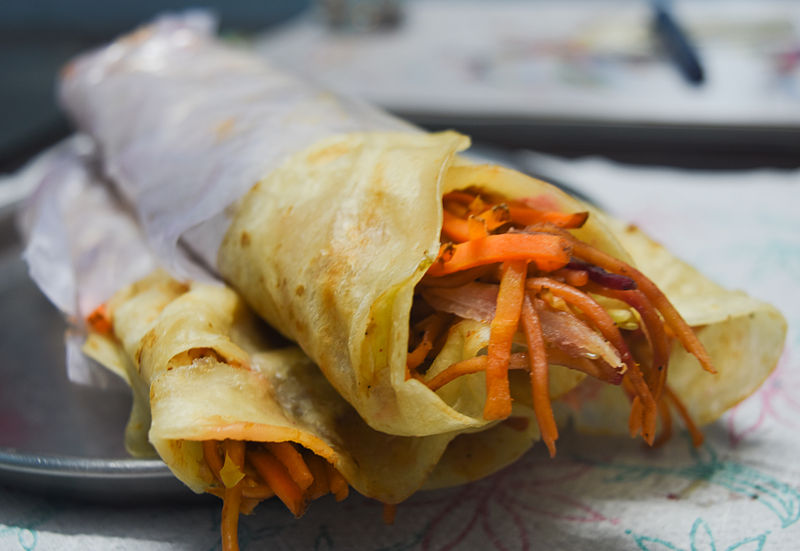
The kathi roll, which now comes in a lot of
variants (including some abominable ones
with mayo and cheese) was conceived in
Nizam’s, which used to be a popular kebab
joint in the first half of the 20th Century.
Located near Stuart Hogg Market (which is
still called New Market), the story goes
that finicky Britishers didn’t want to soil
their hands whilst eating so some wise
person – much like the Earl of Sandwich –
decided to put the meat in a buttery
unleavened flatbread and serve it in a paper
wrapper.
The
name kathi is derived from the time that
bamboo sticks replaced iron skewers to grill
kebabs, since the former allowed for faster
grilling.
Now the Calcutta-style kathi
roll never did get popular in other
parts of India, where different cities have
different rolls like the frankies in Mumbai
and Khan Chacha rolls in
Delhi. Of course, any suggestion
that either of them match up to a
Calcutta-style roll will only evoke from the
strongest invectives from Bengalis.
Like a rolling stone, it changed with the
times with modern variants using green
chilli sauce et al and even became quite
popular abroad. Payal Saha, a businesswoman
from Kolkata, brought the roll to the United
States in 2002 and now owns the Kati Roll
Company Chain which has outlets in Manhattan
and in London. As the not-so-old adage goes:
"A Bengali and his roll are never parted."
That’s all for this fortnight folks. Don’t
forget your antacids and let the good times
roll.
|
|
|
A quick reference to easy recipes, drawn
from Slurrp’s library of over 300,000 food
prep options, with the lowdown on the one
ingredient around which a dish is built.
|
Food journeys that take a turn for the
unexpected. Serendipity guides these
down-the-rabbit-hole explorations: who
knows, poee might just lead
to misal pav.
|
|
In-depth, well-researched narratives about
food. From the evolution of mock meats, to
the cuisine of Gondal's royal kitchen,
you’ll find a food story that keeps you
hooked.
|
These stories and recipes celebrate a vital
part of Indian festivals: food. And our
editors will even line up star chefs to
share their holiday cooking secrets
with you.
|
|
|
Hindustan Media Ventures
Limited,
Hindustan Times House,
18-20,
Second Floor, Kasturba
Gandhi
Marg, New Delhi - 110 001, India
|
|
|
If you need
any guidance or support along the way,
please send
an email to
slurrp@htmedialabs.com. We’re here to
help!
|
©️2021 Slurrp,
HT Media Labs. All rights
reserved.
|
|
|
|