Different states in India celebrate the Hindu New Year in different ways; some use the lunar calendar, while others use the solar calendar. Along with the start of spring, this day also signifies the end of harvest season and the start of a new one. Hindu New Year, which goes by several names in different parts of the nation, is observed with great enthusiasm in many places. It is celebrated as Gudi Padwa in Maharashtra, Ugadi in Karnataka and Andhra Pradesh, Vaisakhi in Punjab, and Navreh, celebrated by Kashmiri Brahmins. On 14 and 15 April, there’s Poila Boisakh in West Bengal, Bohag Bihu in Assam, and Vishu in Kerala. Regional New Year's are harvest festivals at heart. The celebratory rituals involve worshipping the land that grows food and cattle, which till the soil. The link between these rituals and the kitchen is established with simple ingredients like rice, jaggery, coconut, curd, milk and fresh produce of the season, such as green leafy vegetables, fruits, and even flowers. Here’s a quick look at the iconic and main festive dishes from all corners of India.
Roth, Navreh, Kashmir
Roth has to be one of the most indulgent breads of Kashmir; it is wide and large, with some of them being one meter long. It is often embellished with choice dry fruits like raisins, cashews, almonds, etc., and silver varq. If you ever attend a Kashmiri wedding, you must ask for your piece of this delish bread. To mark new beginnings, there is a ritual named Thaal Bharun. A large plate is filled with whole walnuts with shells, sugar, salt, rice, flowers, janthri (calendar), mirror, curd, bread, some herbs, a little bit of cooked rice, pen and an ink pot. The thaal (plate) is assembled the night before and the next morning on Navreh, the first thing one looks at is it. The bread and cooked rice are later put out for birds to eat.
Pitha, Bohag Bihu, Assam
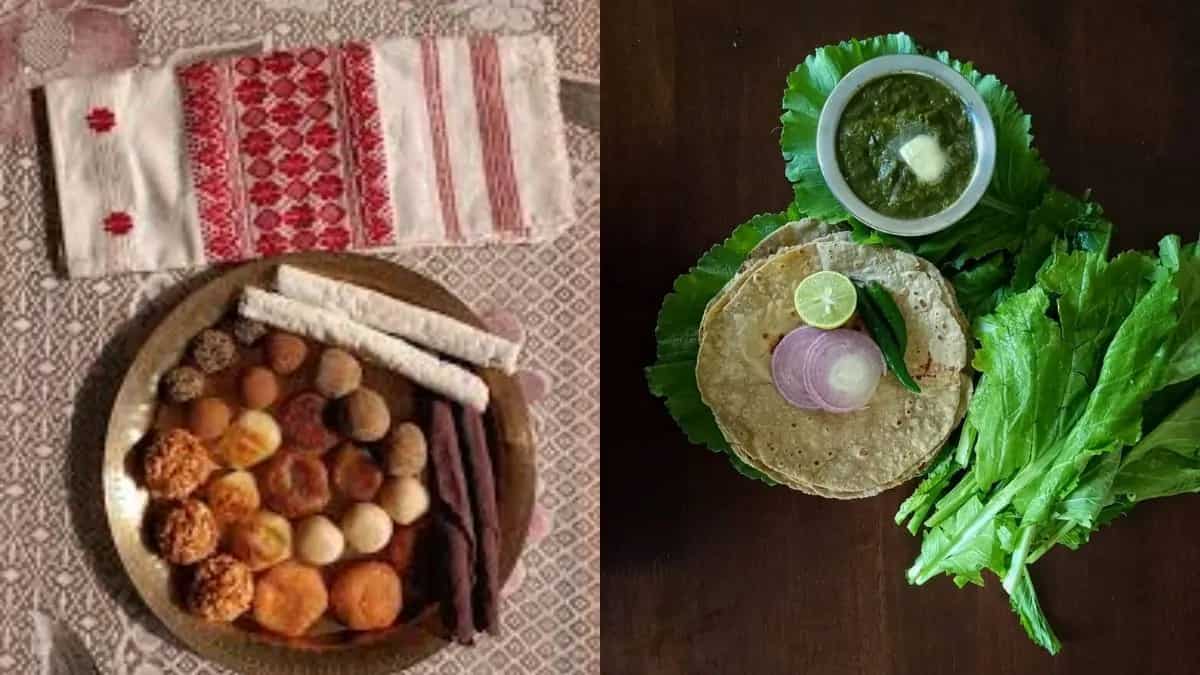
Ground rice powder, jaggery, sesame and coconut are the main ingredients that go into making the various festive pithas of Assam. The fried ghila pitha is made with kneaded dough of sticky rice powder combined with jaggery. Til pitha is the main dish for the celebrations. Assamese larus, laddoos made with sesame and coconut, accompany the pithas. Mini meals with flattened rice, parboiled rice or sticky rice are served with curd or cream, with a sprinkling of jaggery. These pithas are generally made with sticky rice flour called borasaul. Borasaul is first washed properly to remove all the impurities, then drained and finally dried before grinding it into a fine powder. However, the culinary culture has now evolved with time, and people can buy borasaul rice flour from the market too.
Image Credit: Wikimedia Commons
Nolen Gur Payesh, Poila Baishakh, West Bengal
The creamy payesh, fragrant with bay leaves, upgraded with extra cashews and raisins and sweetened with jaggery, is a star dish. The Nobo Borsho feast typically comprises luchi, dhokar dalna and kosha mangsho. There’s always a mixed vegetable dish like shukto or a preparation of rice combined with a vegetable like chaal potol (pointed gourd), cooked with aromatic gobindobhog rice for special occasions. It appears that nolen gur payesh is prepared to mark the seasonal observance and relish the first harvest of the season. The freshly harvested rice and nolen gur are important in terms of nutrition and taste. The jaggery is filled with vitamin C and iron and is beneficial for maintaining respiratory health.
Ugadi Pachadi, Ugadi, Andhra Pradesh & Telangana
Ugadi is, of course, a prominent festival in the south of India, especially in Andhra Pradesh and Telangana. Pachadi is an extension of this very symbolism. A staple of Telugu households during the festival. It is a chutney-like dish that incorporates ‘shadruchulu,' meaning six tastes: sweet, sour, salty, spicy, bitter, and astringence (or what they call vagaru). It is made from tamarind paste (sour), neem flowers (bitter), brown sugar or sweet jaggery (sweet), table salt (salt), green chilies (spicy), and raw mango (astringent)—a culinary reminder of what to expect from the rest of the year. The sourness of the tamarind is a reminder of the unpleasantness in life that may be inevitable; the sweetness of the jaggery indicates the opposite, which is joy and happiness. The astringent taste of the raw mango is for surprise, while the bitterness of the neem is for sadness. Salt indicates fear and black pepper the anger that we may all feel for reasons justified or unjustified.
Image Credit: Wikimedia Commons
Manga Pachadi, Puthandu, Tamil Nadu
It is more of a fresh pickle with a shelf life lasting not more than a week, under refrigeration. Cooked with fruits such as raw mango, pineapple or even fresh tomatoes, it is normally tempered in coconut oil. The tempering contains curry leaves, mustard seeds, white lentils, ginger, whole red chillies spluttered in hot oil and poured over the dish, which provides a tangy flavour of the fruit along with the sweetness of jaggery. The mango pachadi has a wonderful side to go with a bowl of semolina, or it goes well with sambar, rasam, or curry from South Indian cuisine. It complements rice dishes like sambar rice, dosa, etc. Its incredible sweetness, combined with the bite of sourness, makes it the perfect addition to any meal, especially during celebratory occasions or special gatherings where its nutty taste and silky texture are brought to the forefront.
Vishu Kanji, Vishu, Kerala
On this day Keralites get together with their family, indulge in delectable cuisine and lot more. One of the most anticipated parts of the Vishu celebrations is the 'vishukaineetam,' a monetary gift given to youngsters by their parents and other elderly relatives. Once you've filled your pockets, the next thing you'll want to do is sit down to a delicious meal, also known as Kerala Sadya, with your loved ones. The entire family then sits down for the Vishu kanji meal or the Sadya. The kanji itself is specific and usually made only during Vishu or the onset of summer due to its cooling and nutritional value. The fenugreek seeds act as a natural coolant, and the beans are rich in minerals. An altered form of this Vishu kanji or porridge is had again during karkidakam or rainy season, owing to its nutritional benefits.
Image Credit: Wikimedia Commons
Neem Jaggery Chutney, Samsar Padvo, Goa
The first day of the month of Chaitra, known locally as Samsar Padvo, is celebrated by Goan Hindus. To celebrate it, an inverted, garlanded copper pot is placed atop a bamboo stick adorned with a yellow or saffron-colored cloth. Many Hindus commemorate phalgun, the final month in the Hindu calendar, by showering each other with coloured powders and turmeric on the last day of the month. Early in the morning, people get ready in brand-new ethnic clothing and take oil baths. To bless them for a good year ahead, the families do special pujas and offer prayers to Lord Brahma, Lord Vishnu, and Goddess Lakshmi. Eating a concoction of tamarind, jaggery, and neem leaves is a distinctive culinary custom. This helps strengthen immunity and represents accepting both the good and the bad in life.
Shrikhand Poori, Gudi Padwa, Maharashtra
Gudi Padwa fares put the sweet puran poli, poori and shrikhand at the centre of the feast and balance it with other savoury, spicy, sour and tangy elements. It includes dishes like puri, batata bhaji or potato sabzi, puran poli and katachi aamti, masale bhat and a cucumber salad, served with a side of pickle and papad. The trick of getting a good shrikhand lies in getting a good quality hung curd, which decides the texture of the dessert. Once all the water is drained out, the creamy mixture of hung curd that you get is called ‘chakka’. The way you fold the yoghurt into the mango pulp and kesar milk needs to be very delicately done.
Image Credit: Wikimedia Commons
Meethi Tairi Or Sindhi Tahiri, Cheti Chand, Gujarat, Rajasthan, Madhya Pradesh
The Sindhi New Year is celebrated on Cheti Chand, also called Jhulelal Jayanti. Lord Jhulelal, who is revered as the Sindhi community's protector, is honoured on Cheti Chand. He is thought to be a manifestation of the water god Varuna. Jhulelal is now revered as the primary deity of Sindhi Hindus after appearing to aid them in trying times. He is frequently depicted riding a fish, which stands for bravery, faith, and safety. Awadhi cuisine had an effect on Sindhi tahiri, a traditional recipe. This sweet rice dish has a distinct flavour since it is prepared with straightforward, fragrant masalas and topped with dry fruits. For an easy weekday lunch, Sindhi tahiri can be served as a main course recipe along with traditional Sindhi sai bhaji and papad raita.
Makke Di Roti & Sarson Ka Saag, Vaisakhi, Punjab
Vaisakhi in Punjab is a time of great joy and celebration for the people of this vibrant and colourful region. It marks the beginning of a new year and the end of the agricultural season, when the wheat crop is harvested, and the fields are filled with abundance. The festival has a rich cultural and historical significance, commemorating the birth of the Khalsa, the community of devout Sikhs who were initiated by the tenth guru of the Sikhs, Guru Gobind Singh, in 1699. Makki di roti, or maize flatbread, and sarson ka saag, or mustard greens, are classic dishes synonymous with Punjabi cuisine. The dish is prepared by roasting the maize flour on a tawa or griddle and kneading it into a dough with water. The dough is then rolled into flatbreads and cooked on a tawa. Sarson ka saag is prepared by cooking mustard greens and spinach with a blend of spices, including ginger, garlic, and green chilli. The dish is typically served with a dollop of butter and is a staple in almost every Punjabi household during Vaisakhi. This is a celebration of life and the bounty of nature, and it reflects the deep connection that the people of Punjab have with their land and culture. It is a time to honour the hard work of farmers and labourers who toil in the fields to bring food to our tables.