


 Share
Share

Every day, more than two billion cups of this magical concoction of coffee are consumed. Therefore, keep in mind that you are a part of a 500-year-old worldwide group chat the next time you're clutching your iced latte as emotional support. And really? That is somewhat iconic. Considering how ubiquitous coffee is in human lives, it is understandable why industry experts continue to experiment with cultivating the most premium coffee beans. If you are an elite coffee connoisseur, chances are you’ve heard of Civet coffee or Kopi Luwak. A few hundred kilometres away in Indonesia, Kopi Luwak is made with the droppings of civets. Made you stop and stare, didn’t it? Yeah. So, as a coffee lover and someone who believes everything around coffee is art, here’s how the world’s most expensive coffee is manufactured and sent to your doorstep.
The Curious Craft Of Kopi Luwak In Indonesia
Coffee beans were introduced to Indonesia in the 17th century through trade, following which, coffee was widely consumed and cultivated in the country. Things changed with the early 19th-century Dutch occupation of Indonesia, with colonists forcing local farmers to cultivate coffee on their own lands. But in true, exploitative colonial fashion, natives were disallowed from picking cherries for their personal use. The Asian palm civet, a small mammal that resembles a ferret but is more frequently described as resembling a cat, is the "luwak" in Kopi Luwak.
It's an amazing procedure, but not everyone will find it appealing. Some people may be discouraged from taking a drink even though the finished product contains no traces of the animal's excrement. Civet coffee has a distinct taste profile. Depending on the original coffee used, the taste can differ significantly because Kopi Luwak refers to the technique rather than the bean itself. However, civet beans are generally smoother, less bitter, and frequently characterised as having chocolate and caramel undertones when compared to their non-digested cousins. Although the precise cause of these variations has long been unknown, scientists have long linked them to the civet's digestive system. Fermentation in the civet's stomach changes the fat content of the beans, giving them their unique flavour.
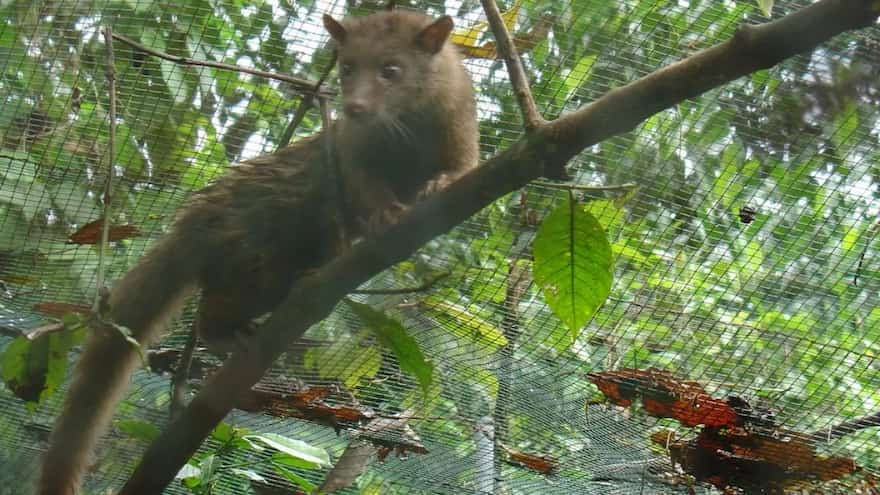
Image Credit: Flickr
A Tale Of 2 Tastes
According to a theory, the civet has a keen sense of which berries are the tastiest, hence the beans it excretes are the best. Given that the two species are interested in different sections of the fruit, it is unclear how the berries that a civet finds most appealing must contain seeds that a human will cherish. The second theory, which does not rule out the first, holds that brewed beans taste particularly good because of something that happens to the bean as it travels through the civet, mentioned in the research titled "Civet Robusta And Natural Robusta Coffee Are Different On Key Fatty Acid Methyl Esters And Total Fat" published on 23 October 2026 in the journal Scientific Reports, testing this notion.
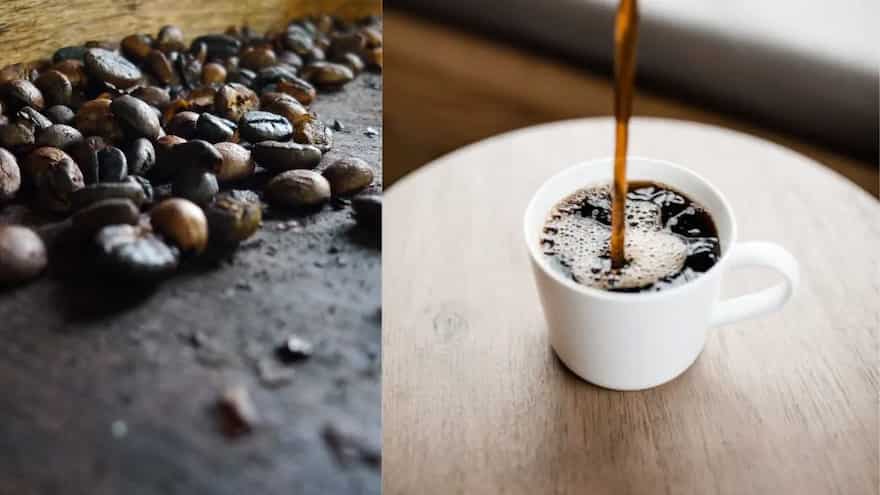
Image Credit: Creative Commons
Coffee beans recovered from wild civet scat were examined by the researchers, who then contrasted them with undigested beans collected from the farms where the scat was found. They discovered that two fatty acid methyl esters and total fat were considerably greater in the raw beans from the scat. The authors noted that the two increased fatty acid methyl esters, caprylic and capric, "are instrumental as flavouring and aroma agents in food, frequently imparting a dairy or milk-like aroma and flavour." However, the distinction between digested and non-digested beans suggests that something is happening during the 12–36 hours that a bean might spend inside a civet. That's why the expensive and exotic beans are so different. Is their exorbitant price justified, though?
Why Is Civet Coffee Or Kopi Luwak The World’s Most Expensive Coffee?
Kopi Luwak comes with a hefty price tag; a kilogram of this variant coffee may cost up to $1,500 (Rs 1.38 lakh approximately). The manufacture of kopi luwak is most closely linked to certain regions of Indonesia, and due to the increasing demand for it abroad, producers there are raising caged civets that are mostly fed coffee beans.
Clearly, any unique selection characteristics that wild civets have are rendered obsolete by caging. The majority of kopi luwak now comes from caged animals since it is far simpler to gather scat from caged civets than to forage for it. PETA, an animal advocacy group, has drawn attention to the subpar conditions in which many farmed civets are kept and claims that a large portion of their product is falsely marketed as coming from the wild. It advises coffee lovers to stay away from the novelty beverage completely.
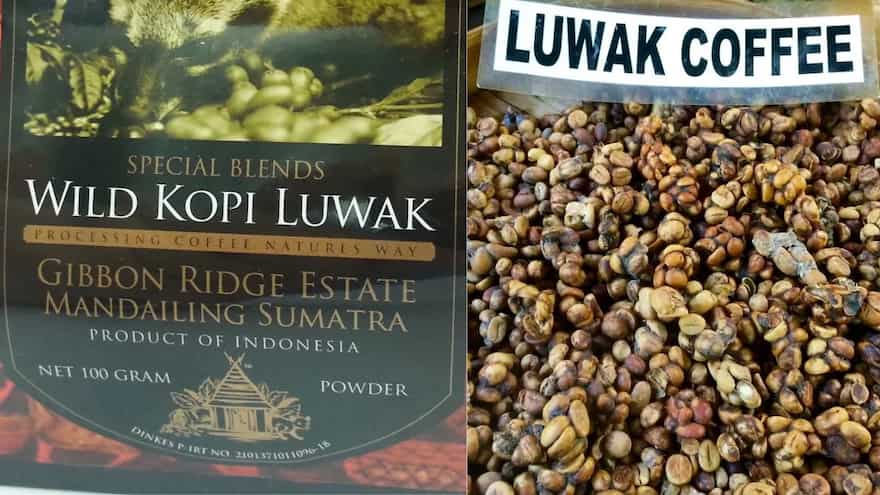
Image Credit: Wikimedia Commons
Kopi Luwak has become more than just a beverage due to its high cost; it now represents exclusivity and luxury. Because of its scarcity and unique manufacturing method, it can fetch outrageous prices, which feeds the hype and perception loop. Over time, the coffee has become a trend in the world of gourmet culture, where its allure frequently stems from its backstory more than its flavour. Its reputation as a ‘luxury gourmet coffee’ is strengthened by the fact that many customers are lured to it as a once-in-a-lifetime indulgence. However, this notion is mostly perpetuated by astute marketing and fascination, as buyers seem to have faith that higher prices automatically translate into higher standards and status.




