


 Share
Share

Every region of India has its own spice mix. Although garam masala is common in Indian cuisine, every local cuisine also uses its own special mix. These masalas are made by pounding the ingredients individually to a fine powder. As that takes a lot of work, people simply buy the masalas from shops. Summer in Kashmir's upper reaches is more than just a season of relaxation; it's also a time to prepare for winter. Families soak wheat, grind it, wash it, and strain it again until just starch remains. This is how nishasta is prepared. It may appear simple, but months later, it transforms into a warm, soothing halwa that people consume in the cold for strength, healing, and a bit of extra cosiness. So what exactly is nishasta, and why do people spend so much time making it in the summer?
Image Credit: Pexels
Bottling Summers For A Cosy Winter
Winter mornings in many Kashmiri houses begin quietly, snow covers the rooftops, clogs roads, and turns off electricity; inhabitants wear pherans and use kangries or fire pots for heat. In some upper-Kashmiri kitchens, someone in the family is cooking nishasta or nishaat, a type of wheat starch.
Also Read: 6 Vegetarian Delights From Kashmiri Cuisine
Nishasta is typically served as a warm drink or halwa, which is basically dry starch mixed with water to make a smooth paste. Sugar is added, and the mixture is slowly heated in ghee over low heat, stirring constantly until it thickens and turns a shade darker. Some households include dry fruits such as almonds and cashews to provide texture. Very few households in the village now make nishasta from scratch, and this dish is primarily consumed in the Northern Kashmir districts of Baramulla, Kupwara, and Bandipora. Years ago, the community of people from these villages would collect wheat to make nishasta from forests and nearby slopes. They would spend days in the forests collecting the raw grain, drying it, cleaning it, and then preparing it carefully.
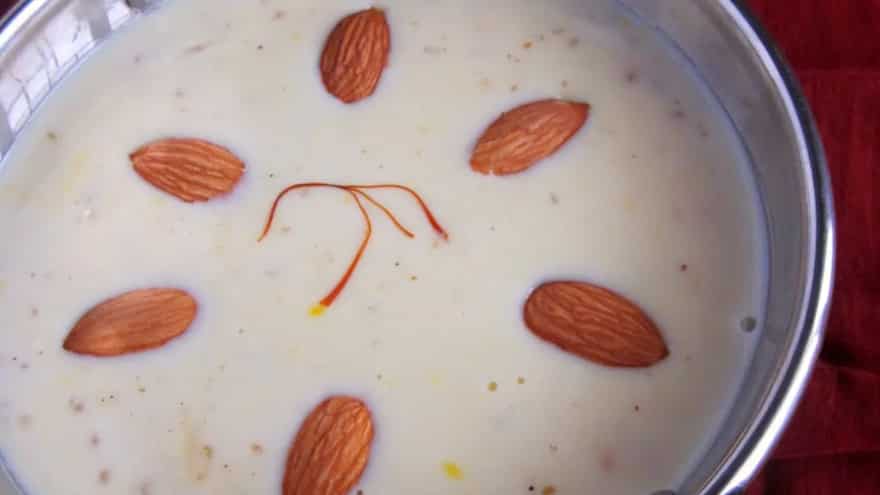
Image Credit: Wikimedia Commons
The process of creating nishasta begins in the summer, with wheat grains soaking for several days before being ground. The mixture is strained repeatedly until the starch settles to the bottom. The starch is dried in the sun and then stored. It is not something to be hastily planned. There is a saying, "If you rush nishasta, it will not keep well until the winter.”
Some traditional methods remain untouched by modern practices. For aeons, wheat has been a staple of millions of Indians' everyday diets. Its usage in different dishes mostly involves ground flour that may or may not contain all three parts of a wheat kernel. One such example is the creation of a traditional Kashmiri dish called nishasta. This practice, which is still performed in homes today, stands out as a testament to the enduring value of cultural heritage.
Image Credit: Wikimedia Commons
Nishasta Is A Time-Tested Healthy Staple
While nishasta is well-known for its health advantages, much of its popularity stems from generational knowledge rather than any medical prescription. Families in the region describe it as energy-rich because it is made with wheat starch, ghee, and dry fruits, all of which are high in calories and help keep the body warm during Kashmir's cold winters. Nishasta is good for digestive health and helps to build the muscles and bones.
Today, traditional home remedies are largely forgotten due to advancements in modern medicine and the availability of pharmaceutical products. People prefer to trust pharmaceuticals and expert treatments more, as they are generally more effective and convenient. As a result, the importance of traditional cures, which have been utilised for generations, has decreased. However, it is critical to remember these age-old practices, as they are an important part of our cultural legacy.
This extract is made from high-quality wheat grains, preserving the beneficial qualities and nutrients found in wheat. Nishasta is well-known in the food processing industry for its ability to improve texture and consistency. It is used to increase dough elasticity, which is necessary for manufacturing high-quality baked items like bread and pastries. The extract aids in achieving a fine crumb structure and improved moisture retention, resulting in a more appealing texture and longer shelf life for the products. Its natural flavour-enhancing characteristics help to create a more complex and pleasing taste without overpowering other ingredients.
A Cultural Ritual In The Modern World
This careful preparation had become a tradition in many Kashmiri families, reflecting a seasonal shift in which summer is meant to be eased into, rather than hurried through. The act of making nishasta used to be as important as consuming it, resulting in a rhythm that feels both grounded and intentional. But now, in this fast-paced world, most of the households have stopped preparing it from scratch. Now, you get this Kashmiri dish in powder form on all e-commerce websites and offline grocery stores and markets.
Different variations have arisen, ranging from lightly sweetened versions to savoury adaptations, each reflecting local tastes and ingenuity. It has also inspired a range of recipes such as delicate puddings, cooling beverages, and soft-textured porridges, which fit with the demand for light, digestible summer cuisine. Interestingly, nishasta has found application in the current culinary industry. Its main constituent, wheat starch, is regarded for its smooth texture and binding characteristics, making it helpful in processed foods, packaged desserts, and even some health-conscious formulations.




