


 Share
Share

The best culinary stories frequently begin well before the kitchen, as many of you are already aware from frequenting cafés and restaurants. At Sienna Store & Cafe, tucked away among the city's buildings, they proudly display Bengali-inspired décor and instantly remind you to pause and reflect. However, it's the meals that truly stop people in their tracks and keep them coming back for more. We had to know their secret, of course. The soil was the cause. In a literal sense. The team at Sienna had their years of research, stories and a lot of tests and trials with vegetables, meat, fish, micro-ingredients, hyperlocal ones, all of which went straight from the earth to the plate. It's where Bengal develops in all of its social, political, economic, and cultural facets—you could say that it bridges horizons.
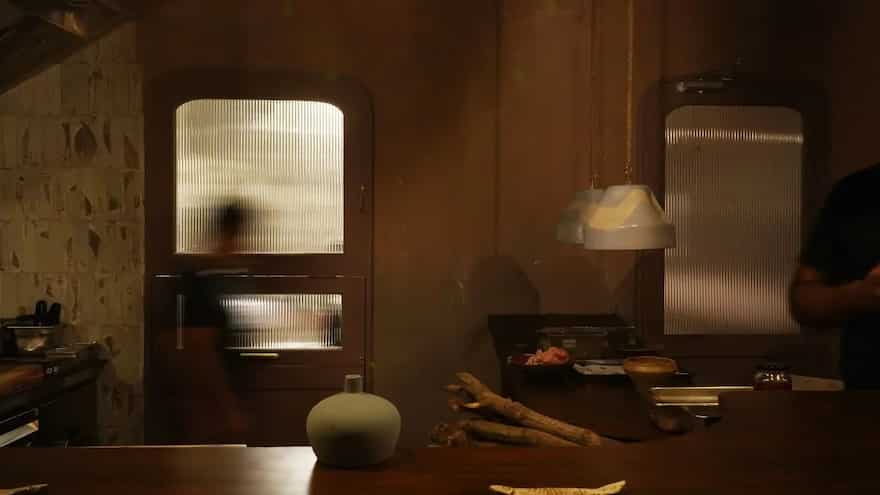
Image Credit: Sienna
Chef Avinandan explains, “We wanted everything to feel right and in harmony the moment you entered the space." Rannaghor creates a cocoon for those ready to rediscover Bengal, as well as for those who still think Kolkata has nothing fresh to offer. Bengal's maati (earth), manush (people), and a bunch of creatives who returned home to create something new are all connected by this restaurant concept, which feels more like a communal dream taking shape. As the plates of food are served, we learn that team Sienna did not want Rannaghor to be just an impression of South Calcutta. They wanted to look at ‘Epar Bangla/Opar Bangla’ concepts of food on a larger scale. This means it is not only the food that they create from scratch around Bengal, but they also learn things along the way. That is essentially what we are going to tell you today. But first, how Rannaghor find its place is a question we know you have, and we shall answer it too.
Bengal Served On A Plate
The history of Rannaghor started in 2010 when a tiny store called Sienna opened in a mall in Kolkata. In an effort to help Birbhum's clay craftspeople, it sold Shantiniketan-made ceramics. Architect Shanta Ghosh and her Kolkata-born daughter Shuli came up with the concept. The small store quickly relocated to a peaceful, historic home in Hindustan Park as it gained traction. Back then, it was a single storey with shelves of ceramics, soft teal windows, and a little café that served coffee, baked goods, and homely pastries. Sienna has become a destination people return to regularly. The store expanded into a clothing line influenced by Bengali designs and weaves.
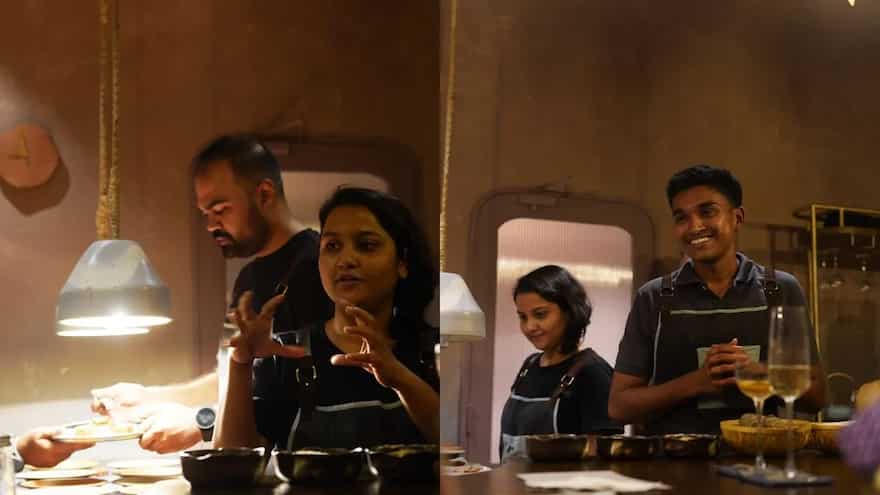
Image Credit: Sienna
Like characters straying into a narrative, Avinandan Kundu, a chef, worked in insurance before quitting to pursue culinary studies in Paris. Additionally, there was Chef Koyel Roy Nandy, who worked with the DIVA company and spent years in upscale establishments like The Oberoi. They all came back to Kolkata with the same silent hope–to attempt something different in a city that isn't often receptive to culinary innovations.
They started modestly, offering well-known café fare. Gradually, they implemented a ‘bajaar-to-table’ cuisine that was inspired by Kolkata's markets, which are home to the fish vendors, vegetable vendors, and small craftsmen who liven up the city's mornings.
Modern Bengal Travels Across The City Borders
Their modern, made-in-Bengal food began to travel far beyond the city. They discovered a new voice under chefs Avinandan and Koyel. Sienna reopened as a revitalised version of itself following months of planning, restoration, and reflection. The upper level was transformed into a cosy eating space and bar with a brand-new ‘Bengal to Table’ menu.
The first level, which is currently the Sienna restaurant with a dine-in-only menu including Bengali cuisine, is reached by a flight of steps in the reception area. With its wooden tables and vintage rattan seats, it truly embodies the atmosphere of a typical Bangali khabar ghor (dining room). With wall and ceiling treatments reminiscent of a pucca hut, it also takes you to rural Bengal. Elements of the 100-year-old south Kolkata home that houses Sienna, such as the beams on the ceiling and the large windows with wooden panes, remain, adding a touch of old Calcutta vibe. Continuing the ethos of sustainability, leftover fabric is used in the making of the hanging lights, and then you take a few more steps up.
Bitter, Sweet & Everything In Between
And now, we've finally reached Rannaghor. Sienna's latest tasting room delves deeper into Bengal than any previous one. Every course is like discovering something new, something old, and something forgotten all at once. Rannaghor has a distinct feeling. It seems to be the location where all of their thoughts have at last found their most coherent form.
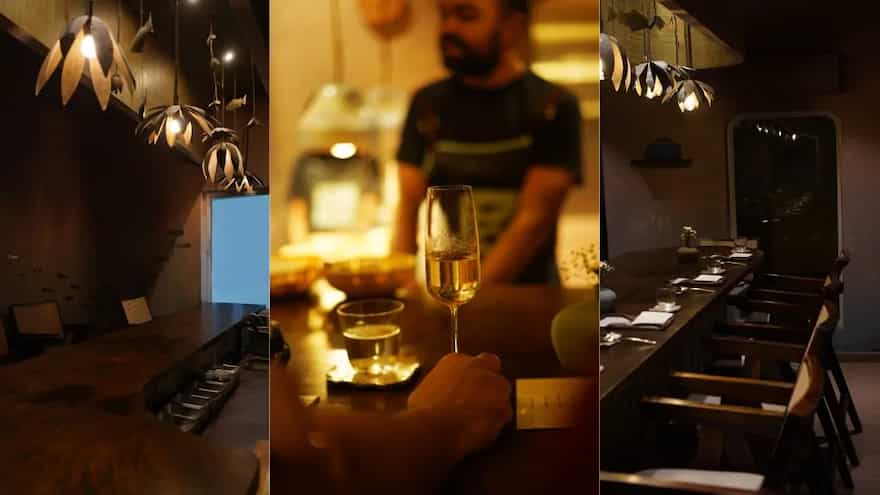
Image Credit: Sienna
Chefs Kundu and Nandy delve deeply into Bengali cuisine in this first edition of their multi-course dinner, almost like researchers, but there's nothing rigid about it. They nevertheless have vibrant, cosy, and surprising tastes. The trip starts with a quick ascent to the second floor. A narrow passage opens into a dim, cosy room where the open kitchen steals your attention immediately. There’s a long chef’s table with eight seats, no more, no less, making it feel like being inside a small secret.
In their Shantiniketan studio, craftsmen worked closely with the chefs to shape each plate and bowl by hand. The weight of each piece conveys that care. We sit down in front of the team, which includes Kundu, Nandy, and the other cooks, who prepare food in front of us. After carefully plating each meal, they take a moment to explain its origins, purpose, and the region of Bengal it represents. It feels more like being welcomed into someone's memory than a restaurant.
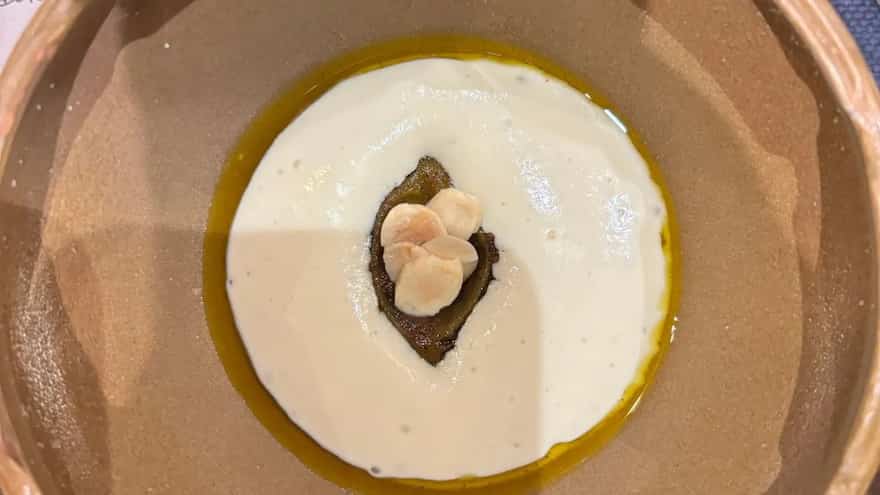
Image Credit: Rajlakshmi Dastidar
For the first course, a spoonful of Ucchey-Ol sealed that idea for us. A single slice of bitter gourd rests on a foam of ol (elephant foot yam), its bitterness tempered by the starchy base and a dab of mango pickle oil, transforming the traditional tito (bitter) first dish of any Bengali meal into an inventive little plate. Along the way, the chefs became aware of how readily Bengal's diverse traditions might be reduced to a single, neat image. However, they encourage visitors, whether from India or elsewhere, to learn about the state's rich tales and unique methods of eating and living. Even while kosha mangsho and luchi are comfortable, there is a whole other universe.
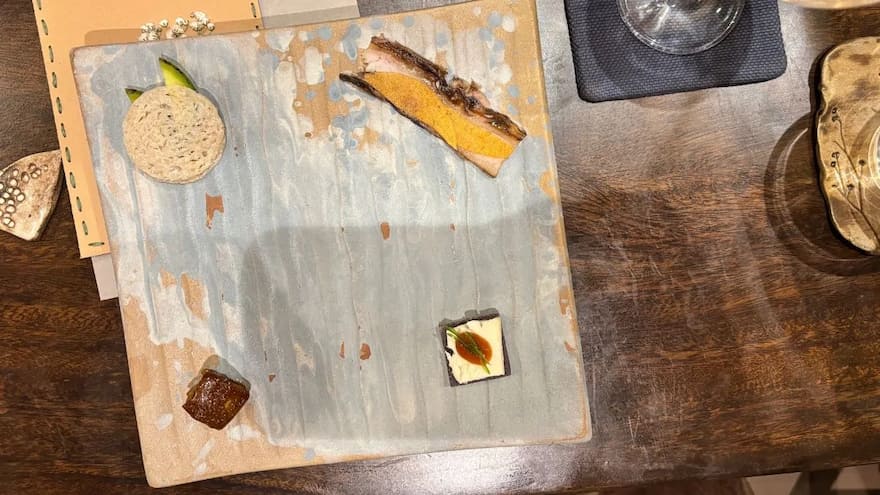
Image Credit: Rajlakshmi Dastidar
Next, a little charcuterie board called Snacks-Jam with cheese, jam, salami, and bacon, but with a twist, is placed before us. The jam is sweet aam-gur, the cheese is homemade Dhakai ponir on a black rice crisp, the salami is stingray (shankar maach) discs, and the bacon is katla fish belly. It pairs the lesser-known stingray, which is typically found exclusively in rural kitchens, with a well-known fish like katla.
Chef Avinandan also adds, ‘Even something as basic as fish has a narrative of its own. We frequently hear that Bengalis only eat freshwater fish and do not consume seafood. This is true for Kolkata, but not for Bengal's southern regions. Seafood from this area is still viewed nationally as an afterthought, a sort of off-catch. However, these are commonplace in many nearby communities. Rannaghor also wishes to highlight that aspect of Bengal.’
The chefs want the tasting menu to evoke memories for Bengali guests while also surprising them and possibly challenging their preconceived notions. They wish to demonstrate to non-Bengalis that this is also Bengal. All of this is based on the straightforward fact that Bengalis are a linguistic group rather than a single ethnic group. The cuisine we refer to as "Bengali" was shaped by the collaboration of numerous communities from various locations. When you trace the origins of the components, even recipes like malai curry, for instance, reveal a different story.
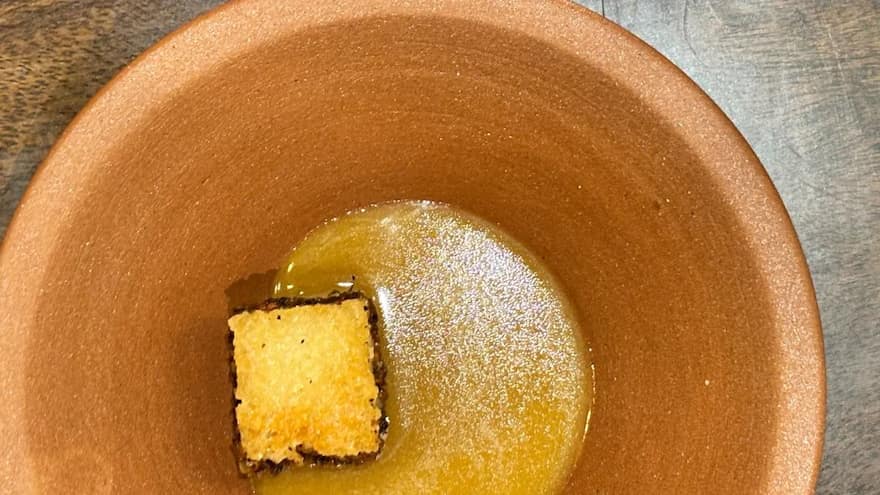
Image Credit: Rajlakshmi Dastidar
This also brings in the discussions around whether food is political or was it ever political? Naturally, politics and food are inextricably linked–who has access, what constitutes "good" food, who receives credit, and who is excluded. The Rannaghor crew doesn't back down from that. They want to start conversations honestly and without being impolite or aggressive. One method of recording all of this is through Rannaghor, which does research, pushes boundaries, and asks what Bengali cuisine might look like today. Anywhere in the world, not only in Kolkata. It's food as it may have been and perhaps should be. Having said that, many unexpected courses follow, including recipes from Bangal (East Bengal) and Ghoti (West Bengal), rural eating customs, and dishes that highlight the city's many cultures.
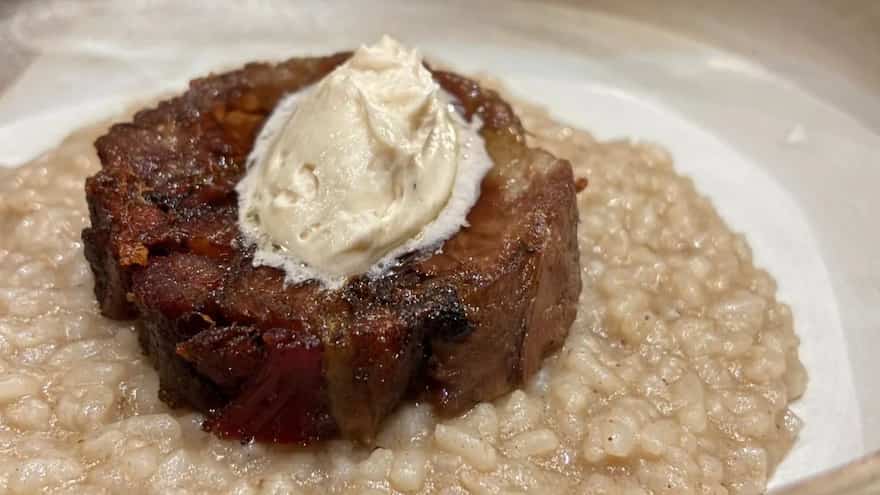
Image Credit: Rajlakshmi Dastidar
The chefs introduce each course as the meal unfolds in two acts. The non-vegetarian tasting menu's first six dishes mostly consist of seafood and vegetables. After that, there is a brief interval where attendees are encouraged to visit with friends or stretch their legs. The Duck-Kochu, a delicate, contemplative dish, introduces Act Two. A silky mash of maan kochu (taro root) and tender slices of roasted duck, drizzled with Sundarban honey, is served with a sauce that has been lightly flavoured with radhuni. The last delectable dish is a reimagining of every Bengali's dream. The aromatic Karpurkanti rice is layered over mangsho bhaat to create a creamy mutton rizala risotto, which is then generously brushed with bone marrow butter. Dessert is a three-course experience that thoroughly satisfies the Bengali sweet craving. The creative Mishtir-Dokan, a thoughtful collection of tiny Bengali candies, is where it all starts. Among the surprises are a baby potol (pointed gourd) mishti filled with sweetened cottage cheese, a malpua filled with honey and Kalimpong cheese, and shorbhaja (fried milk cream).
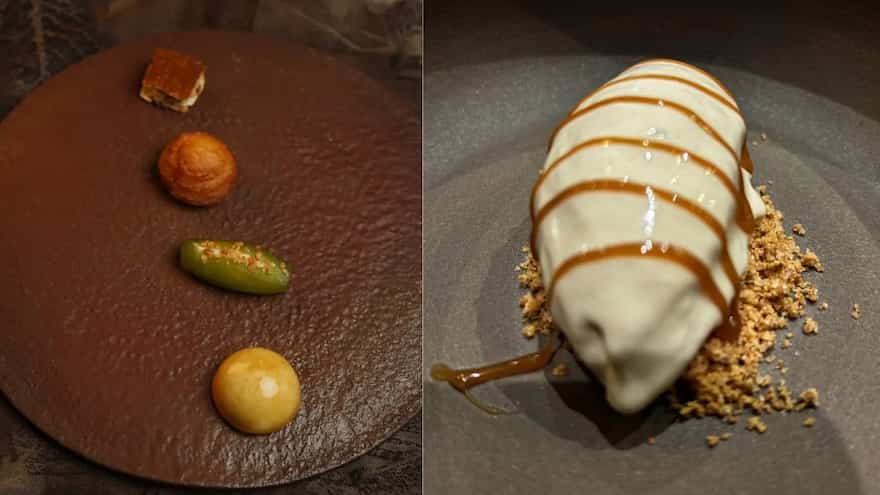
Image Credit: Sienna
Every course has a cocktail companion, but the one that stuck with us was a brilliant gin mix that paid homage to Jowaner Arak, a carom seed digestif better known by its medicinal name, Aqua Tchychotis. It seemed like the ideal, deliberate way to punctuate the meal. The goal is to expand our understanding of hyperlocal and regional Bengali cuisine as narratives of place, culture, and society rather than merely as food. Social hierarchies, economic realities, and the cultural politics of what is deemed ‘worthy’ on a plate are all reflected in dishes which bear layers of history.
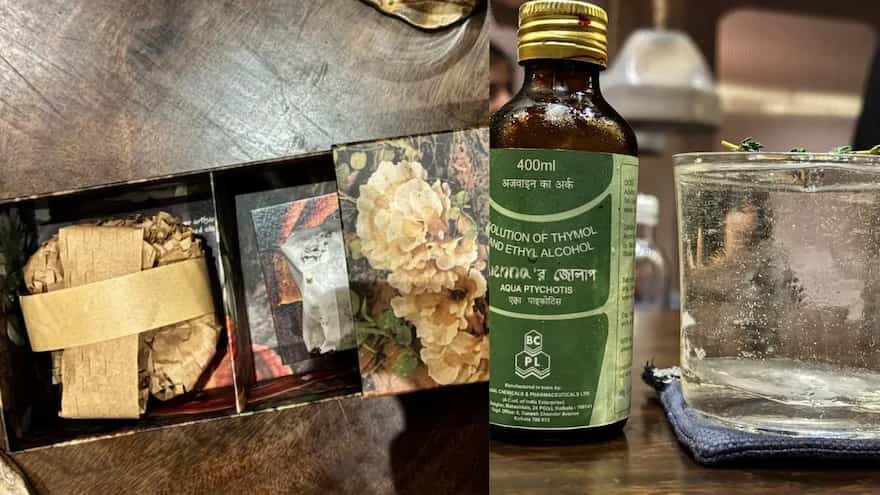
Image Credit: Rajlakshmi Dastidar
Rannaghor wants to challenge preconceptions, show these meals with dignity, and encourage others to reevaluate their own perceptions about Bengal’s food.
Address: 49, 1, Golpark, Hindustan Park, Gariahat, Kolkata, West Bengal 700029
Timings: 8 PM - 10 PM, Friday to Sunday
Price: INR 4,500 per person




