


 Share
Share

Mahashivratri will be celebrated on February 15, 2026. This day is devoted to Lord Shiva, and the night is observed in keeping fast and praying to Lord Shiva. On this day, the bhog holds great importance, which is simple, pure and sattvic in nature. Unlike lavish festive spreads, the bhog has dishes that are close to Lord Shiva, as he is considered to prefer simplicity over luxury, which is why things like milk, fruits, nuts, and light sweet dishes take centre stage.
Many people prepare these dishes at home and offer them as bhog to Lord Shiva. The focus of bhog preparation is not on richness, but on the intention behind it. Every ingredient carries a significant meaning, like cooling milk, natural sweetness, and fasting-friendly dishes. When combined, they reflect balance, devotion, and gratitude all at once. On the occasion of Mahashivratri, bhog is less about food and more about showing faith in its most unique form.
Thandai
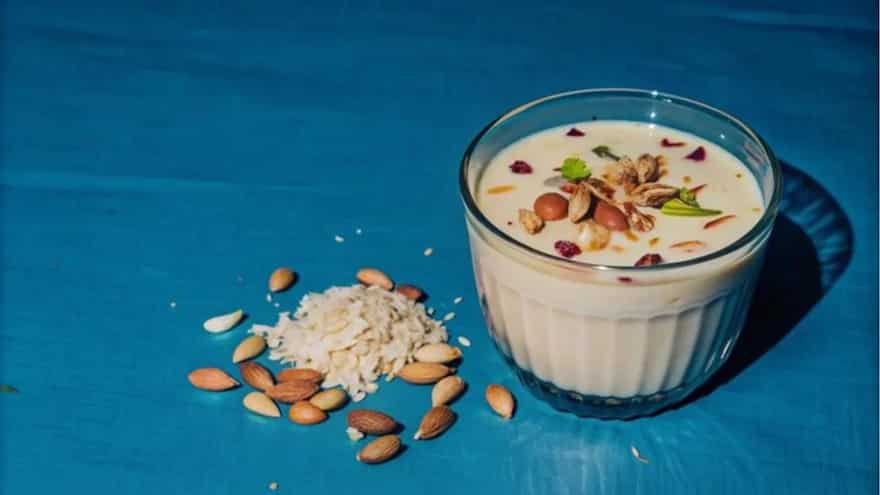
Thandai is one of the most classic traditional offerings on the occasion of Mahashivratri. Prepared with milk, soaked almonds, fennel seeds, black pepper, melon seeds, cardamom, and a hint of saffron, it is cooling and fragrant. Lord Shiva is often linked with calmness and balance, and thandai is a representation of that soothing energy. The drink gently balances the body during the fasting day and long prayers. It is lightly sweet, and aromatic spices make it feel more festive without being too heavy. Offering thandai is representative of devotion that is served with purity and care.
(Image credit: Freepik)
Bhaang
In certain parts of India, bhaang carries great spiritual meaning on Mahashivratri because legends link it closely with Lord Shiva. It is assumed to symbolise detachment from worldly distractions. Traditionally, bhaang is prepared with bhaang leaves, milk, dry fruits, and spices such as crushed black peppercorns. It is offered to Lord Shiva traditionally and then consumed as prasad. However, this tradition is not followed everywhere in the country. The offering represents sacrifice and spiritual elevation rather than just indulgence.
Sabudana Kheer
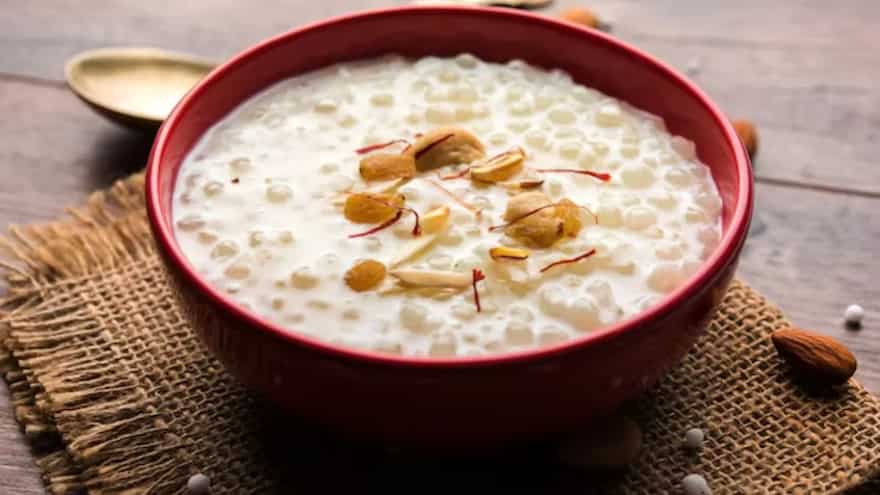
Sabudana kheer is a common bhog that feels gentle and nourishing in every sense, adhering to the fasting guideline. Preparing with soaked sabudana or tapioca pearls, milk, sugar, cardamom, and chopped nuts, it has a soft, pleasant texture. During the MahaShivratri vrat, heavy grains are avoided, and sabudana becomes a perfect ingredient to have during a fast. The kheer is lightly sweet, easy to digest, and excellent to have during fasting. Offering it as bhog reflects simplicity and pure cooking.
(Image credit: Freepik)
Fruits And Panchamrit
Lord Shiva is considered to prefer simple, natural offerings. Fresh fruits such as bananas, apples, and seasonal produce are very commonly offered as bhog because they represent the abundance of nature. Panchamrit is a sacred mixture that is prepared from milk, curd, honey, sugar, and ghee, and is also prepared to be offered during Rudra-abhishek and as bhog. Every ingredient symbolises nourishment and positivity. The panchamrit is lightly sweet, creamy, and feels sacred rather than indulgent. Offering fruits and panchamrit keeps the ritual pure and deeply metaphorical of gratitude.
Makhana Kheer
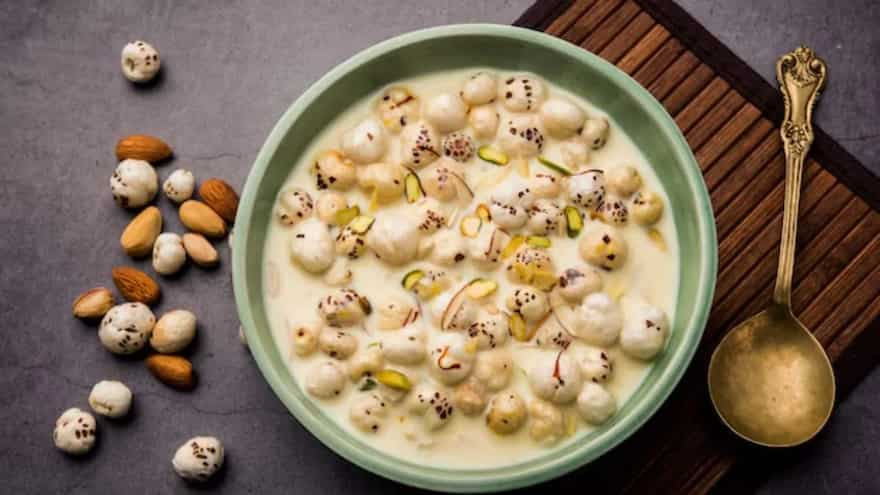
Makhana or fox nuts are widely enjoyed during fasting rituals and are considered sattvic. Roast it lightly with ghee and simmer it in milk with cardamom and a little sugar. The kheer turns soft and creamy once the makhanas turn soft. Makhana kheer is filling without being too heavy, making it perfect to have for Shivratri vrat. Since Shiva symbolises discipline and simplicity, this is a light yet nourishing dish that fits beautifully in the bhog. The taste is light, nutty, and satisfying.
(Image credit: Freepik)




