


 Share
Share

Planning on observing the Mahashivratri fast this weekend? Look no further than the sumptuous roster of fast-friendly Maharashtrian foods which are delicious, yet light on the gut. The Mahashivratri fast is observed every year as both a day of worship and as a way to connect spiritually with the divine. Fasting is a day-long activity as a way to rest the gut and to feast on foods that are simple but filling enough without making the stomach feel overwhelmed.
All Maharashtrian fasting foods perfectly fit into this theme and comprise dishes that are rich in protein, fibre and a whole lot of micronutrients. They can be served as meals in themselves, to keep calorie intake in moderation on this day. Moreover, preparing these foods is quite easy too, effectively making them easy options to plan for a fast observed throughout the day.
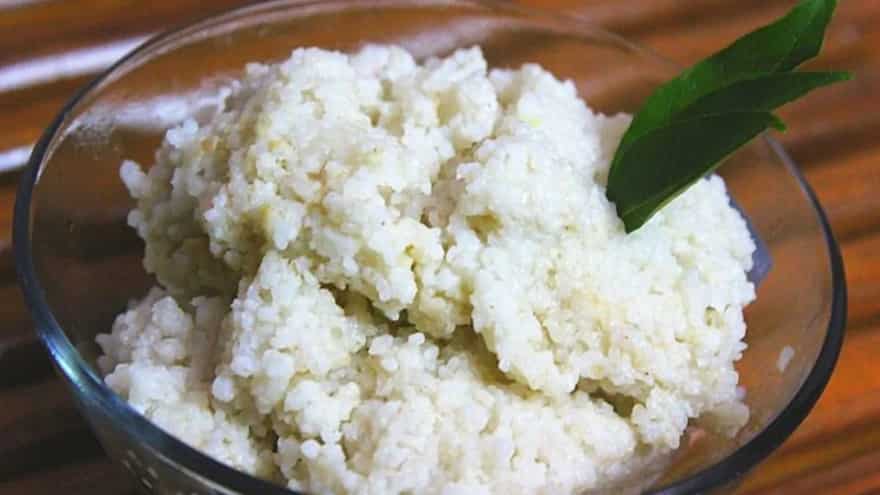
Tandool-Amti
While tandool essentially stands for rice and amti denotes a lentil curry, this fasting version of the tandul-amti is a slight colloquial misnomer which refers to a rice and dal-like combination, made without either! Tandool-amti is a fast-friendly preparation which means regular rice or tur and moong dal cannot be used in its making.
Varai or barnyard millet, a common fasting food, is cooked in lieu of rice. It is accompanied by the amti, a stand-in for dal or lentil curry made from a purée comprising crushed, roasted peanuts, some green chillies, cumin and freshly grated coconut. Tandool-amti can be prepared warm and served as a hot lunch on Mahashivratri day with a side of simple cucumber raita.
Thalipeeth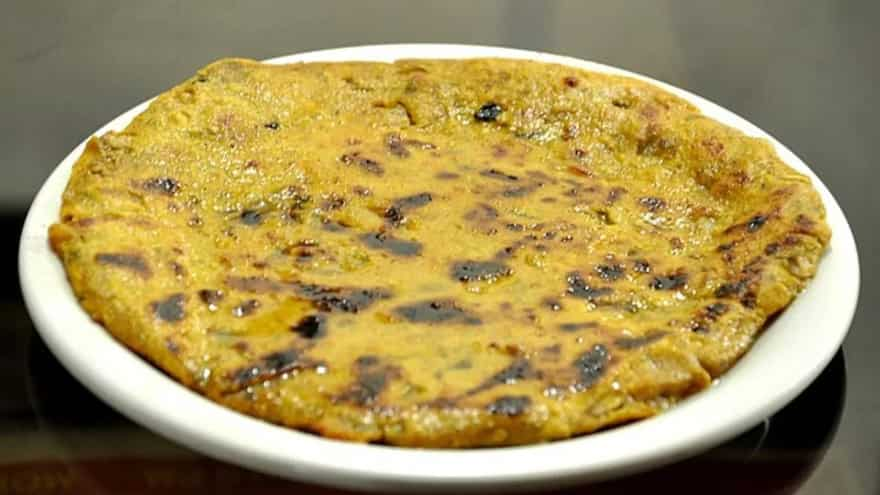
Ensure you bring home the flour for the fasting day thalipeeth as opposed to the regular one. The flour used for making the thalipeeth is entirely gluten-free, utterly nutritious and primarily made using rajgira or amaranth flour, singhada or water chestnut flour and varai flour.
This loose flour is turned into a dough that is then smoothened into a flatbread on a cast-iron pan. Lathered with ghee at the base, the thalipeeth cooks slowly on the tawa on a low flame. It can be served with ghee and curd as a sumptuous meal for lunch or dinner.
Sabudana Khichadi
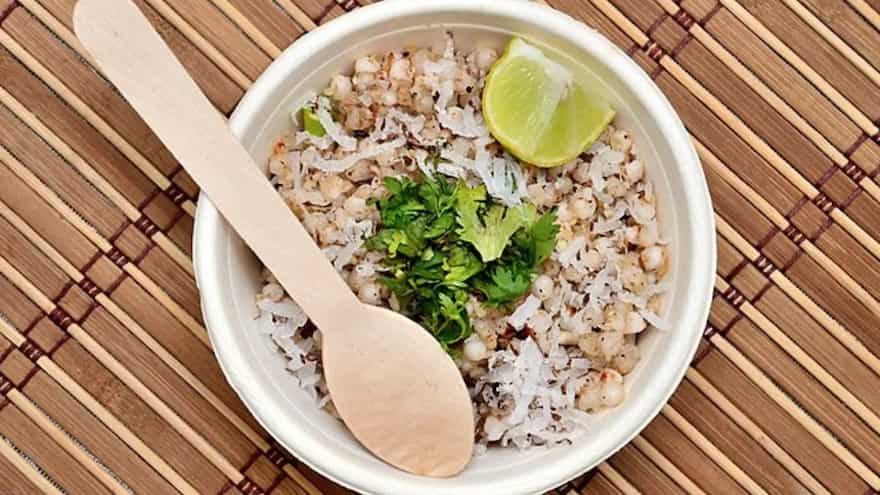
One of the more well-known and quite favoured breakfast staples across Maharashtrian fasting cultures, sabudana khichadi makes use of soaked sago, tossed in a tempering of ghee, cumin and green chillies. What builds into the overall flavour of this fasting food are thin potato slices.
Garnish the sabudana khichadi with coriander and freshly grated coconut while serving it for breakfast. Since the khichadi is quite filling, it can be had as a sumptuous meal in itself, especially by those who eat only once during the day, following the rest of the fast in a more stringent sense with a fruits and milk repast alone.
Sweet Potato Kees
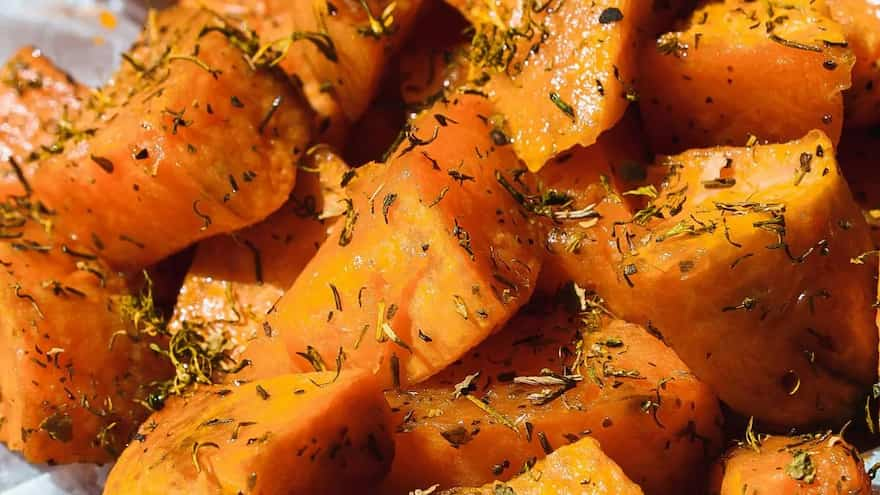
Kees essentially refers to a scramble-like preparation in which grated sweet potato is cooked in a fast-friendly way with a light seasoning of salt, cumin, green chillies and some crushed peanuts. Sweet potatoes are extremely nutritious, balance gut health and can become quite filling as a meal in themselves.
Grate the sweet potatoes and soak them slightly in salt water before frying them in ghee. The lightly sweet and dense notes of the ghee seep into the kees too, introducing a more intense flavour note into the vibrant kees.
Potato Sabzi Or Simple Stir Fried Potatoes
An interesting accompaniment with tandool-amti or thalipeeth, a simple potato sabzi is made by boiled potatoes and chopping them into large chunks before frying them lightly. A tempering of ghee and cumin brings some light flavours into the potatoes and a chopped coriander garnish adds a lush green brightness.
The sabzi can be served warm as a side dish on Mahashivratri day. This stir fry can be quite filling so prepare and serve it in moderate proportions.




