


 Share
Share

The culinary landscape of India is as diverse as its geography. While spices and curries often dominate the global conversation about Indian food, there is a silent, bubbling revolution of flavours hidden in the tribal belts of the country. In the verdant valleys of Assam, amidst rolling hills and tea gardens, lies a tradition that is centuries old. It is the art of brewing traditional fermented drinks, a practice perfected by the Bodo community. For the Bodo people, their traditional rice beer is not merely an intoxicant. It is a sacred offering, a medicinal tonic, and a symbol of their profound connection to the land. To understand this drink is to understand the soul of one of the most vibrant communities in North East India.
Who Are the Bodo People
The Bodos are the largest ethnolinguistic group in Assam and are part of the greater Bodo-Kachari family. They are considered the earliest settlers of the Brahmaputra valley. With a history that is deeply rooted in agriculture, the Bodo lifestyle revolves around nature, weaving, and farming. They are people of the soil, known for their colourful distinct attire like the Dokhna, their mesmerising Bagurumba dance, and their resilient spirit.
Their culture is intrinsically linked to rice cultivation. Rice is not just a staple food for survival; it is the canvas upon which their culinary identity is painted. From pithas to elaborate meals, rice features in every aspect of their gastronomy. However, the most revered transformation of this grain is its fermentation into Jou. The Bodo people follow the Bathou religion traditionally, where nature worship is central, and this respect for nature’s processes is evident in how they prepare their food and drink.
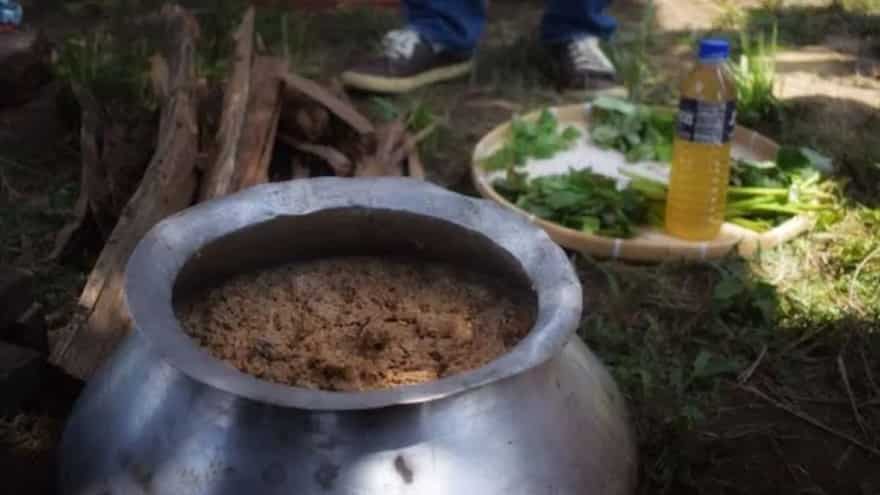
Image credit: Orange Wayfarer
The Spectrum Of Bodo Drinks
In the Bodo language, the general term for wine or rice beer is Jou. However, this simple word encompasses a variety of drinks, each with its own texture, potency, and purpose.
The most common and culturally significant form is Jou Bishi. This is often described as the golden liquor. It is the clear, fermented liquid that is collected from the rice mash. It has a sweet, tangy taste and is relatively mild compared to distilled spirits. It is the drink of welcome and the drink of worship.
Another variant is Jou Gwin. This refers to the fermented rice mash itself, often consumed with a spoon or diluted. It is heavier and more filling, serving almost as a meal in itself during long days of labour in the fields.
There is also a distilled version known locally as Photika in the broader Assamese context, though the Bodos have their own specific methods of distillation to create a potent clear spirit from the fermented mash. This is stronger and reserved for those who prefer a harder drink, often consumed in smaller quantities.
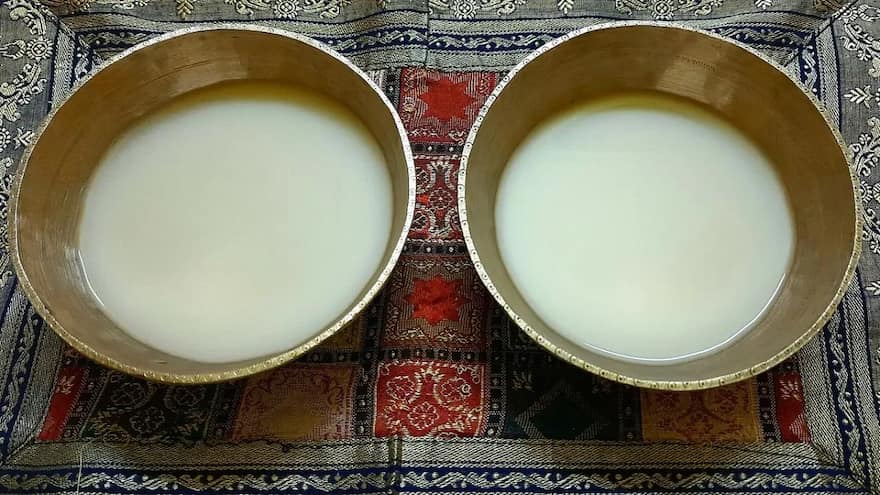
Image credit: Wikipedia
The Art Of Fermentation
The magic of Bodo rice beer lies in its starter cake, known as Angka or Ama. This is the heart of the fermentation process. Unlike commercial yeast, Angka is a complex biological ecosystem cultivated on a base of rice flour mixed with specific medicinal plants.
The process begins with the collection of plants. Bodo women, who are the traditional custodians of this knowledge, gather herbs such as wild pepper leaves, pineapple leaves, jackfruit leaves, and other local flora known for their antimicrobial and fermenting properties. These plants are dried, ground, and mixed with soaked rice which is then pounded into a fine powder. This mixture is shaped into round, flat cakes and dried in the shade or over the fireplace in the traditional kitchen.
To brew the drink, glutinous rice or Bora rice is cooked and spread out to cool on a banana leaf or a bamboo mat. Once it reaches the right temperature, the Angka is crushed and sprinkled over the rice. The mixture is thoroughly tossed to ensure the starter is evenly distributed.
This mixture is then placed in an earthen pot called a Dwo or Hadi. The choice of an earthen pot is crucial as it allows the brew to breathe and maintains a stable temperature. The mouth of the pot is sealed tightly, often with banana leaves and mud, to create an anaerobic environment. Fermentation takes anywhere from three to seven days, depending on the weather. In summer, the heat speeds up the process, while in winter, the pots are often kept near the kitchen fire to maintain warmth.
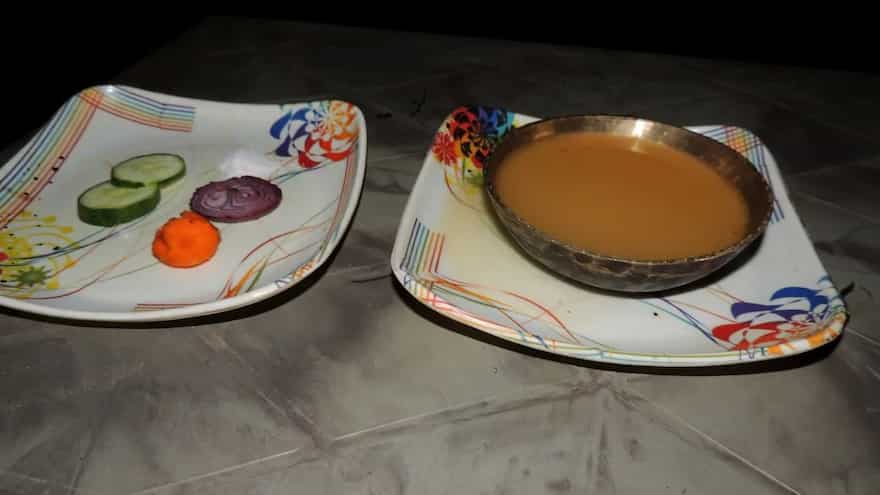
Image credit: Wikipedia
Health Benefits And Medicinal Value
While modern medicine warns against excessive alcohol consumption, the Bodo community views Jou through a different lens. When consumed in moderation, it is considered a health tonic. The use of medicinal herbs in the Angka infuses the drink with therapeutic properties.
It is widely believed to be excellent for gut health. The fermentation process creates probiotics that aid digestion and maintain a healthy stomach lining. This is particularly important in a tropical climate where digestive ailments can be common.
One of the most specific uses of Jou, particularly Jou Bishi, is for post-natal care. In Bodo tradition, new mothers are given small, controlled amounts of this brew. It is believed to help alleviate pain, act as a relaxant, and restore strength after the rigours of childbirth. The warming nature of the drink helps combat fatigue and body aches. Furthermore, the herbs used in the starter cake are selected for their ability to purify the blood and boost immunity.
Significance In Rituals And Hospitality
You cannot separate Jou from the social and spiritual fabric of Bodo life. It serves as the primary medium of social bonding. In a Bodo household, offering Jou to a guest is the highest form of respect and hospitality. It breaks the ice and signals trust. Refusing a cup can sometimes be seen as a rejection of friendship, though modern hosts are gracious about individual choices.
In religious contexts, Jou is indispensable. during Kherai, the most important religious festival of the Bodos, the drink is offered to Lord Bathou. The Deodhani or shaman who performs the trance dance during the puja often consumes Jou as part of the ritual, believed to help channel spiritual energy.
During Bwisagu, the Bodo New Year festival which coincides with Rongali Bihu, Jou flows freely. It is a time of merriment, dancing, and feasting. The drink fuels the energetic Bagurumba dance, where women spread their colourful arms like butterflies. Elders are served Jou by the younger generation as a mark of reverence, accompanied by a bow to seek blessings.
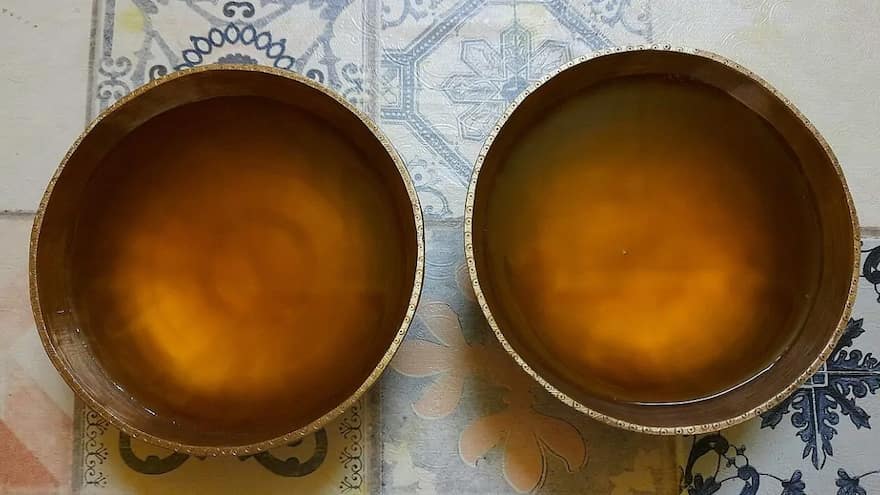
Image credit: Wikipedia
A Symbol Of Identity
For the Indian audience looking to understand the North East, the fermented drinks of the Bodo community offer a perfect entry point. It is a tradition that defies the modern, industrialised approach to food and drink. It is slow, sustainable, and deeply personal. Every batch tastes slightly different, carrying the signature of the woman who brewed it.
The preparation of Jou is a skill passed down from mother to daughter, preserving indigenous knowledge of botany and biochemistry that has vanished from many other cultures. It represents self-sufficiency and a celebration of local produce.
As India wakes up to the value of its regional cuisines, the fermented brews of the Bodos stand out as a unique heritage product. They are not just drinks; they are liquid history, preserved in earthen pots and served with an open heart. Whether used to honour the gods, heal the body, or welcome a friend, Jou remains the lifeblood of Bodo culture, inviting everyone to taste the warmth of Assam.




