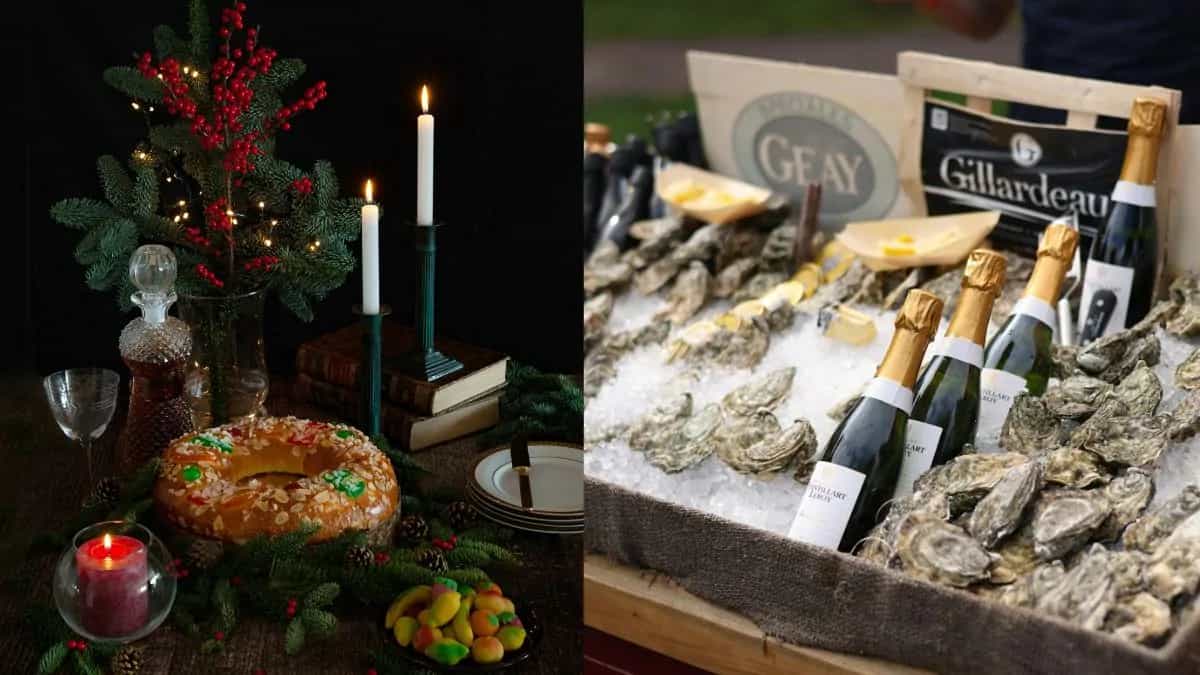
Across cultures, the end of the year is rarely marked by fireworks alone. Food plays a central role in how communities express hope, closure, gratitude, and anticipation. What appears on the table at this time is often chosen carefully, guided by old beliefs around luck, prosperity, protection, and renewal. If you are curious about what to eat as one year closes and another begins, this is a look at the symbolic foods people around the world turn to at year’s end, and the meanings quietly attached to each bite.
Spain: 12 Grapes For 12 Months Of Luck
In Spain, one of the most widely recognised New Year traditions involves eating 12 grapes at midnight, one with each stroke of the clock. The ritual dates back to the early 20th century and has roots in both agricultural surplus and older European beliefs linking grapes with abundance. Each grape represents a month of the coming year, and finishing all twelve before the final chime is believed to ensure good fortune and continuity. Today, the practice remains a communal moment shared across homes, town squares, and televised countdowns.
Image credit: Pexels
Japan: Toshikoshi Soba For Longevity And Letting Go
In Japan, families eat toshikoshi soba on New Year’s Eve, just before the year turns. These buckwheat noodles are long and thin, symbolising long life and resilience. At the same time, soba is easier to break than other noodles, which represents the ability to cut away the hardships of the past year. The dish is intentionally simple, reinforcing the idea of entering the new year unburdened and with humility.
Image credit: Adobe Stock
Italy: Lentils for Prosperity
New Year’s Eve meals in Italy often include lentils served with pork sausage, particularly cotechino or zampone. Lentils resemble small coins and have long been associated with wealth and financial stability. Pork, historically linked to abundance and progress, complements the symbolism. Eating lentils at the stroke of midnight is believed to encourage prosperity and steady growth in the year ahead.
Image credit: Adobe Stock
Greece: Vasilopita For Good Fortune
Families in Greece welcome the new year by cutting vasilopita, a sweet bread or cake baked with a coin hidden inside. The cake is sliced ceremonially, with portions assigned to family members, the household, and sometimes symbolic entities like the home itself. Whoever finds the coin is believed to receive exceptional luck and blessings for the year. The tradition blends Christian customs with older regional beliefs about fate and fortune.
Image credit: Adobe Stock
China: Dumplings For Wealth And Longevity
In China, symbolic foods dominate New Year celebrations, even when observed alongside Western year-end customs. Jiaozi dumplings, shaped like ancient gold ingots, symbolise wealth and prosperity. Whole fish, served intact, represent surplus and continuity, while nian gao, a sticky rice cake, signifies progress and upward movement. These foods reflect wishes for abundance, advancement, and family unity.
Image credit: Adobe Stock
Germany: Marzipan Pigs For Good Luck
In Germany, gifting and eating marzipan pigs, known as Glücksschwein, is a playful but meaningful New Year custom. Historically, pigs symbolised wealth and security, as owning livestock once meant survival and status. Marzipan pigs are exchanged as tokens of good luck, prosperity, and forward momentum, often alongside other edible charms like clover-shaped sweets.
Image credit: Adobe Stock
India: Sweet Beginnings And Auspicious Foods
In India, the turn of the year is welcomed with foods that symbolise auspicious beginnings, warmth, and continuity, rather than a single fixed New Year dish. Many households begin the year with something sweet, as sweetness is believed to set a positive tone for what follows. Winter sweets made with jaggery and sesame, such as laddoos and chikki, are common and represent nourishment, longevity, and resilience during seasonal transition. In other regions, kheer or payasam appears at family gatherings as a marker of abundance and emotional comfort, while Christian communities across Goa, Kerala, and the North East continue the year-end tradition of fruit cakes and rum-soaked bakes, where preserved fruits symbolise longevity, memory, and shared celebration.
USA (Southern States): Black-Eyed Peas & Collard Greens For Prosperity
In the southern regions of the United States, New Year’s Day meals often feature Hoppin’ John, a dish of black-eyed peas, rice, and pork. The symbolism is layered: black-eyed peas represent coins, collard greens resemble paper currency, and cornbread evokes gold. Together, the plate is believed to attract wealth, stability, and protection for the year ahead.
Image credit: Adobe Stock
France: Oysters & Champagne As Symbols Of Fresh Starts
New Year’s celebrations in France lean towards elegance rather than overt superstition. Oysters, associated with purity and the sea, symbolise renewal and clarity, while Champagne represents elevation and joy. Consumed together, they signal a refined fresh start, marking the transition into the new year with intention and indulgence.
Image credit: Pexels
Philippines: 12 Round Fruits For Luck & Abundance
In the Philippines, households prepare displays of 12 round fruits, each symbolising prosperity for one month of the coming year. The round shape resembles coins, reinforcing the association with wealth. Fruits such as oranges, apples, grapes, and melons are common, and many families also wear polka dots or cook round-shaped foods to amplify the symbolism.
Denmark: Kransekage For Stability & Success
In Denmark, New Year’s Eve is marked by kransekage, a towering confection made of almond paste rings stacked into a cone. The structure symbolises growth, stability, and ambition, with each ring representing a step upward. Often served with sparkling wine, the cake reflects both celebration and aspiration.
Image credit: Adobe Stock
Mexico: Rosca De Reyes With Hidden Figurine
The holiday season in Mexico extends into early January with rosca de reyes, a ring-shaped bread containing a hidden figurine. Finding the figurine symbolises both good fortune and social responsibility, as the finder traditionally hosts the next gathering. The ritual reinforces community bonds and continuity.
Image credit: Adobe Stock
Russia: Olivier Salad & Tangerines For Renewal
In Russia, New Year’s Eve is more significant than Christmas, and food plays a central role. Olivier salad, rich and celebratory, represents abundance, while tangerines symbolise renewal and festivity. During the Soviet era, citrus fruits were rare in winter, making them a powerful marker of celebration and hope.
Scotland: Black Bun For Protection
In Scotland, the Hogmanay tradition includes black bun, a dense fruitcake wrapped in pastry. Historically shared at year-end, the cake symbolises protection, completeness, and endurance, with its preserved fruits reflecting longevity and continuity.
Image credit: Wikipedia
Brazil: Pomegranate Seeds & Lentils For Prosperity
In Brazil, people eat pomegranate seeds and lentils at New Year to attract abundance. Pomegranate seeds represent fertility and multiplicity, while lentils symbolise wealth due to their coin-like shape. These rituals are often paired with wearing white for peace and renewal.
Image credit: Pexels
Turkey: Pomegranate For Renewal & Good Fortune
In Turkey, pomegranates are eaten or smashed at New Year to invite luck, renewal, and abundance. The fruit’s many seeds and vivid colour connect it to prosperity and continuity, making it a powerful symbol for fresh beginnings.