


 Share
Share

IN THE WEEKS LEADING UP TO CHRISTMAS, Thalassery smells different.
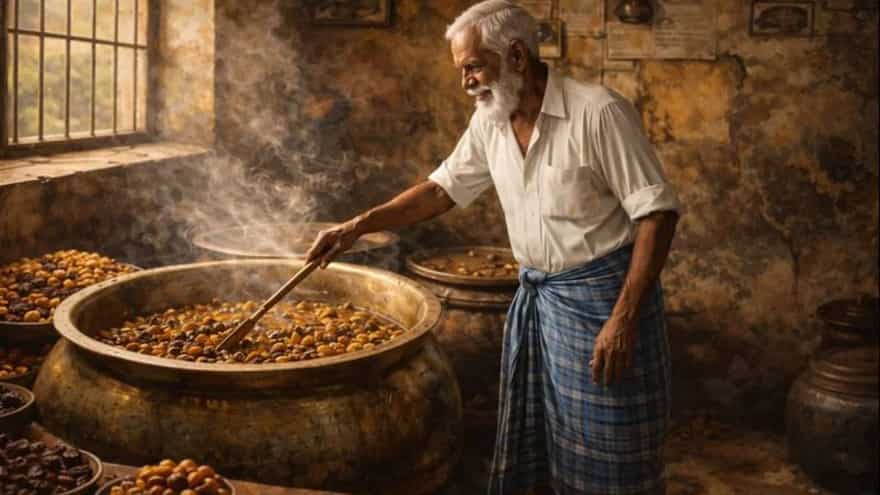
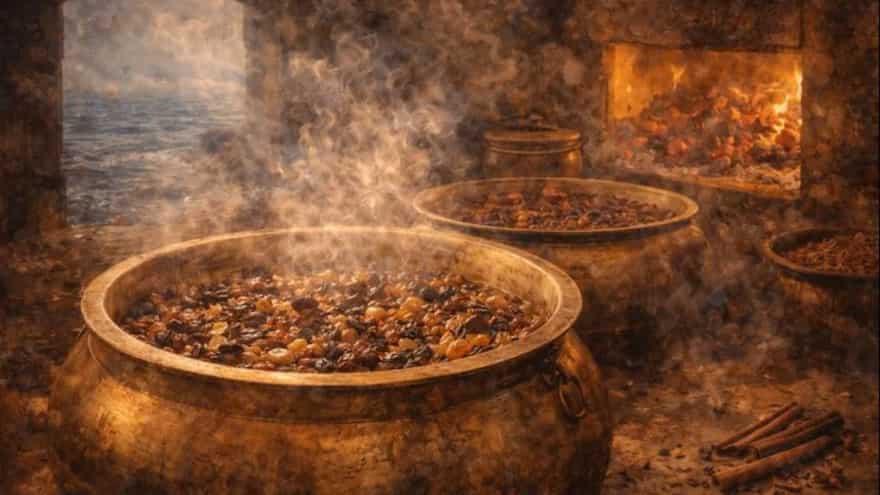
The air grows heavier, almost sticky with anticipation: wine-soaked fruit, caramelising sugar, clove and cinnamon blooming under heat. The sea is close enough to be felt, if not seen — the salt in the breeze mingling with the smoke from wood-fired ovens that have been lit before dawn. Inside old bakeries, bell-metal urlis simmer quietly, holding fruit that has been macerating for months, sometimes longer, waiting for its moment.
This is where India’s first Christmas cake was born. Not in a colonial club or a missionary kitchen, but in a small bakery run by a man who had never baked a cake before — and who, in doing so, refused to copy a foreign recipe exactly as it was handed to him.
To understand Mambally’s Royal Plum Cake, one must begin not with Christmas, but with movement.
A Port Town That Taught People How to Adapt
In the late nineteenth century, Thalassery — then known as Tellicherry — was not a sleepy coastal town but a crucial node in the global spice trade. Cinnamon, pepper, cardamom and cloves moved through its ports, carried by European traders, missionaries, colonial administrators, and local merchants who understood that survival depended on adaptability.
Among them was Mambally Bapu, a trader who had spent years in Burma (now Myanmar), where he learned the art of biscuit-making. When he returned to Thalassery in 1880, he brought back not just a skill, but a sensibility shaped by travel, observation, and necessity.
Bapu established the Royal Biscuit Factory, widely believed to be the first bakery in India founded by an Indian. Yeast was unreliable and often unavailable in British India, so he turned instead to what he knew: locally sourced toddy, used to ferment dough for bread. The bakery soon produced more than forty varieties of biscuits, rusks, buns and bread — everyday food, made inventive through constraint.
Then, in December 1883, something unexpected walked through his door.
A Cake from England, and a Ten-Minute Lesson
Mr Murdoch Brown managed the vast Anjarakandy cinnamon plantation, reputedly the largest in the world at the time. With Christmas approaching, he arrived at the Royal Biscuit Factory carrying a rich plum cake from England — a dense, dark thing, heavy with dried fruit and alcohol.
Brown asked Bapu to taste it. Then he issued a challenge.
Could Bapu recreate this cake for Christmas? Brown offered a brief, ten-minute demonstration of the fundamentals of cake-making. It was hardly a masterclass. Bapu had never baked a cake in his life.
But he accepted.
This was not an act of mimicry. It was a test of judgment.
The Refusal to Copy Exactly
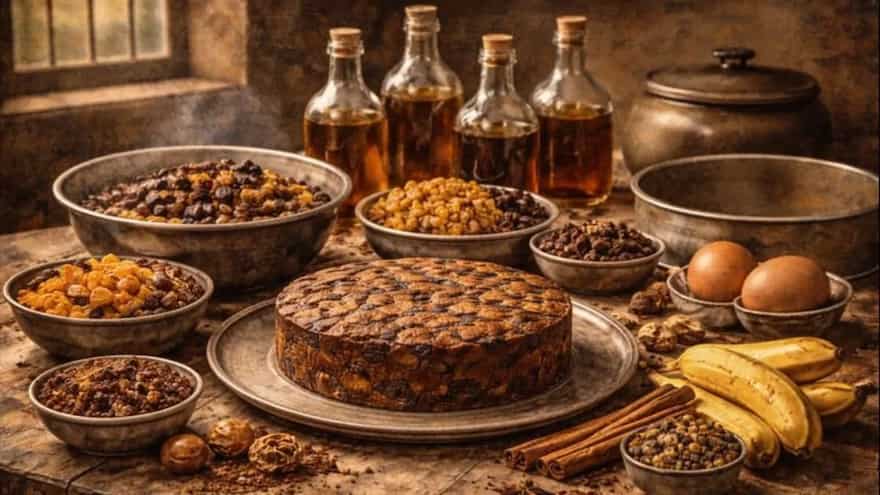
Brown supplied the essential imported ingredients — cocoa, raisins, dates, dried fruits — and instructed Bapu to soak them in French brandy, to be purchased from nearby Mahe, the French settlement just fourteen kilometres away.
Bapu did not go to Mahe.
Instead, he turned to a locally brewed liquor, made from cashew apples and a specific variety of indigenous banana known as kadalipazham. This brew — an early form of arrack — served multiple purposes. It replaced both the brandy and the unreliable yeast, fermenting the dough and infusing the fruit with warmth and depth.
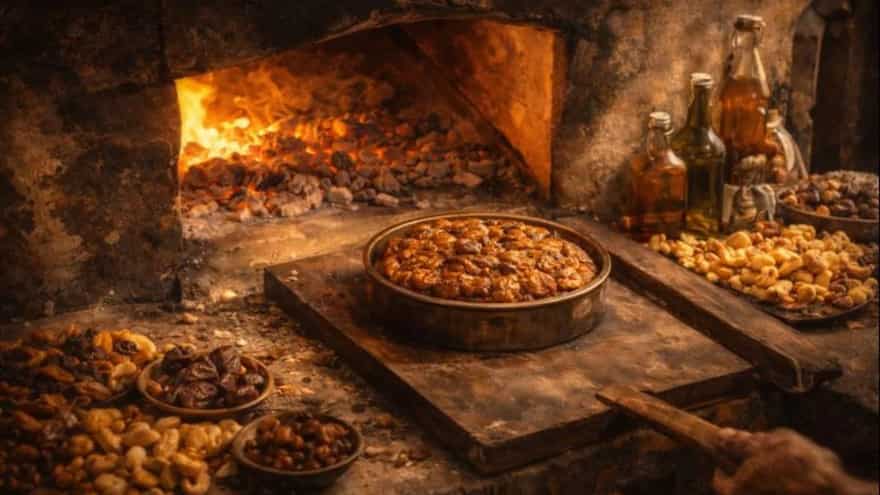
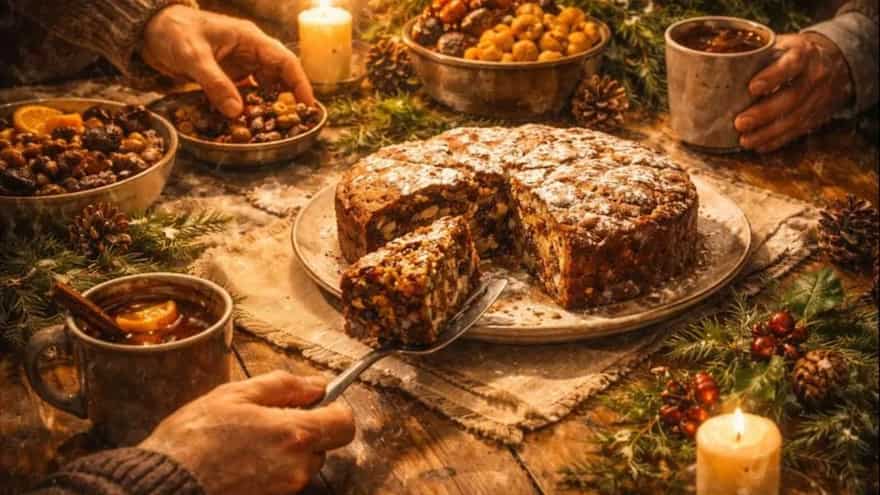
A local blacksmith in Dharmadam was commissioned to fashion a cake mould from scratch, based on description alone. The cake was baked in a traditional wood-fired oven — a borma — using hot sand and live charcoal, a method that imparted a faint smokiness no European oven could replicate.
What emerged was not an English plum cake transplanted to India, but something else entirely.
“Better Than the One from England”
On December 20 — records vary between 1883 and 1884 — Murdoch Brown returned to taste the result.
According to oral history passed down through generations, he declared the cake excellent. Better, even, than the one he had brought from England. He ordered a dozen more on the spot.
In that moment, a tradition was born — not through deference to colonial taste, but through confident localisation. A recipe crossed oceans and returned speaking a new language.
Cake, Cricket, and Circus
The success of Mambally’s plum cake transformed Thalassery into a culinary landmark. The town would later be known for the “three Cs”: cake, cricket, and circus — each a testament to disciplined craft and communal joy.
During the First and Second World Wars, Mambally’s biscuits and cakes were shipped to Indian troops stationed in Egypt and the Middle East, carrying a taste of home far beyond the Malabar Coast. Field Marshal KM Cariappa, independent India’s first Commander-in-Chief of the Army, was a devoted patron, reportedly sending couriers from Coorg to fetch the bakery’s goods.
Under Kerala’s Marumakkathayam system of matrilineal inheritance, Bapu’s descendants carried the trade forward, establishing some of the state’s most iconic bakeries — Santha Bakery, Cochin Bakery, Modern Bakery, Best Baking Co — each a branch of the same lineage.
Paintings of Bapu handing the cake to Murdoch Brown still hang on bakery walls today, not as a colonial tribute but as an origin myth: the moment the cake changed hands, and meaning.

A Christmas Cake That Belongs to Everyone
There is a quiet radicalism in the fact that India's first Christmas cake was created by a Muslim baker, commissioned by a Christian planter, and embraced across communities.
Today, Mambally’s Royal Plum Cake is eaten by Hindus, Muslims, Christians — by families who may not celebrate Christmas religiously but mark the season through food. It has become secular through repetition, ritual through familiarity.
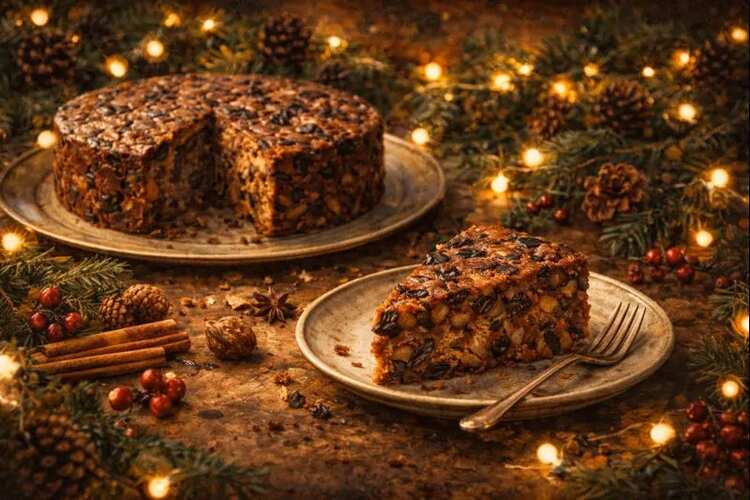
Its flavour profile remains distinct: rich but not cloying, dense yet restrained. Clove, nutmeg and cinnamon announce themselves on the nose but recede politely on the palate. Fruits — raisins, prunes, figs, dates, orange peel — are still soaked for months, sometimes a year, often stewed in urlis that bear the marks of decades of use.
The ovens are still fired with coconut shells. The smoke still matters.
What Endures Is Not the Recipe
Legal regulations have changed; brewing arrack is no longer simple. Ingredients have adapted, techniques refined. Yet what survives is not a static recipe but a philosophy: that foreign forms can be met without surrender, that tradition is something you make, not inherit intact.
Mambally’s Royal Plum Cake did not arrive fully formed from England. It was negotiated into being — through local knowledge, improvisation, and a refusal to believe that excellence belonged elsewhere.
Every December, when the ovens light up and the air thickens with spice and smoke, Thalassery remembers this.
Not as nostalgia. But as proof.




