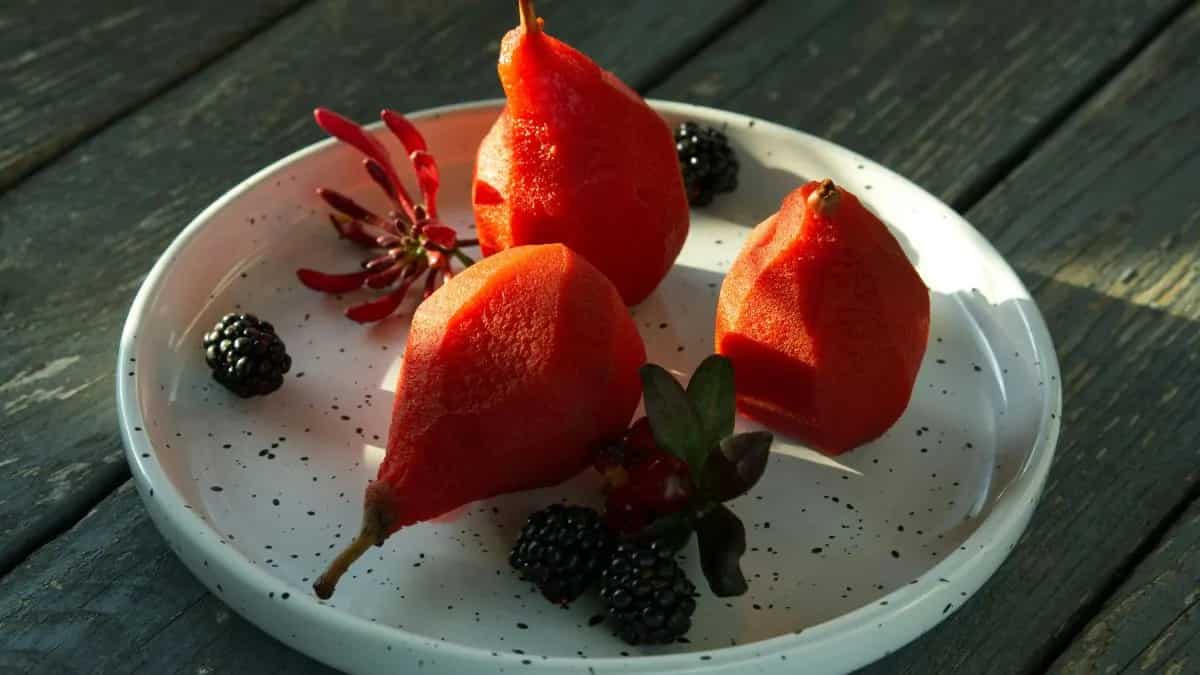
As the Indian winter sets in, bringing a crisp chill to the air and a vibrant array of produce to the local mandis, the palate often craves something warm and comforting. While traditional Indian mithai remains a beloved staple, there is a growing appreciation for desserts that celebrate the natural integrity of fruit. Poaching is a culinary technique that perfectly bridges the gap between healthy eating and indulgent luxury. It is a method that demands patience rather than complex equipment, resulting in a dish that is as visually stunning as it is delicious.
Image credit: Pexels
What Is Poaching?
At its core, poaching is a moist heat cooking method. It involves submerging fruit in a liquid and simmering it at a low temperature until it becomes tender. Unlike boiling, which can be violent and break down the delicate fibres of the fruit, poaching is gentle. The goal is to keep the fruit whole and shapely while allowing it to soak up the flavours of the poaching medium.
The poaching liquid, often referred to as a bouillon or syrup, is typically a mixture of water or wine, sugar or honey, and a variety of aromatics. In an Indian context, these aromatics often include green cardamom, cinnamon sticks, saffron strands, and even dried rose petals. The result is a fruit that is soft enough to be cut with a spoon but firm enough to hold its form on a plate, coated in a glistening, reduced glaze.
A Brief History Of The Technique
The history of poaching fruits is deeply rooted in European culinary traditions, particularly in France and Italy. During the medieval period, poaching was a practical way to preserve fruit or to make underripe or tough orchard fruits more palatable. Because sugar was a luxury commodity, these desserts were often reserved for the aristocracy and royal courts. The slow simmering process allowed the expensive sugar to penetrate deep into the fruit, creating a translucent and jeweled appearance that was the hallmark of a sophisticated kitchen.
In India, there is a parallel tradition in the form of Murabba. While Murabba is more of a long term preserve involving heavy sugar syrups and sunlight, the underlying principle of softening fruit in a sweetened, spiced medium is remarkably similar. Today, the modern poached fruit dessert is a lighter, more refined version of these ancient practices, focusing on immediate consumption and subtle flavour balances. It has become a favourite in fine dining establishments because it provides a light end to a heavy meal.
Image credit: Pexels
Winter Variants: Recipes For The Indian Palate
1. Assam Black Tea and Ginger Poached Apples
This recipe combines the tannic depth of strong Indian tea with the heat of fresh ginger. It is an ideal way to use crisp Kashmiri or Shimla apples.
Image credit: Adobe Stock
Ingredients
• 4 medium apples, peeled, cored, and halved
• 500ml water
• 2 tablespoons loose leaf Assam black tea or 3 tea bags
• 150g jaggery or brown sugar
• 2 inch piece of fresh ginger, thinly sliced
• 1 strip of lemon zest
Method
1. In a large saucepan, bring the water to a boil. Add the tea leaves and let them steep for 4 minutes. Strain the tea back into the pan.
2. Add the jaggery, ginger, and lemon zest to the tea. Stir until the jaggery has completely dissolved.
3. Gently place the apple halves into the poaching liquid.
4. Simmer on a very low heat for 12 to 15 minutes. Apples can soften quickly, so check them often with a skewer. They should be tender but not falling apart.
5. Use a slotted spoon to remove the apples.
6. Increase the heat and boil the tea liquid until it reduces by half, creating a dark, spicy syrup.
7. Serve the apples warm with a drizzle of the tea syrup and a side of fresh cream.
2. Kesar and Elaichi Poached Pears
This recipe uses the classic Indian pairing of saffron and cardamom to create a royal dessert.
Image credit: Adobe Stock
Ingredients
• 4 firm pears, peeled but stems left on
• 500ml water
• 150g white sugar
• 10 to 12 saffron strands
• 4 green cardamom pods, lightly crushed
• 1 stick of cinnamon
Method
1. In a deep saucepan, combine the water, sugar, saffron, cardamom, and cinnamon. Bring to a gentle boil until the sugar dissolves.
2. Carefully place the peeled pears into the liquid. Ensure they are mostly submerged.
3. Reduce the heat to a low simmer. Cover the surface of the liquid with a round piece of greaseproof paper to keep the fruits submerged.
4. Simmer for 20 to 30 minutes. The pears are ready when a knife slides into the thickest part with no resistance.
5. Remove the pears and boil the remaining liquid until it reduces to a thick, golden syrup. Pour the syrup over the pears before serving.
3. Hibiscus and Star Anise Poached Guavas
Guavas are a winter specialty in India. Poaching them removes their astringency and highlights their floral notes.
Image credit: Adobe Stock
Ingredients
• 4 large, semi-ripe guavas, peeled and halved
• 500ml water
• 2 tablespoons dried hibiscus flowers
• 100g sugar
• 2 star anise
• A pinch of black salt or Kala Namak
Method
1. Create the poaching base by simmering water, sugar, hibiscus, and star anise for 5 minutes until the liquid turns a deep ruby red.
2. Add the guava halves and the black salt. The salt helps to cut through the sweetness and enhances the fruitiness.
3. Simmer on low heat for 15 minutes. Guavas cook faster than pears, so monitor them closely to avoid them turning mushy.
4. Let the guavas cool in the liquid to absorb the vibrant red colour. Serve chilled or at room temperature with a scoop of vanilla bean ice cream.
4. Spiced Red Wine and Cinnamon Pears
For those who enjoy a more robust and sophisticated flavour, red wine provides a deep colour and complex notes of fruit and oak.
Image credit: Adobe Stock
Ingredients
• 4 firm pears, peeled and base trimmed so they stand upright
• 500ml red wine, preferably a Shiraz or Cabernet Sauvignon
• 150g granulated sugar
• 1 whole cinnamon stick
• 3 whole cloves
• 1 strip of orange zest
Method
1. Combine the red wine, sugar, cinnamon, cloves, and orange zest in a saucepan. Stir over medium heat until the sugar is fully dissolved.
2. Place the pears into the wine mixture. If the pears are not fully submerged, you may add a splash of water or orange juice.
3. Bring the liquid to a very gentle simmer. Do not let it boil vigorously as this can damage the skin of the pears.
4. Cook for 20 to 25 minutes, turning the pears occasionally to ensure an even ruby red colour.
5. Once the pears are tender, remove them from the pan and set them aside.
6. Boil the wine mixture over high heat for 10 minutes or until it becomes a syrupy glaze.
7. Place each pear in a serving bowl and pour the warm wine reduction over the top.
Tips And Tricks For Poaching To Perfection
To ensure your poached fruits look and taste like they came out of a professional kitchen, consider these expert tips:
• Selection is Key: Always choose fruit that is firm and slightly underripe. Fully ripe fruit will collapse under the heat and lose its shape. The fruit should feel heavy for its size.
• The Cartouche Method: Use a circle of parchment paper, known as a cartouche, placed directly on top of the liquid. This prevents the tops of the fruit from drying out or discolouring by keeping them constantly bathed in the syrup.
• Aromatics Matter: Do not be afraid to experiment. Indian kitchens are full of poaching treasures like fennel seeds, cloves, and even a hint of black pepper for a spicy kick.
• Cooling in Liquid: If time permits, let the fruit cool completely in the poaching liquid. This allows the flavours to penetrate deep into the core and ensures a more uniform colour. This is especially important for red wine or hibiscus recipes where the colour is a major part of the appeal.
• Repurpose the Syrup: Never throw away the leftover liquid. It is a concentrated essence of fruit and spice. Use it to sweeten tea, drizzle over pancakes, or mix into a winter gin cocktail.
Serving Suggestions
Poached fruits are incredibly versatile. For a traditional touch, serve them alongside a bowl of thick, unsweetened Greek yoghurt or home-made hung curd. If you want to lean into the indulgence, a piece of warm almond cake or a spoonful of shrikhand provides a wonderful textural contrast.