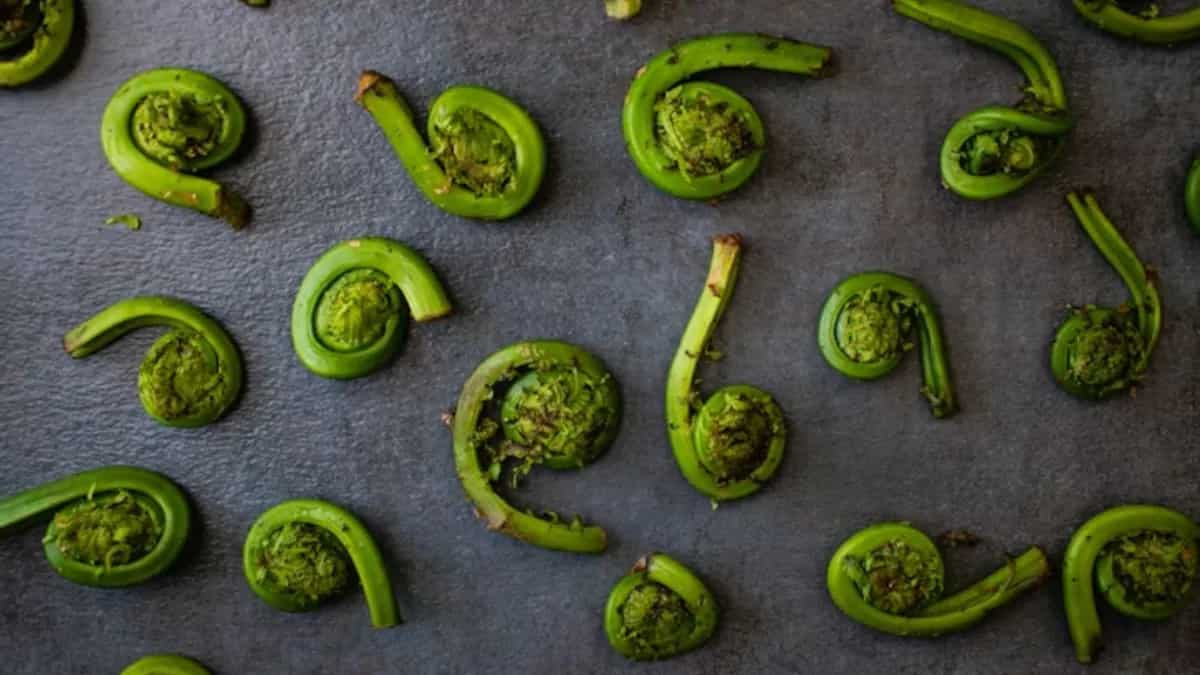
Apart from spinach, mustard greens, and fenugreek, which are popular green vegetables in Indian cooking, there are some local and indigenous varieties too, that are loaded with health benefits but are not known widely in other parts of the country. Fiddlehead ferns, also known as lingaru and dhekia xaak, are the best example of it. These tender and half-curled fronds are a widely consumed saag by the locals of Uttarakhand, Himachal Pradesh and Assam that grows abundantly in the wild, mainly on the foothills of the Himalayas.
Image Credit: Unsplash
Grown along the river banks, they have a meaty texture and tangy flavour. A much-loved side dish is prepared with it in the Assamese cuisine, and a popular pickle ingredient in Himachal Pradesh. They are basically young shoots of the plant that look like tiny scrolls, and only the tightly coiled tips of the ferns are eaten.
Known for its distinct taste and high nutritional content, called ninggure in Nepal, it is slowly becoming more and more renowned outside of its native region. It is a healthy ingredient, high in vitamins, minerals and antioxidants added to many dishes and often consumed tender, i.e. soon after they appear. Given how fiddlehead fern is integral to cuisines across the Himalayan belt, it is not uncommon to find seasonal or regional dishes that pay homage to the culinary traditions of a place.
Of Forests & Plates: A Fiddlehead Fern Story
Ferns have existed for nearly 400 million years, long before flowers, fruit, or human beings. When early humans scavenged for greens, they reached for the plant’s tender tips. And long before food trends made ingredients “rare”, “seasonal”, or “foraged”, fiddleheads were exactly that. Today, they can be found in farmers’ markets in Maine, in pickles in Jammu, in coconut curries in Indonesia, and in the memories of home cooks across the Himalayan belt.
But in India, the fiddlehead fern, known variously as lingri, lingad, limbra, kasrod, dhekia xaak, muikhonchok, niyuro, therme thoppu, has its own life story to tell.
Also Read: Have You Tried These Nepali Desserts?
If you've ever travelled through the Himalayas' beautiful green forests during the spring, you may have noticed tightly coiled green shoots blooming in groups. These are fiddlehead ferns that have been used in Himalayan cuisine for millennia. Not only do they have a distinct flavour, but they also provide numerous health benefits.
Fiddlehead ferns thrive in the cool, shady parts of the Himalayan foothills, particularly near rivers and forested slopes. They appear in early spring and are foraged by locals while young and tightly coiled, preserving their nutritional content and sensitive texture. Because these ferns grow organically, they are 100% organic and chemical-free, making them an extremely nutritious addition to your diet. If you're wondering where to buy fiddlehead ferns, they're generally available in local markets during the season.
Image Credit: Unsplash
Himalayan Ways Of Cooking Fiddlehead Ferns In India
When cooked, they surprise you with a grassy flavour like asparagus, nutty like broccoli stems, a little woodsy, and occasionally tangy depending on the species. The Himachali lingri, for example, has a characteristic sour flavour, whilst the prized North American Ostrich fern (Matteuccia struthiopteris) is cleaner and more delicate. You must cook them raw since fiddleheads may contain hazardous bacteria or natural poisons found in certain fern types. It’s one ingredient that insists on a little respect: rinse, clean, blanch or boil, and only then let it into your curry, stir-fry, or pickle jar.
In Uttarakhand, they are commonly foraged in the wild and used in a variety of recipes. They are known locally as linguda and are highly valued for their particular flavour and texture. In linguda aloo, they are cooked with potatoes and spices, making for a flavourful, nutritious dish. Known for its high antioxidant, vitamin, and mineral content. Ferns have an important role in Uttarakhand's cultural legacy. They are frequently produced for festivals and special occasions to represent the link between people and their natural surroundings. Chefs and home cooks continue to experiment with ferns, adding them to more modern cuisines and quick recipes.
Follow the western Himalayas upward in spring, and you’ll find vendors selling bunches of lingad in Himachal Pradesh, their hands dusted with the brown papery scales that must be cleaned off each shoot. In Jammu, jars of kasrod ka achaar signal generosity and pride — a pickle so beloved that families gift it when relatives return from the hills.
In Assam, where the fern is called dhekia xaak, it is one of the most recognisable spring greens. In Tripura, it becomes a bhaja, crisp, savoury, and quick. In Manipur, it is cooked with prawns or chicken, melding seamlessly with local protein traditions. In Coorg, therme thoppu appears in humble stir-fries eaten with rice or akki roti. Across Darjeeling and Sikkim, niyuro is almost household vocabulary — a vegetable, not a novelty. Himalayan cooks never fetishised fiddleheads as precious; they simply recognised them as the first, freshest green after winter’s lull.
It’s a seasonal handshake from the forest and, unlike Western cuisines where fiddleheads often appear as side dishes dressed with lemon or butter, Indian kitchens fold them into daily meals such as sabzi, stir-fries, pickles, curries, and even cheese-based preparations in the hills.