The word “halwa” originates from the Arabic word “ḥalwā” (حلوى), meaning sweet or confection, derived from the root ḥ-l-w, which denotes sweetness or pleasantness. As Arab culture and cuisine spread through trade, conquest, and migration, the term traveled across regions - evolving into halvā in Persian, helva in Turkish, and eventually halwa in the Indian subcontinent. Over time, "halwa" came to represent not a single dish but a broad category of sweets made with ingredients ranging from semolina and lentils to vegetables like carrots, all typically prepared with sugar, ghee, and spices. In India, it evolved into countless regional variations - from sooji halwa in the north and rava kesari in the south, to Karachi halwa in the west and black halwa in Kerala - each unique, yet unified by the name. Thus, "halwa" is more than a dessert; it’s a word that has journeyed through centuries, cultures, and cuisines, always symbolising one thing: delight.
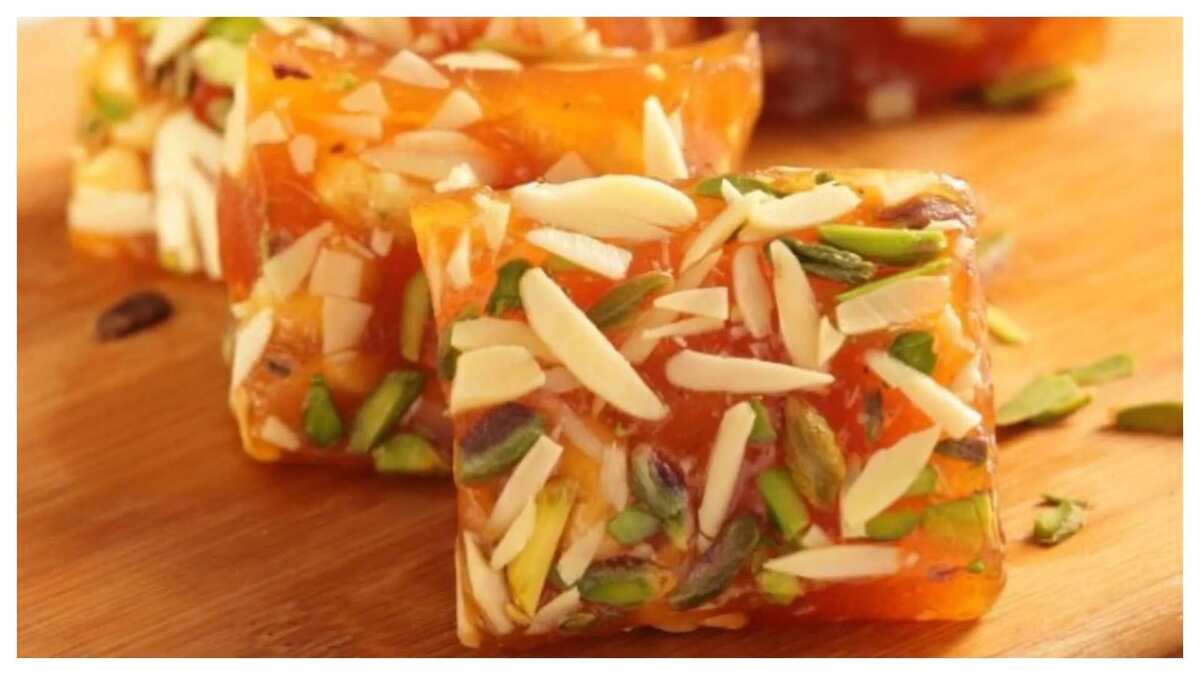
In the bustling lanes of Mumbai, you’ll find bright, jewel-toned slabs of a chewy, ghee-laden sweet proudly sold as Karachi Halwa. Cross the border into Pakistan, and you'll find an almost identical sweet — being sold as Bombay Halwa.
What gives?
Why does the same dessert bear the name of the other city in each country? The answer, like many things in the subcontinent, lies in the tangled history of migration, memory, and Partition.
A Halwa from Home
Karachi Halwa traces its origins to the vibrant Sindhi confectioners of pre-Partition Karachi. Known for its glossy finish, elastic texture, and long shelf life (thanks to cornflour and generous amounts of ghee), this halwa was a festive staple.
But in 1947, everything changed
As the Indian subcontinent was split into India and Pakistan, millions were displaced in the largest mass migration in history. Among them were Hindu Sindhi families - many of whom resettled in Bombay (now Mumbai), bringing their recipes, skills, and memories with them.
To preserve the identity and origin of this beloved sweet, they continued to call it Karachi Halwa - a culinary anchor to a homeland left behind. Even today, the name serves as a gentle tribute to the city they once called home.
The Turkish Mother of All Delights
But the story doesn’t begin in Karachi or Bombay — it starts centuries earlier in the Ottoman Empire. Lokum, or Turkish Delight, is the spiritual and structural ancestor of Karachi Halwa. Made from starch and sugar, and often flavored with rosewater, nuts, or citrus, Turkish Delight was a luxurious sweet prized across the Middle East and Europe.
As trade routes brought ingredients and ideas eastward, variations of Turkish Delight began to take root across Persia and the Indian subcontinent. Local adaptations saw the use of ghee, saffron, cardamom, and food coloring, resulting in what we now recognise as Karachi Halwa - a firmer, glossier, and more indulgent cousin of its Ottoman forebear. In many ways, Turkish Delight walked so Karachi Halwa could run.
A Sweet Swap in Karachi
Meanwhile, on the Pakistani side of the border, things were shifting too. Karachi saw an influx of Muslim migrants from western India - especially from cities like Bombay. These migrants brought with them new tastes, foods, and traditions.
In time, sweet shops in Karachi began making the halwa that the new arrivals were familiar with. But with the sentiment of Bombay attached to it, it came to be known locally as Bombay Halwa.
What began as a geographical label quickly became a marketing hook - exotic, nostalgic, and imbued with the taste of another time and place.
A Tale of Two Cities (and One Halwa)
So today, in a quietly poetic twist, each country sells the same sweet named after the other’s city:
In India, it’s Karachi Halwa, evoking memory, migration, and identity.
In Pakistan, it’s Bombay Halwa, capturing nostalgia, movement, and adaptation.
It’s a delicious irony - and a poignant reminder - that while borders may divide, the stories we carry in our food endure. These stories are not just about ingredients or taste; they’re about longing, belonging, and the resilience of culture.
More Than Just Dessert
This halwa is more than a festive indulgence. It’s a symbol of shared heritage - a culinary keepsake passed across generations and across borders. It's proof that even amidst the bitter realities of Partition, sweetness survived - in memory, in name, and on the tongue.
So the next time you bite into a slice of Karachi or Bombay Halwa, know that you’re not just tasting sugar and ghee. You’re tasting history.