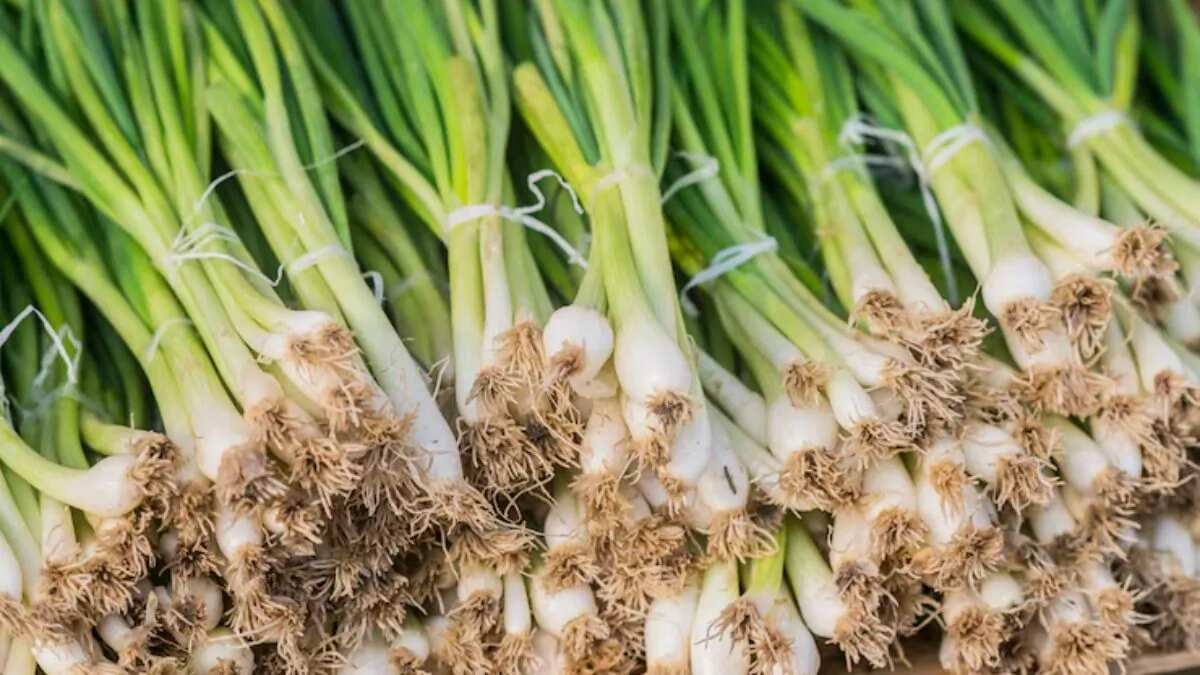
The winter season brings with it a unique ingredient to Gujarati kitchens: green garlic, which is also known locally as lilu lasan. Unlike grown garlic, which is harvested for its mature cloves, green garlic is picked while the plant is still immature, with its soft white base and fresh green leaves unchanged. Its flavour is recognisably garlicky but generally more temperate, making it useful to use in dishes where garlic needs to add freshness as well as kick.
In Gujarat, especially in the southern region around Surat, green garlic is more than just a seasonal garnish. It is an essential ingredient in winter preparations like surti undhiyu, garlic chutney and also lasan kachhu, which is a fresh, pungent sauce. Its arrival overlaps with the season for other local choices, which include surti papdi and soft winter vegetables. Combined, these ingredients give Gujarati winter cooking its unique personality.
However, the good news is that if you are also fond of green garlic, it can also be grown in a pot or a small kitchen garden. You do not need a big patch of ground to harvest a few soft stalks for a fresh harvest. With suitable garlic cloves, well-drained soil and frequent care, you can grow this seasonal ingredient at home and use it fresh whenever a recipe demands it.
How To Grow Green Garlic At Home
Green garlic is grown from separate garlic cloves. Pick firm, healthy cloves and then plant them pointed-end up in a small pot that has drainage holes. Use loose, well-draining potting soil and then position the cloves a few inches apart so that the shoots have some space to grow.
Place the pot in a place that receives enough sunlight, and keep the soil a bit moist without letting water collect in the roots. Waterlogged soil can make the cloves decay, so drainage matters more than regular watering.
For green garlic, you do not have to wait for the underground bulbs to develop fully. Once the shoots have grown and the plant has developed usable green growth, you can gather young plants for their shoot leaves and the white bases. The exact time depends on growing requirements and the garlic variety. If you want repeated crops, plant a few cloves at a few intervals rather than all together. This gives you plants at different stages of growth.
(Image credit: Freepik)
Why Green Garlic Belongs In Gujarati Winter Cooking
The charm of green garlic lies in its blend of delicate texture and fresh, sharp taste. The white base adds a fuller garlicky flavour, whereas the green stalks add a pop of colour to the dish with a grassy note. Both parts can be finely chopped and then used in cooking, which also reduces the need to discard the portions that can be used.
In surti undhiyu, green garlic adds to the aromatic masala that is prepared with ingredients like chopped coriander, green chillies and grated coconut. This winter speciality also brings together a mix of seasonal vegetables that includes surti papdi, purple yam, raw banana and brinjal. The garlic helps in tying the varied vegetables together, giving the dish a fresh, savoury taste.
Make Fresh Green Garlic Chutney And Lasan Kachhu
One of the easiest ways to use green garlic is to turn it into a fresh chutney. Finely chop some tender stalks and then blend them with some coriander, green chillies, lemon juice and a pinch of salt. Add a little water only if required. The outcome of the chutney is a sharp, herbaceous accompaniment that can be used with thepla, rotla, khichdi and snacks such as dhokla, handvo, muthiya and patra.
Another preparation is lasan kachhu, a classic winter relish that is linked with parts of Surat. Green garlic gives it its unique kick, making it a natural accompaniment to seasonal meals like undhiyu with puri, bajra rotla, ringan no olo (roasted brinjal mash) and khichdi. Recipes may vary from household to household, but the focus is on the fresh ingredients rather than just a long cooking process.
(Image credit: Adobe Stock)
Add Green Garlic To Everyday Winter Dishes
Green garlic can also be added to the thepla dough, mixed in a potato or brinjal sabzi, or added to a pot of dal. Add the chopped greens only towards the end of cooking when you want to get its fresh flavour that should remain evident. For a deeper, sweeter taste, simply sauté the white base in oil before adding the other ingredients.
Growing green garlic at home makes it easier to use only what you need, whether that represents a handful for undhiyu masala or a few stalks for the chutney. Its value lies in this versatility: one small pot can provide an ingredient that combines everyday cooking with Gujarat's unique winter food traditions.