For Bengalis, a Durga Puja mela is where the festive mood spills beyond the pandal and takes over the fairground with childish joy. There is usually something happening in every direction you turn in a mela. For example, children are negotiating with their parents for another ride, women are browsing jewellery and bangles, all kinds of shoppers are examining clothes and various household goods, while there seems to be an endless parade of vendors displaying everything from toys and kitchenware to bed linen and carpets.
Food stalls add their own irresistible pull, with hot oil crackling, spices spreading their zesty aroma in the air and queues forming in front of familiar favourites. The scale and variety of a Durga Puja mela are part of its attraction. Unlike a small neighbourhood fair, a Pujo mela can feel like a temporary marketplace, amusement park and street-food festival rolled into one.
Durga Puja itself has been recognised by UNESCO as intangible cultural heritage, celebrated through various public installations, artistic collaboration and community participation. Food stalls are deeply interwoven into this larger social experience, as the United Nations in India notes in its account of Durga Puja. For many visitors, exploring the mela assigns equal importance to wandering, eating out, and spending time together as much as shopping or enjoying the rides.
But the main difficulty lies in deciding what to eat without experiencing FOMO, aka fear of missing out. One stall might promise hot and crisp fritters, while another is whipping up a fresh line of rolls, and somewhere nearby, a vendor is tossing muri with zingy mustard oil, chillies, and chopped onion. Plus, there is the infinite array of noodles, fried appetisers, kebabs, sweets, and chilled drinks, all competing for your attention. With so much to sample, arriving somewhat hungry is sensible, but trying to eat everything in one visit is not.
What to Eat at a Durga Puja Mela in 2026
Jhalmuri
Jhalmuri can be your go-to companion for a long, leisurely walk around the fair. Puffed rice is tossed with chopped onion, green chilli, spices, peanuts, coconut pieces, and mustard oil, usually accompanied by crunchy chanachur and a squeeze of lemon. The result is light in texture but truly bold in flavour, with the mustard oil bringing its trademark pungency and the muri providing a crisp yet light base.
Image credit: Wikimedia Commons
The dish is also conveniently served in a paper cone or pocket, making it easy to carry and snack on while browsing stalls. Unlike a plated meal, jhalmuri does not ask you to stop exploring. It is the sort of snack you can finish while deciding whether the next stop should be the jewellery stall or the giant Ferris wheel.
Fish Fry or Kabiraji
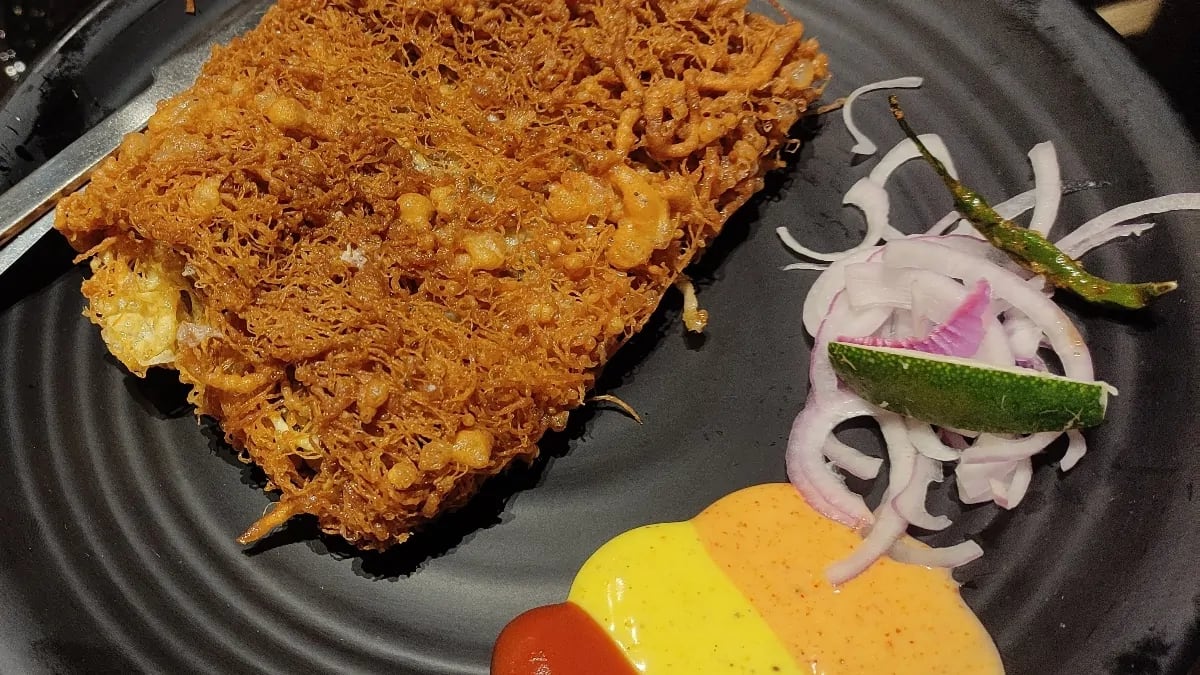
For those who want something nostalgically associated with Kolkata's iconic food culture, then keep a lookout for fish fry or kabiraji cutlet. Fish fry features a marinated fish fillet coated in crumbs and then fried until golden, with a crisp outside and tender centre. On the other hand, kabiraji is a richer affair, with the juicy fish cutlet wrapped in a delicate, lacy coating of fried egg.
These are much more indulgent than a cone of jhalmuri, so they work well as a shared, occasional food stop rather than an automatic addition to every mela food order. So, if you see a stall serving them fresh, go for it, amid the parade of rolls and noodles, but remember, moderation is your best mela friend.
Kathi Rolls
Once the smaller snacks have done their rounds, a kathi roll makes a more substantial food choice. This familiar Kolkata street food staple wraps kebab, egg, and other fillings in a flaky paratha, usually with onion, a squeeze of lime, and chutney or sauces. The bread brings a buttery, lightly crisp exterior, while the filling contributes charred savouriness, spice, and umami juiciness.
Image credit: Wikimedia Commons
The Howrah district administration's culinary guide also traces the dish’s origin to Kolkata. A Kathi roll’s greatest advantage at a mela is its filling practicality: it is a complete, portable meal that can be eaten without searching for a table or plate. Egg rolls are a good option if you want something less filling, while chicken or kebab-filled versions are ideal for those seeking a heartier, on-the-go bite.
Chow Mein and Chilli Chicken
Mela menus often stretch far beyond traditional Bengali snacks. For example, a quick plate of chow mein, tossed with vegetables, sauces and egg or chicken, is a very familiar street-style food option for visitors who want something savoury and filling but not too fancy. Add chilli chicken if you desire a spicier and saucier accompaniment, as the dish’s crisp-edged pieces, glossy coating and sharp chilli-garlic flavour make it a popular pairing with the noodle main.
Image credit: Wikimedia Commons
These dishes are best chosen when you are ready for a proper pause in the midst of your evening wanderings. Share a plate if you still have several other food stalls on your list, and look for food cooked to order rather than previously prepared and reheated meals.
Ghugni
Not every worthwhile mela food has to be crisp or deep-fried. Ghugni, made using dried yellow peas or white peas cooked in a nicely-spiced gravy, is a cosy, savoury option. Depending on the vendor's cooking style, your ghugni may arrive topped with chopped onion, green chilli, coriander, and a squeeze of lemon.
Some versions are richer and more gravy-focused, while others are thicker and finished with a generous scattering of crunchy accompaniments. A small bowl makes a good middle point and flavour changer for when you want something spoonable and more mouthwatering after several dry snacks. It also offers a different flavour profile compared to the crisp appeal of fish fry or the mustard-oil bite of jhalmuri.
Momos
Momos have become a familiar sight at urban food stalls, and their appeal at a crowded Durga Puja mela is easy to understand. The hot and soft dumpling wrapper gives way to a savoury vegetable or meat filling, while the accompanying chilli chutney brings a sharp, fiery kick.
Image credit: Wikimedia Commons
Steamed versions offer a welcome change from the crumb-coated cutlets and fried pastries, while there are fried and pan-fried momos for those who prefer a crisp dumpling. A small plate is easy to share, and the dumplings taste best when eaten very hot and freshly made. If you are visiting with a group, ordering both vegetable and chicken versions makes the stop more varied and interesting.
Mishti, Kulfi Or Hot Jalebi
Save a little space for dessert. A mela may have Bengali sweets such as rosogolla and sandesh, alongside kulfi, ice cream, jalebi, or other syrup-soaked treats. Choose according to your mood, since each has its own characteristics: sandesh offers a milky, delicate sweetness; kulfi is dense and creamy; while jalebi delivers a crisp shell and sticky syrup in every bite.
If you spot jalebi being made fresh, then the just-fried, warm version is highly tempting, with its crunchy edges giving way to a syrupy, tender centre. Meanwhile, kulfi is a refreshing finish after a stretch of spicy and fried food. The selection does vary from one fairground to another, so part of the fun is seeing what is being made on the spot and making a choice.