


 Share
Share

Durga Puja might be the only time when getting hungry is part of the daily itinerary. You leave home after lunch or dinner, promising yourself that you will visit only “a few pandals,” and several hours later you have walked through half the city, stood in queues, admired elaborate and creative installations, bowed in front of countless magnificent idols, bumped into school friends, taken approximately 47 photographs, and developed a very serious craving for a cheese-loaded, spicy chicken roll.
This hunger is particularly relevant in Kolkata, where Puja streets become their own enormous food carnival. Puchka carts, snack stalls and temporary food counters appear alongside all the regular restaurants, while established and gourmet kitchens come up with unique and festive menus. But pandal-hopping food requires its own strategy, irrespective of state and landscape. Be it Delhi, Bengaluru or Mumbai, you cannot start your pandal-hopping evening with a plate of biryani at 6 pm and expect to make it through the night. Nor should you spend the entire evening surviving on puchka only; that may be a special recipe for heartburn.
The ideal Puja food trail moves between little bites, fried indulgences, dessert favourites, and one proper meal, somewhere in the middle. The order of consumption does not matter here. Think of it as a very excited Bengali response to a multi-course meal, except this time the courses are determined by where your feet are, your current appetite or craving, as well as which famous pandal you plan to visit next.
Ultimate Durga Puja Pandal Hopping Guide For Bengali Foodies
Puchka - The Best Amuse-Bouche Cum Palate Cleanser
Every serious Puja food trail should start with puchka. It is not just ideal as the opening bite of the night but also suitable as a palate cleanser between snacks and courses. Plus, the variety of puchka or pani puri is truly inspiring, be it a normal spicy-tangy one, a sweet one, a rich dahi-loaded one, or a creative dum-aloo-filled creation. Also, there is something ceremonial and nostalgic about standing beside a puchkawala, watching him fill the shells one after another while everyone in your group boasts about how many each person can easily gobble.
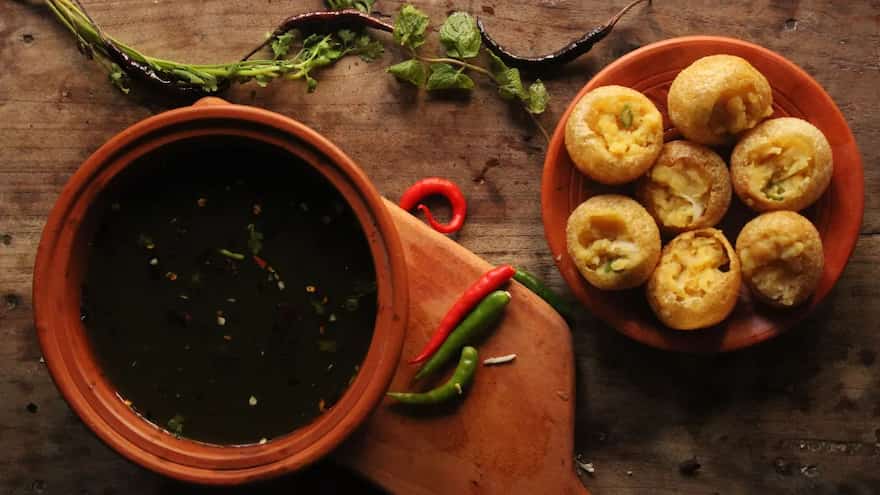
Image credit: Pexels
The iconic potato-and-kala-chana filling, chopped green chilli, roasted cumin, black salt, and zesty tamarind water are enough to wake up even a sleeping, satiated appetite that may have been perfectly happy an hour earlier. And puchka is exactly what the opening course should be: small, sharp, and impossible to stop after eating only one.
Best time: Early on your pandal-hopping route, before you become genuinely hungry, or hangry.
Pandal-hopping rule: Do not make this your dinner. Puchka or pani puri should be the opening statement, not the conclusion.
Also read: 10 Best Places for Ghugni Chaat in Kolkata
Jhal Muri - The Walking Snack
If puchka requires you to stop, stand and eat, then jhal muri lets you keep moving. The beauty of the humble snack lies in its chaotic and highly flavoursome ecosystem: muri, mustard oil, peanuts, chanachur, chopped onion, green chilli, coriander, spices and whatever else you and the muriwala believe belongs in that particular cone. It is crunchy, spicy, savoury, and very frequently consumed during Durga Puja. And most importantly, jhal muri is a snack that belongs outdoors. Snacking on it while walking towards the next pandal feels more correct than eating it at a dining table, or even on a plate.
Best time: Between two pandals when you want something savoury but are not ready to sit down for starters or a full meal.
Pandal-hopping rule: Pointedly ask for mustard oil or achaar, like mango pickle oil. That sharp, pungent hit is part of the snack’s point.
Fish Fry Or Kabiraji Cutlet - The Fried Interlude
Now we get serious with the snacking business. A crispy bhetki fish fry with kasundi is one of those Bengali flavour combinations that needs very little explanation. A breadcrumb-coated fillet arrives golden and crunchy on the outside, soft, flaky, and well-seasoned on the inside, commonly accompanied by salad and mustard. And kabiraji cutlet takes this indulgence even further.
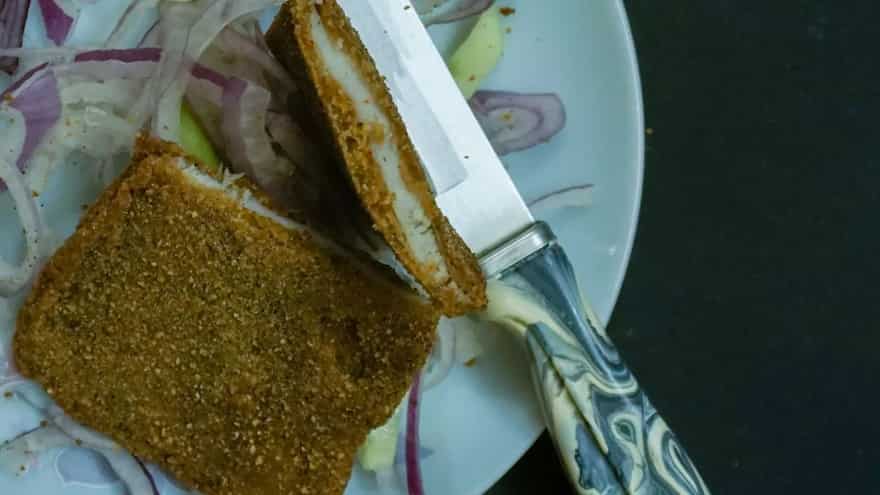
Image credit: Wikimedia Commons
The meat or fish cutlet is enclosed in a delicately woven web of fried egg, creating an almost lace-like, designer-looking shell that shatters into savoury and crispy pieces in your mouth when bitten into. Both the snacks remain firmly in the territory of classic Bengali café food, and both feature prominently in the festive food choices of natives.
Best time: When you want a proper, substantial snack but still have several iconic pandals left to visit.
Pandal-hopping rule: Kasundi is not optional. It is the punctuation here.
The Kathi Roll - Your Portable, Light Main
There is a reason the kathi roll is such a dependable and filling pandal-hopping companion: it was basically designed for eating on the move. While an egg roll is enough for a lighter appetite, it rarely fills up your festive stomach. Chicken, mutton, and cheese-loaded versions make a much more substantial meal, especially when hot paratha, egg, sliced onions, green chillies, and meat, maybe with some cheese, are wrapped tightly enough to be eaten while standing in a pandal queue.
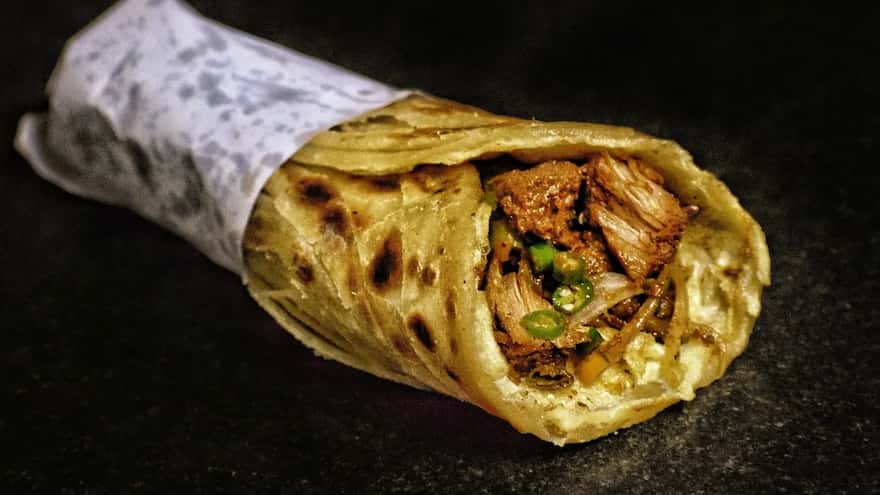
Image credit: Wikimedia Commons
Plus, rolls are ideal as they smartly occupy the middle ground between snack and dinner, despite having humble as well as fancy options available nearly everywhere now. As a result, rolls form an essential festive food that is perfect for sustenance during long nights of pandal hopping.
Best time: When your hunger has become real and active, but sitting down for dinner would interrupt your route to the next pandal.
Pandal-hopping rule: Keep the paper wrapping around the bottom till the very end. You will thank yourself when the roll gets generously sauced and is unable to drip on your brand new Puja clothes, due to a firmly held approach.
Biryani - The Proper Dinner
Eventually, even the most committed pandal hopper has to sit down. This is when biryani enters the story and saves the day by satiating your hunger. The combination of fragrant rice, tender meat (also potato and egg in certain popular regional versions), and restrained spices is what makes dreams come true when the first mouthful hits your taste buds.
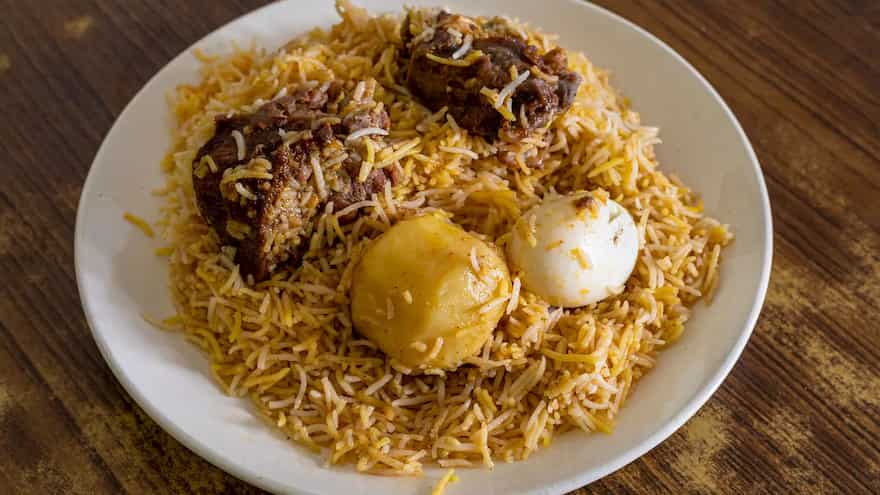
Image credit: Wikimedia Commons
Plus, if you have been walking since afternoon or evening, then this is the point where sitting down, ordering something cold to drink, and eating a proper meal suddenly feel like the best idea anyone has had all day. Pair your biryani with a delicious chaap or rezala-style preparation of your choice for a true feast. But if you wish to have a moderate meal, then pair your biryani with some raita and a green salad for balance.
Best time: Lunch or dinner.
Pandal-hopping rule: Do not schedule walking to your most distant pandal immediately after this meal. Biryani deserves a little digestion and resting time.
Mishti - The Dessert Course That Needs No Extra Stomach Space
After all that, there is absolutely no reason to skip dessert completely, unless you are absolutely full. For this is the right time to visit the sweet shop and make wise dessert choices. Your stomach is no longer empty; the opposite, really. All you want is the perfect sweet finish to your meal.
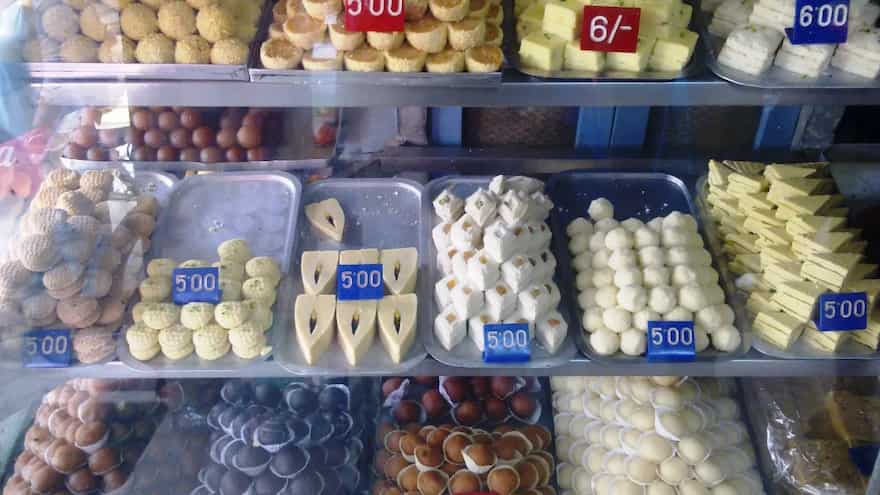
Image credit: Wikimedia Commons
Rosogolla, sandesh, mishti doi, chomchom, rabdi, chhena poda, mihidana, sitabhog, or whatever appealing treat catches your eye behind the mithai glass counter can be yours now. After all, Puja is an excellent excuse to buy a mixed box of sweets for everyone to have their pick. And unlike the earlier courses, dessert does not need a complicated eating strategy. Buy several. Sample one in store. Take the rest home. Eat one more with the rest of the family, and try to remember that the rest are for tomorrow.
Best Time: After meals
Pandal-hopping rule: Either eat them in-store or at home, else you will need wet wipes at hand to eat on the go.




