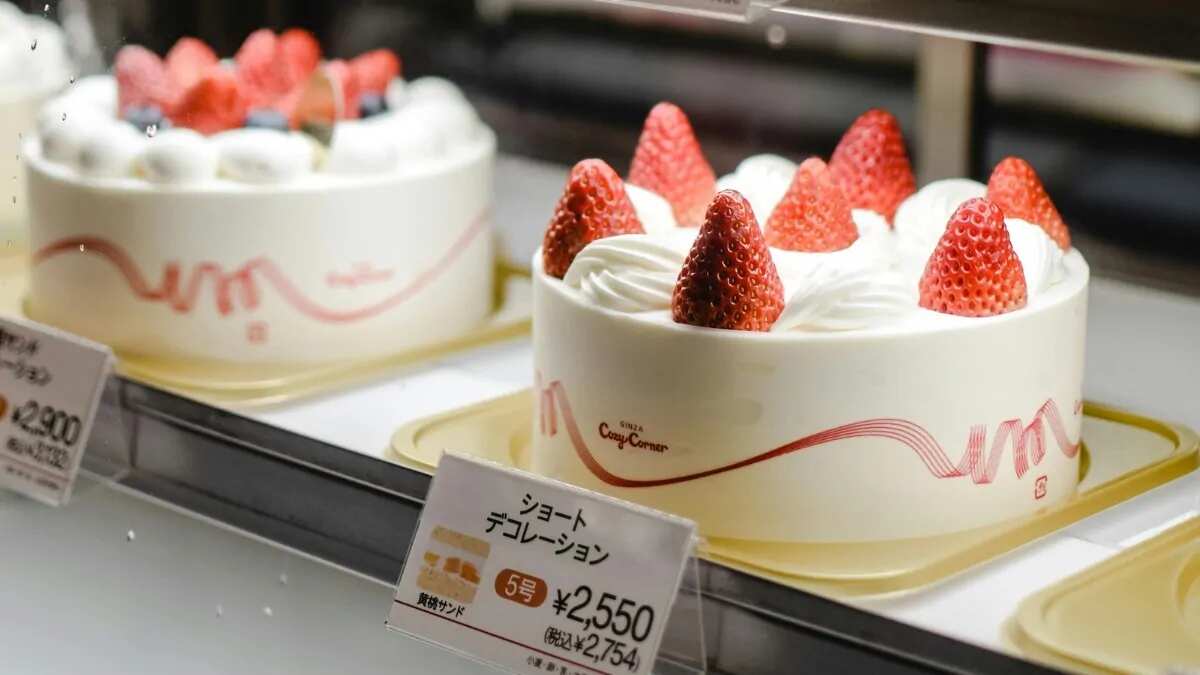
Japan’s Christmas staple, the strawberry shortcake feels timeless now, yet it is a surprisingly modern tradition shaped by history, advertising, and post-war optimism. It is light, pale, and pretty, with soft sponge, lightly sweetened cream, and bright strawberries arranged in a dance. The sponge is made using whipped eggs rather than chemical leavening, which creates a fine, springy crumb. The cream is whipped slowly and gently, with very little sugar. Strawberries are used generously but thoughtfully, adding colour and brightness without overpowering the cake. Presentation matters as much as flavour. The cake is smooth, clean-edged, and symmetrical, with strawberries placed immaculately. This careful finish reflects a broader Japanese approach to celebratory food, where visual harmony and aesthetics are equally, if not more important, than the taste itself. This cake has become so closely tied to December in Japan that bakeries begin taking Christmas reservations weeks in advance, with entire family schedules planned around picking it up.
Image credit: Pexels
Post-War Origins Of The Strawberry Shortcake
The Japanese Christmas cake story begins after the Second World War, during a period when Western customs were being reintroduced and reimagined for a rapidly rebuilding society. Christmas itself was not a religious holiday for most people in Japan, but it offered something new and aspirational, centred on togetherness, celebration, and modernity.
A key role in shaping this tradition is often credited to Fujiya, a long-established confectionery brand that began promoting strawberry shortcake as a Christmas dessert in the early 1950s. The cake’s colours, white cream and red strawberries, echoed the Japanese flag, which helped it feel culturally familiar while still carrying a Western association. At a time when ingredients like fresh cream and strawberries signalled prosperity, the cake became a symbol of post-war recovery and a small luxury that families could share.
Image credit: Pexels
How Christmas Is Celebrated In Japan
Christmas in Japan is largely secular and social rather than religious. The holiday centres on couples, friends, and family, with an emphasis on shared meals and carefully chosen food rather than long rituals or church services. Christmas Eve often carries more significance than Christmas Day, especially for couples, and restaurants book out well in advance.
Food plays a central role, and two items dominate most Christmas tables: strawberry shortcake and fried chicken. The cake usually appears at the end of the evening, brought home from a local bakery or department store food hall, often boxed with care and opened together. Candles are lit, photos are taken, and the cake is sliced neatly, with attention paid to even portions.
What makes this tradition distinctive is how uniform it feels across the country. From small neighbourhood patisseries to luxury department stores, the visual language of the Christmas cake remains consistent. White cream, red strawberries, soft sponge, and restrained decoration continue to define the ideal, even as variations appear with chocolate, champagne-soaked layers, or seasonal fruits.
Japanese Strawberry Shortcake Recipe
This is a traditional home-style recipe that stays close to what you would find in a Japanese bakery.
Ingredients
For the sponge cake:
- 4 large eggs, at room temperature
- 120 g caster sugar
- 120 g cake flour, sifted
- 30 g unsalted butter
- 30 ml whole milk
- 1 teaspoon vanilla extract
For the cream and filling:
- 400 ml fresh whipping cream
- 30–40 g icing sugar, adjusted to taste
- 400–500 g fresh strawberries, washed and hulled
Image credit: Pexels
Method
- Preheat the oven to 170°C and line the base of a 20 cm round cake tin with baking paper.
- Place the eggs and caster sugar in a heatproof bowl and set it over a pan of gently simmering water. Whisk continuously until the mixture feels warm to the touch, then remove it from the heat and beat with an electric mixer until pale, thick, and tripled in volume. The mixture should fall in soft ribbons when lifted.
- Sift the flour again and fold it into the egg mixture in batches using a spatula, working gently to preserve as much air as possible.
- In a small pan, heat the butter and milk until the butter melts, then remove from the heat and stir in the vanilla. Add a small amount of the batter to this warm mixture to lighten it, then fold it back into the main batter carefully.
- Pour the batter into the prepared tin, smooth the surface, and bake for 25–30 minutes until the sponge springs back lightly when touched. Turn it out onto a rack and allow it to cool completely.
- While the cake cools, whip the cream with icing sugar until it holds soft, smooth peaks. Slice most of the strawberries thinly for the filling, keeping a few whole or halved for decoration.
- Slice the cooled sponge horizontally into two even layers. Place the bottom layer on a serving plate, spread a thin, even layer of cream over it, and arrange the sliced strawberries neatly across the surface. Add a little more cream to secure the fruit, then place the second sponge layer on top.
- Cover the entire cake with the remaining cream, smoothing the sides and top with a palette knife. Decorate with the reserved strawberries, keeping the arrangement simple and balanced.
- Refrigerate the cake for at least one hour before serving so the cream can settle and the flavours can come together.