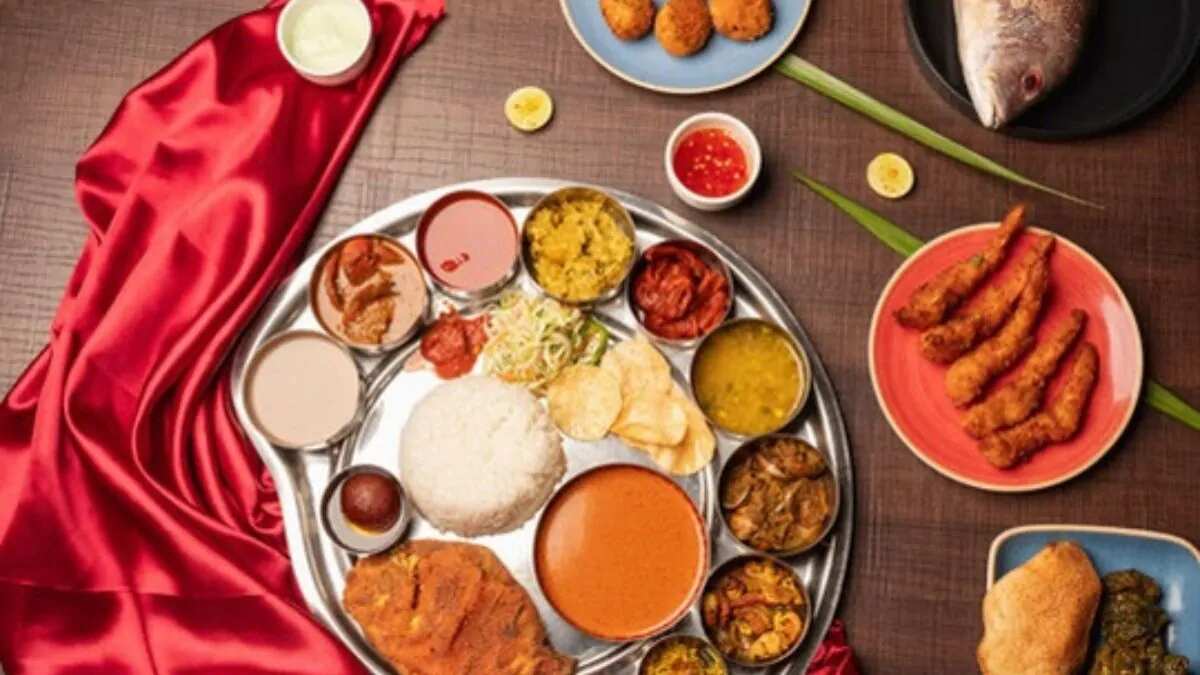
Diu remained part of Portuguese India until 1961, and this long period created a steady exchange of techniques between Lusophone kitchens and the coastal households of the island. Vinegar marinades, egg-enriched cakes and certain baking patterns came from the Portuguese presence, while coconut, jaggery, chillies, bajra and date palm products reflected Gujarat’s agricultural and maritime character. Christmas became a season in which these strands met naturally. Fish curries displayed the influence of older Portuguese methods through the use of palm vinegar and dried chillies, yet they rested on local spice profiles that preferred moderate heat. Cakes and loaves carried the memory of brick-oven baking and rum-soaked fruits, yet they were shaped by island ingredients such as coconut and jaggery. These forms evolved steadily, and the festival table now mirrors the island’s relationship with fishing cycles, monsoon rhythms, coastal trade and indigenous produce. Christmas preparations involve early soaking of fruits, procurement of fish that can hold their texture in curries, slow baking of dense loaves and the careful seasoning of stews that sit comfortably within both Gujarati and Lusophone culinary logic.
Image credit: Pexels
Coastal Fish Traditions And The Adaptation Of Portuguese Techniques
The island’s Christmas menu depends heavily on species available during the season, and kingfish, pomfret, mackerel, ghol, baby shark and small prawns appear most frequently because they respond well to simmering and shallow frying. Families often prepare coconut-based fish curries that use ground coconut, coriander seeds, cumin, dried Kashmiri chillies and garlic. The paste cooks with softened onions before firm fish is added, and coconut milk produces a smooth and steady consistency. A measured portion of palm vinegar enters the curry at the end to introduce an acidity that owes its presence to Portuguese marinades but remains distinctly local in its gentle application.
Image credit: Adobe Stock
Mackerel prepared with jaggery–chilli masala reflects another strand of this adaptation. The fish holds its shape well when pan-fried, and the mixture of crushed garlic, dry chilli and grated jaggery melts into the flesh, creating a flavour that hints at Goan spice structures yet moves in a direction shaped by Gujarati preferences for controlled heat. These dishes show a clear parallel with Goan Christmas cooking in their use of vinegar and coconut, although Diu favours simpler spice layers and local sweetness from jaggery rather than elaborate masala profiles.
Image credit: Pexels
Portuguese Parallels, Gujarati Logic And Festive Savoury Food
Diu shares certain structural features with Goan festive cuisine, especially in the use of palm vinegar, dried chillies and coconut milk. However, the island’s savoury dishes follow a Gujarati approach that values moderation in spice and a sweeter palette. Goan Christmas dishes such as sorpotel or vindaloo often involve complex spice assemblies, whereas Diu’s celebratory stews rely on a smaller group of spices and a greater dependence on coconut.
Image credit: Adobe Stock
Palm vinegar appears regularly in Christmas cooking across the region, yet Diu tends to soften its sharpness with jaggery or date paste, a practice shaped by local agricultural availability. This creates a festive profile that looks connected to the Lusophone world but feels rooted in the west-coast rhythm of Gujarat, where coconut, chillies, groundnuts, jaggery and bajra occupy everyday culinary space. The island’s Christmas food therefore holds Portuguese traces without adopting the full weight of Goan elaboration, and this selective absorption forms one of the most defining features of Diu’s festive savoury repertoire.
Image credit: Pexels
Fruit Soaking, Rum Cakes, Coconut Sweets And Island Bakery Traditions
Baking holds a central place in Diu’s Christmas preparations, and many households maintain soaking rituals for dried fruits that begin several weeks before the festival. Dark rum remains the most common soaking medium, although some families combine it with palm wine or use a jaggery syrup simmered with cloves and cinnamon. The soaked fruit enters various cakes and loaves, and the flavour deepens as the mixture matures.
Rum cakes occupy an important position on the Christmas table. These cakes often contain grated coconut, chopped cashews, raisins and candied peel, and the batter relies on eggs and jaggery to produce a rich structure. Slow baking results in a deep caramel tone and a texture that stays tender for days. Coconut–jaggery cakes remain popular as well, and these depend on freshly grated coconut mixed into molten jaggery before being folded into a simple batter.
Image credit: Adobe Stock
Date and cashew loaves reflect the agricultural history of the Kathiawar coast, where date palms grew in abundance and cashew trade passed through western ports. These loaves travel easily and often become gifts exchanged among neighbours. Island bakeries also produce small coconut biscuits that trace their lineage to earlier Portuguese baking techniques, and many older establishments continue to rely on methods involving long fermentation and slow baking in metal-lined trays. This continuity demonstrates how Diu maintained baking traditions after the end of colonial rule, adapting them through local produce and domestic preference.
Image credit: Pexels
Local Liquor And The Organisation Of Festive Preparations
Local liquor plays a limited yet distinct role. Coconut feni and palm liquor appear in small quantities in marinades, where they add fragrance rather than pronounced strength, and the same spirits enter fruit mixtures for cakes. Festive organisation in Diu usually involves early purchasing of fish, long soaking of fruits, preparation of spice pastes that can be used across multiple dishes, and the gradual baking of cakes that need resting time to develop their character. These tasks often take place within extended family units, and older residents recall that neighbourhood churches once oversaw collective cooking for community gatherings, a structure that influenced how households plan their own preparations today.
Recipes That Mirror The Portuguese–Gujarati Christmas Table
Coconut Fish Curry
A smooth paste made from fresh coconut, dried Kashmiri chillies, coriander seeds, cumin and garlic cooks slowly with softened onions before firm cubes of kingfish or pomfret settle into the mixture, and the fish absorbs the masala while coconut milk creates a rounded consistency. The curry can use a small amount of palm vinegar after the heat is reduced, and this element introduces an acidity that connects the dish to older Portuguese techniques while keeping its flavour firmly grounded in local coastal practice.
Mackerel Stuffed With Jaggery–Chilli Masala
Whole mackerel slit along one side are packed with a paste prepared from crushed garlic, dried chilli flakes, coriander seeds and grated jaggery, and the fish rests in this mixture long enough for the sweetness to merge with the spice. The mackerel is then shallow-fried until the exterior forms a firm layer and the interior releases a warm fragrance, and this preparation suits festive evenings because it retains its structure and flavour even when cooked in advance.
Roast Chicken With Coriander, Pepper And Palm Vinegar
A whole chicken coated in a paste of toasted coriander seeds, crushed peppercorns, garlic and a small drizzle of oil rests for several hours before receiving a thin coating of palm vinegar that provides a restrained yet distinctive acidity. The bird roasts at a steady temperature until the skin develops an even golden surface and the juices run clear, and occasional basting with its own drippings allows the spices to settle uniformly. The final flavour reveals the influence of Portuguese marinades shaped through Gujarati seasoning.
Image credit: Adobe Stock
Coconut–Jaggery Christmas Cake
Fresh coconut mixed with molten jaggery forms the core of this batter, and the warm mixture is folded into eggs, flour and cardamom before soaked raisins are added for depth. The cake bakes slowly until the jaggery darkens into a natural caramel shade, and the texture remains moist through the festive week, which makes it suitable for early preparation.
Rum-Soaked Date And Cashew Loaf
Dates soaked in dark rum combine with chopped cashews and beaten eggs to create a dense mixture that requires only a modest amount of flour. The loaf bakes until the surface forms a gentle crust and the centre firms without losing moisture, and the rum produces an aroma linked closely to older island baking traditions adopted during Portuguese rule.