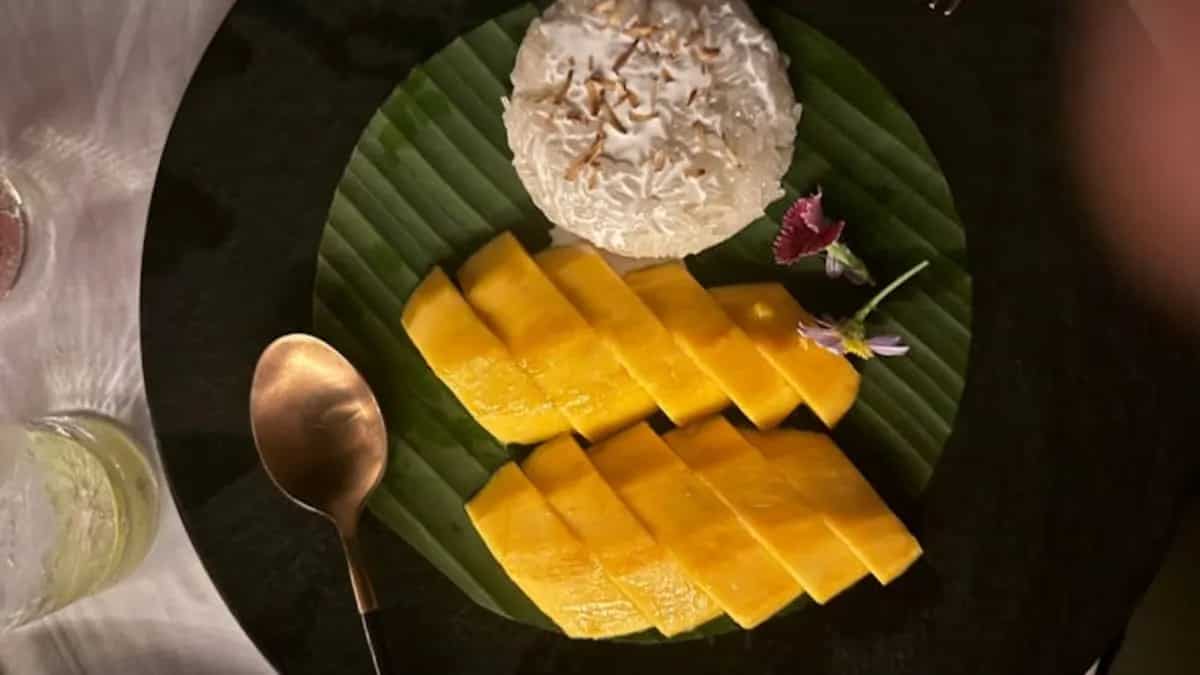
Mango sticky rice has its roots in Thailand, where it is deeply ingrained in the nation's culinary customs. The dish showcases the perfect harmony of local ingredients: sweet, ripe mangoes and sticky glutinous rice cooked in coconut milk. Mango sticky rice is frequently associated with joyous festivals such as Songkran (the Thai New Year) and Loy Krathong (the Festival of Lights). The dish is typically presented on a banana leaf, which adds a touch of natural elegance. The glutinous rice is formed into a mound or shaped into a square and topped with slices or cubes of fresh, ripe mangoes. The dish is then drizzled with a generous amount of coconut milk sauce.
In Thai culture, there is a custom of offering food to monks and spirits. During certain festivals and religious ceremonies, mango sticky rice is often prepared and presented as an offering to show gratitude and seek blessings. This reflects the cultural significance of the dessert as a symbol of abundance, generosity, and reverence for tradition. The dish has become a cult favourite, moving beyond Thailand to other South Asian countries and across borders. It is also known by various monikers depending on how it is prepared or on availability. Nevertheless, whichever type of mango sticky rice you prepare, these variation tips can help you ace it:
Image Credit: Wikimedia Commons
Pulut Mangga
Here, the coconut is deeply ingrained in the rice, in contrast to the Thai khao niew mamuang, where it rests on top and makes a statement. Even before the mango is added, the grains feel nearly pre-seasoned, rich, somewhat salty, and finished. There's a noticeable warmth from palm sugar in Malaysian pulut mangga. It's not always noticeable, but when it is, it adds a richer, nearly caramel-like note that the harsher Thai version typically lacks. Serve the bite-sized mango cubes alongside the coconut sticky rice. Just make the mango and sticky rice the same way you did for the ‘Half Mango’ presentation. Next, cut the mango cubes from the peel with a knife and place them on the platter next to the sticky rice.
Traditional Mango Sticky Rice
The two halves of the mango are then sliced off from the seed after it has been skinned. Next to the sticky rice, one half is sliced diagonally. Crispy mung beans and extra coconut cream are then added to the rice and/or mango. Within Thailand, various regional adaptations of mango sticky rice can be found. In southern Thailand, a variant known as “khao niao durian” features durian fruit alongside mangoes. Use a small dish or cup to shape the sticky rice into a clean oval or dome rather than tossing it. This instantly elevates it to the level of a restaurant.
Xoi Xaoi
Sticky rice, also known as xôi, is handled a little more carefully in Vietnam. Typically, the rice is steamed until it is soft but not excessively creamy, after which it is gently mixed with coconut milk, just enough to add aroma without becoming overly thick. The sweetness is more subdued, allowing the mango to take centre stage. It is frequently served with crushed peanuts, freshly grated coconut, or even sesame seeds for a subtle crunch. The meal has a lighter finish since the coconut sauce is thinner and easier to pour than the heavy Thai version.
Image Credit: Wikimedia Commons
Mango Sticky Rice Sushi Rolls
Roll the sticky rice into a long cylinder and cut it into bite-sized pieces to make the sushi rolls. Cut the two edges of the mango away from the core seed after peeling it. Slice the mango horizontally through the entire fruit while one side is flat. After placing the sticky rice over the mango slice, cut the mango to make it fit. Roll the mango until the sticky rice cylinder is fully covered. Add roasted sesame seeds or crispy mung beans on top. Just push the sticky rice into rectangular shapes to produce nigiri. Next, cut and peel the mango halves to remove the seed. Cut the mango diagonally, then trim it down to fit on the sticky rice. Add crispy mung beans and sweet, salty coconut cream on top before serving.