


 Share
Share

One of the highlights of many tourists' trips to the Caribbean is getting to eat real Puerto Rican cuisine. The cuisine of Puerto Rico is a celebration of flavours that visitors can savour, particularly during one of the various food tours, bringing the vibrant culture to life. Mofongo, tostones, pasteles, arroz con gandules, tembleque, and coquito are a few of the most popular dishes. Indigenous Taíno people, Spanish colonists, African slaves, and the produce grown on the Caribbean island all contributed to the characteristics of Puerto Rican cuisine. A lot of Puerto Rican food is defined by anato and sofrito, while adobo seasoning is a mainstay. Along with rice and plantains, pique is another condiment that is used on a daily basis. Naturally, the people who create the food, from famous chefs to grandmothers, are what set it apart.
One's relationship to different ethnic foods, family, and regions can be naturally shaped and strengthened by learning more about each of these influences. The native Taíno cuisine and the West African dishes of the enslaved inhabitants who were already on the island were layered with the influence of Spanish cooking techniques and delicacies brought to the island during colonisation in the early 1500s. Served with a variety of accompaniments, such as fish, chicken, or vegetables, and frequently accompanied by a broth or sauce, mofongo has become a staple dish.
The ‘mangú’ from the Dominican Republic is made with boiling green plantains rather than fried ones. As a representation of the Caribbean cuisine's blending of African, Indigenous, and Spanish elements, mofongo has grown to be a beloved component of these areas' cultural and culinary legacy. But how did it become what it is today? Let’s dig in.
A Brief History Of Mofongo
Mofongo is thought to have originated from Africans who were brought to the Caribbean as slaves during the colonial era. The main ingredient in the recipe is fried green plantains that have been mashed into a ball or mound with salt, garlic, and usually bacon or pork cracklings. The Congo region of Africa is believed to be the source of its name. The precise etymology has not yet been confirmed, though. Originally, yuca, or cassava, was used in place of plantains. However, plantains became the main ingredient as they proliferated throughout the Caribbean.
Before Christopher Columbus arrived in the Caribbean in 1492, the civilisation was thriving. The Taíno were soon invaded by Spanish colonists and forced into slavery to work on plantations and in gold mines. The Spanish brought enslaved West Africans to the island to replace their declining labour force since so many Taíno perished under colonial authority.
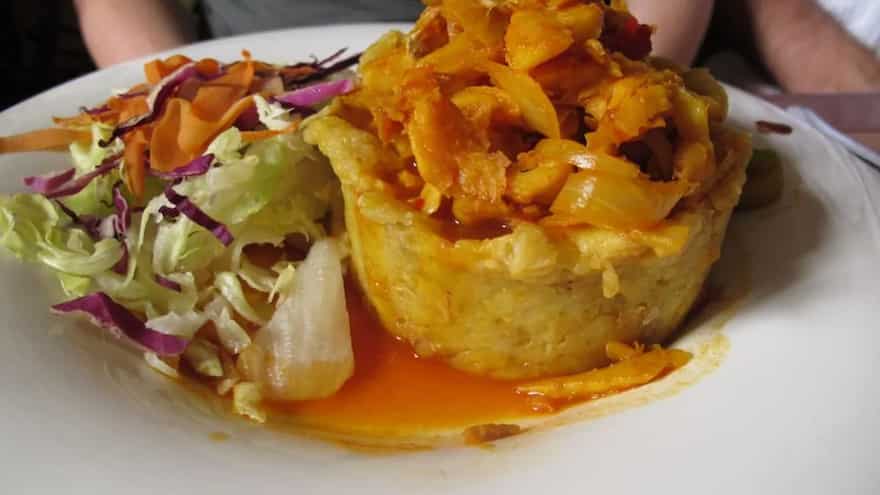
Image Credit: Flickr
Cooks in West Africa have traditionally made fufu, a boiled and mashed meal made from plantains, yams, or cassava. The same method was introduced to Puerto Rico by Africans who were held as slaves. Additionally, they brought plantains, which grew well on the island and became the primary food supply for the impoverished and slaves who returned to Indiana from Puerto Rico. Although they are closely related to bananas, plantains are not sweet when they are green and unripe. Instead, they can be used as a neutral starch, much like potatoes. African chefs gradually added European ingredients like chicharrón, oil, and garlic to plantain-based fufu to give it taste and moisture. In Eating Puerto Rico: A History of Culinary, Culture, and Identity, the late culinary historian Cruz Miguel Ortíz Cuadra stated that the name ‘mofongo’ is derived from the Angolan Kikongo word “mfwenge-mfwenge,” which translates to "a great amount of anything at all."
Making Mofongo For The Modern World
In recent years, mofongo has experienced some spinoffs, like any other famous cuisine. Innovative chefs in the mainland and Puerto Rico are experimenting with their own versions of garlicky mashed plantains. After being mashed, yuca and plantains become rather dry, so the cook must add liquid and fat to keep them wet. You won't be able to even swallow it if you don't put fat or some sort of liquid. While chicharrón was traditionally used to add moisture, many contemporary mofongos, such as trifongo, are soaked with broth and olive oil. Add fat gradually and taste to determine whether the texture is to your satisfaction in order to avoid going overboard.
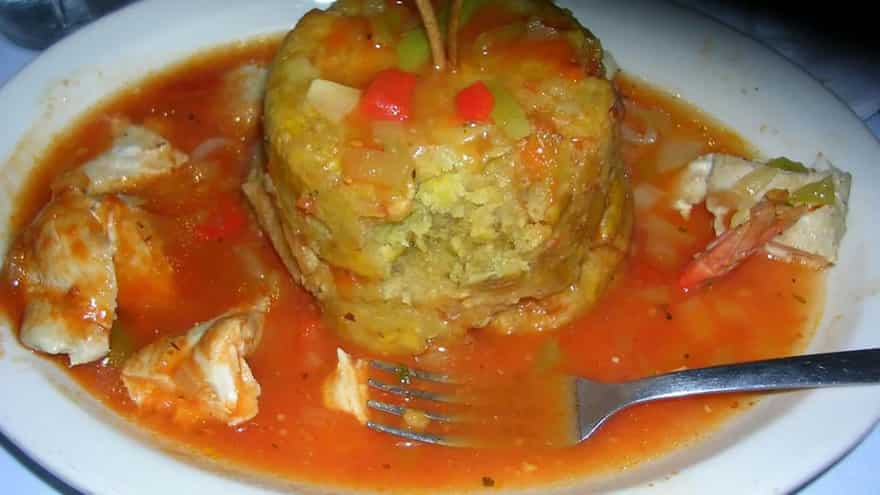
Image Credit Wikimedia Commons
The result should be a mash with lots of crunchy bits rather than a puree. Because starches become considerably more difficult to work with as they cool. Many recipes suggest smashing them while they're still hot from cooking. If you don’t have a mortar and pestle, you can put the starches in a stainless steel bowl, cover them with a kitchen towel, and pound them with a mallet. Placing them in a plastic bag and smashing them with the flat bottom of a cup or a pan can work, too.
And lastly, yuca and green plantain are pretty bland, so salt, garlic, and other seasonings seal the taste. It should taste very garlicky. It has a similar flavour to stuffing or dressing, particularly when paired with meats or broth. In a familiar yet very unique way, the savoury, somewhat smoky, garlicky flavour profile is comforting.




