


 Share
Share

For Mumbai’s Koli community, Narali Purnima 2026 is not just another festival, but it is closely tied to the sea, fishing and livelihood. In 2026, Narali Purnima will be celebrated on August 28, which falls on the full moon day of the month. The festival traditionally marks the time when the monsoon fishing break comes to an end, and the community prepare themselves to return to the sea.
Coconuts are central to the festival and offered to Varuna, the god linked with the waters, as families ask for protection and a safe, successful fishing season. On this day, coconut-based dishes are prepared specifically. For the Kolis, the sea is not just part of the geography; it is part of their everyday life.
Why Is Narali Purnima Important To The Koli Community?
The importance of Narali Purnima becomes more obvious when viewed through the fishing calendar. During the monsoon, wild seas make fishing difficult, and a seasonal fishing ban also allows fish populations to reproduce and regenerate. This period also gives fishing families time to repair boats, mend the nets and prepare for the season that lies ahead. Narali Purnima marks the transition back to fishing.
The National Fisheries Development Board has also described the festival as marking the end of the monsoon season, when fishing communities traditionally resume fishing.
Why Is Coconut Central To Narali Purnima?
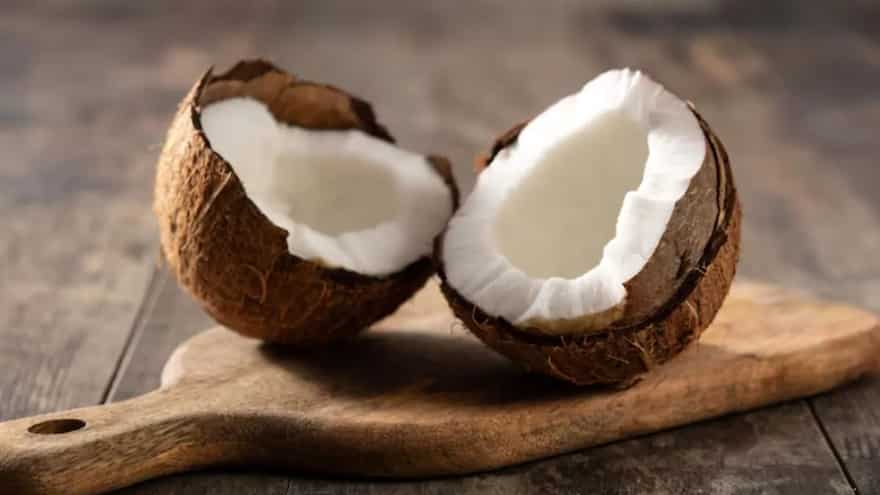
The name itself gives away the festival's representative ingredient: naral, which means coconut, whereas Purnima refers to the full moon night. Coconut serves as both a ritual offering and an essential part of the food that is prepared at home.
For Koli households, the coconut is especially relevant as it is deeply associated with coastal food habits. During the festival, coconuts are offered to the sea after prayers to Varuna, whereas households use coconuts in festive preparations and the offerings.
(Credit: Freepik)
What Do Koli Families Eat On Narali Purnima?
Food is where the festival's association with coconut becomes particularly visible. While recipes may vary from household to household, the common thread is the use of fresh coconut and simple ingredients that fit the coastal Maharashtrian kitchen. Here are some of the dishes that are prepared on the day of Narali Purnima 2026:
Narali Bhaat
Narali bhaat is possibly the dish most closely linked with the festival. Rice is cooked with freshly grated coconut and sugar or jaggery as per preference, giving it a light sweetness rather than making the dessert heavy. Cardamom, saffron, cloves or raisins are also added depending on the family recipe.
The rice is usually cooked so that the grains remain separated while soaking the coconut and sweetener. Its use of coconut also directly mirrors the festival's name and ritual connection naturally.
Narali Karanji
Narali karanji brings coconut into one of the best-known festive sweets of Maharashtra. Karanji, or gujiya, is generally made from a thin dough made prepared from all-purpose flour or semolina and is rolled out and filled with a mixture made of grated coconut, sugar or jaggery, cardamom and sometimes poppy seeds or nuts, depending on the choice. The edges are then sealed perfectly into the classic crescent shape and fried until crisp and golden.
Unlike the soft texture of narali bhaat, karanji has a contrast of crunchy pastry and soft coconut filling. It is often made in batches, making it suitable for sharing during family gatherings.
Coconut Ladoo
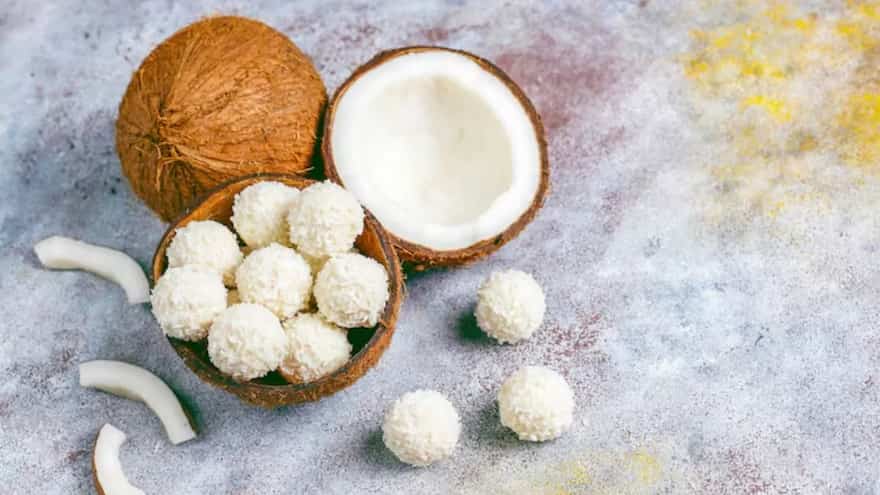
Easy to make but with a festive vibe in each bite, coconut ladoos are another way fresh coconut becomes part of the Narali Purnima spread. Grated coconut is cooked gently with some sugar or jaggery until the mixture turns thick and sticks together.
Adding cardamom gives it fragrance, whereas milk or condensed milk gives the ladoos a softer texture. The mixture is cooled down a bit before being shaped into small round ladoos. Their small size makes them easy to use as a bhog or festive sweet.
(Credit: Freepik)
Kayi Holige (Coconut Puran Poli)
Kayi holige, or coconut pooran poli, is made by stuffing the wheat paratha with freshly grated coconut, jaggery and cardamom. The coconut-jaggery filling is cooked until the mixture turns thick, then filled into the dough and gently cooked on a tawa until it turns golden on both sides.
Unlike other versions of Maharashtrian puran poli, which traditionally uses a lentil-based filling, kayi holige gets its special texture and flavour from the use of coconut.
Malvani Seafood
A classic of Maharashtra’s Konkan coast, Malvani seafood makes the most of fresh local fish catch, coconut and a strong spice blend. Fish like pomfret, surmai or mackerel are cooked in a thick coconut-based curry that is flavoured with dried red chillies, coriander, cumin and other spices, whereas kokum or tamarind often adds a sharp sour note to this.
The outcome is a curry that perfectly balances heat, tang and the natural taste of the fish, and is generally enjoyed with steamed rice.




