


 Share
Share

Few Hindu festivals combine the same level of devotion, colour, music, and childlike mischief as well as Janmashtami. Celebrated as the iconic birthday of Lord Krishna, the festival brings together temple rituals, fasting, bhajans, midnight prayers, decorated swings (jhulan), and elaborate bhog or food offerings. In Mathura and Vrindavan, where Krishna's story is deeply woven into their cultural and historic landscape, the celebrations become particularly elaborate and mesmerising.
In 2026, Krishna Janmashtami will be observed on Friday, 4 September across much of India. However, the exact ritual timings may vary by location and tradition. For example, local Panchang gives the Nishita period in Delhi as 11:57 pm on 4 September to 12:43 am on 5 September, while Kolkata's corresponding window is earlier. So, be sure to consult the local Panchang or temples for precision.
Why A Cake Can Find A Place At A Janmashtami Celebration
A cake is certainly not a compulsory part of Janmashtami rituals, nor does every Hindu household consider it suitable as a religious offering. Traditional bhog varies widely and commonly includes milk-based sweets, makhan mishri, kheer, peda, taler bora, and other preparations associated with Krishna's childhood as well as regional customs. But contemporary birthday trends in India tend to lean towards the cake-cutting tradition nowadays. So, if your family enjoys marking birthdays with cake, there is no reason the celebration cake has to look like an ordinary chocolate sponge. Make it appropriate and relevant for the festivity.
A homemade Janmashtami cake can take its visual cues from Krishna's world and perspective as a child, from his favourite foods such as butter, milk, and fruits, to peacock feathers and the hues of Vrindavan. The recipes below are celebration cakes inspired by Janmashtami and the essence of the festival, rather than any hyperbolic claims about traditional religious offerings.
Perfect Janmashtami Cake Ideas For 2026
Makhan Mishri Vanilla Cake
If there is one flavour combination that immediately evokes Krishna's mischievous childhood, it is makhan and mishri. This cake takes that familiar pairing and turns it into a soft, celebratory dessert.
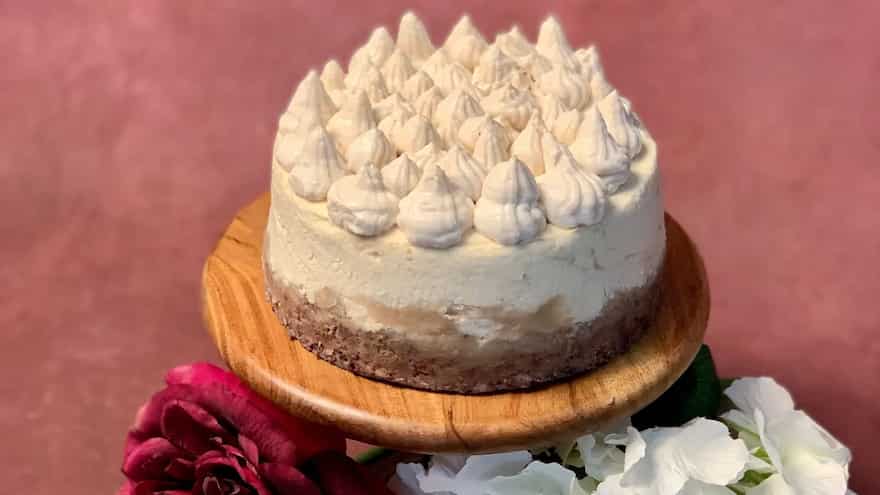
Image credit: Pexels
Ingredients (Serves 8 to 10)
- 180g plain flour
- 1½ tsp baking powder
- ½ tsp baking soda
- 120g caster sugar
- 100g unsalted butter, softened
- ½ cup thick yoghurt (instead of eggs)
- 100ml milk
- 1 tsp vanilla extract
- 2 tbsp powdered mishri
For the frosting
- 200g cream cheese
- 100ml whipping cream
- 2 tbsp icing sugar
- 2 tbsp unsalted butter
- 2 tbsp finely crushed mishri
- 1 tsp vanilla extract
Method
- Preheat your oven to 180°C and grease a 20cm round cake tin.
- Now, sift together flour, baking powder and baking soda.
- Then beat butter and sugar until pale and fluffy.
- Now, add your yoghurt, followed by vanilla.
- Time to fold in your dry ingredients alternately with milk. Then stir in the powdered mishri.
- Pour into the tin and bake for 30–35 minutes, or until a skewer comes out clean.
- Now, cool completely.
- For the frosting, beat cream cheese, butter, icing sugar, and vanilla until smooth. Also, whip the cream separately and fold it into this mix.
- Finally, spread over the cooled cake and scatter crushed mishri on top. For decoration, use tiny edible buttercream swirls rather than actual butter or dairy decorations, as they may become unstable at room temperature.
Also read: Janmashtami 2026: Date, Time, Significance, And Traditional Dishes
Peda-Stuffed Saffron Cake
This is perhaps the most playful way to bring a traditional Janmashtami mithai into a cake without simply decorating a sponge with multiple pedas. A soft saffron sponge surrounds a creamy peda filling, giving every slice a little surprise.
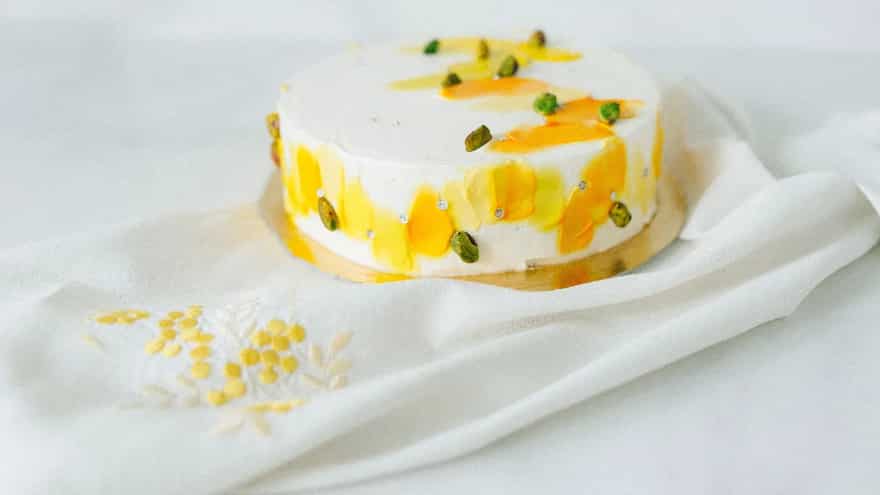
Image credit: Pexels
Ingredients (Serves 8 to 10)
- 180g plain flour
- 1½ tsp baking powder
- ½ tsp baking soda
- 100g unsalted butter, softened
- 120g caster sugar
- ½ cup yoghurt (instead of eggs)
- 100ml whole milk
- ½ tsp saffron strands
- ½ tsp cardamom powder
- 1 tsp vanilla extract
For the filling
- 200g soft peda, crumbled
- 2 tbsp thick cream
- 1 tbsp chopped pistachios
- ¼ tsp cardamom powder
For decoration
- 150ml whipping cream
- 1 tbsp icing sugar
- Pistachios
- A few saffron strands
Method
- First, soak your saffron in two tablespoons of warm milk for 10 minutes.
- Preheat the oven to 180°C and line a 20cm round cake tin.
- Now, cream your butter and sugar until light and fluffy.
- Then beat in your yoghurt, followed by vanilla and saffron milk.
- Time to fold in the flour, baking soda, baking powder, and cardamom, alternating with the remaining milk.
- Now, bake for 30–35 minutes and cool completely.
- In the meantime, mix your crumbled peda with cream, pistachios, and cardamom until spreadable.
- Then slice the cake horizontally into two layers and spread the peda mixture between them.
- Whip your cream with icing sugar and cover the cake lightly.
- Finally, finish with pistachios and saffron.
Mango Yoghurt Flute Cake
Krishna celebrations do not need to be restricted to heavy milk sweets or rich desserts only. A simple, end-of-season mango and yoghurt cake offers something lighter, fruitier and colourful, particularly if children are involved in the celebration. Plus, if you use a long or rectangular cake tin for getting the flute-like shape, then multiple cakes can be made and customised for children and adults, accordingly.
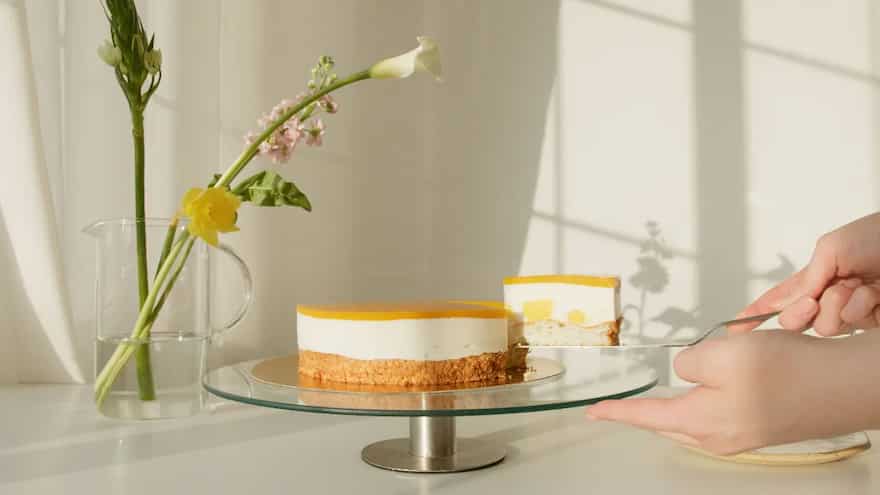
Image credit: Pexels
Ingredients (Serves 8)
- 180g plain flour
- 1½ tsp baking powder
- ½ tsp baking soda
- 100g sugar
- 100ml plain yoghurt
- 80ml vegetable oil
- ½ cup extra yoghurt (instead of eggs)
- 1 tsp vanilla
- 120g mango purée
- ¼ tsp cardamom
For decoration
- 150ml whipping cream
- 2 tbsp icing sugar
- 100g diced ripe mango
- 1 tbsp chopped pistachios
Method
- Heat your oven to 180°C and line a 20cm cake tin (size and shape is your call).
- Now whisk yoghurt, oil, sugar, and vanilla.
- Then add mango purée and cardamom.
- Fold them through the flour, baking soda, and baking powder.
- Once well-combined, bake for about 30 minutes.
- It is crucial to cool completely.
- Finally, whip up some cream with icing sugar and spread it over your cake.
- Arrange mango cubes and pistachios over the top to resemble a delicious mango-themed flute cake.
- For a special Krishna-inspired finish, you can arrange your mangoes and pista garnishes accordingly, while placing a small, edible flute-shaped chocolate decoration right in the centre.
Also read: Janmashtami 2024: Chefs Share Traditional Gur-Based Dessert Recipes You Must Try
Blueberry, Coconut And Cardamom Krishna Cake
Blue does not need to mean artificial food colouring. A blueberry-based cake gives you a naturally dramatic purple-blue appearance, while coconut and cardamom bring a gentle desi aroma and sweetness. Plus, a few fresh blueberries and a small edible peacock feather-inspired decoration can give this cake its Krishna connection without making it appear over the top.
Ingredients (Serves 8)
- 180g plain flour
- 1½ tsp baking powder
- ½ tsp baking soda
- 100g caster sugar
- 100g softened butter
- ½ cup yoghurt (instead of eggs)
- 100ml coconut milk
- ½ tsp ground cardamom
- 100g fresh or frozen blueberries
- 1 tsp vanilla extract
For the topping
- 150ml whipping cream
- 2 tbsp icing sugar
- ½ tsp cardamom
- 75g blueberries
- 2 tbsp toasted coconut
Method
- Heat your oven to 180°C and line a 20cm cake tin.
- Then cream butter and sugar together, until light.
- Now, beat in your yoghurt and vanilla.
- Fold in the flour, baking soda and baking powder, alternating with coconut milk.
- Time to add cardamom and gently fold through your blueberries.
- Now, bake for 30–35 minutes.
- Then cool the cake completely before decorating.
- In the meantime, whip your cream with icing sugar and cardamom.
- Finally, spread over your cake and finish with blueberries and toasted coconut.
Fig, Walnut And Honey Janmashtami Cake
Dried fruits and nuts have been natural companions to Indian festive sweets for a long time, so this cake can bring a slightly more grown-up character to the celebration. It is dense, fragrant and particularly good with a cup of chai after the midnight festivities.
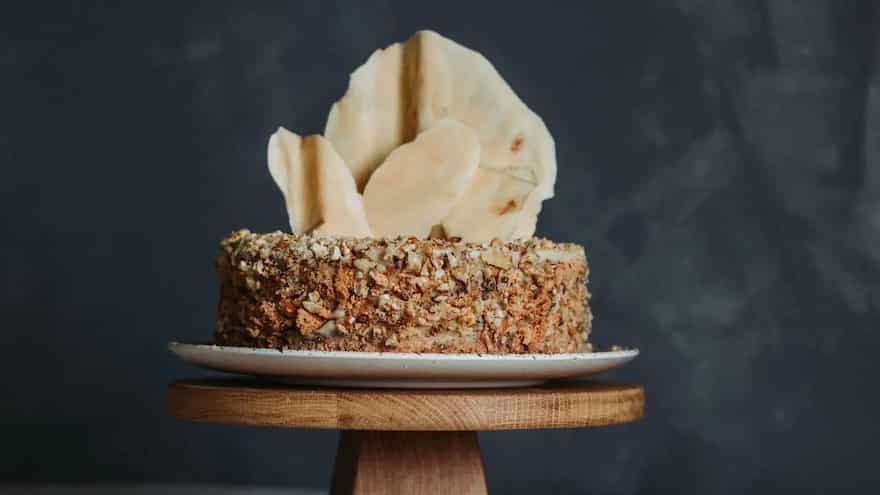
Image credit: Pexels
Ingredients (Serves 8)
- 180g plain flour
- 1½ tsp baking powder
- ½ tsp baking soda
- 100g unsalted butter
- 100g honey
- ½ cup yoghurt (instead of eggs)
- 100ml milk
- 100g dried figs, finely chopped
- 50g walnuts, chopped
- ½ tsp cinnamon
- ½ tsp cardamom
- 1 tsp vanilla
For decoration
- 2 tbsp honey
- 30g chopped walnuts
- 2 dried figs, thinly sliced
- A few pistachios
Method
- Soak your chopped figs in warm milk for 10 minutes.
- Now, preheat your oven to 180°C and line a 20cm cake tin.
- Then beat butter and honey together until smooth.
- Add in your yoghurt and vanilla.
- Then fold in the flour, baking soda, baking powder, cinnamon, and cardamom. Combine all the ingredients properly.
- Time to add the soaked figs, milk, and walnuts.
- Now, bake for approximately 35–40 minutes.
- Then cool the cake completely.
- Finally, brush the cake top lightly with honey and decorate with figs, walnuts, and pistachios.
A Better Way To Think About The Janmashtami Cake
Always remember, your Janmashtami cake does not need to pretend to be a traditional bhog component. It can simply take inspiration from the flavours, colours, and stories surrounding Lord Krishna. Since Janmashtami food traditions are wonderfully diverse, instead of making every cake artificially coloured or buying ready-made ones from the store, you can work with simple Indian mithai and dessert ingredients, along with seasonal produce. Automatically, the connection between the cake and the occasion becomes more nuanced and thoughtful, and the resulting dessert is far more interesting to eat and savour together.




