


 Share
Share

There are a few Indian festivals where midnight is as important as daytime, and Janmashtami is one of them. On Janmashtami, homes are quiet but expectant, temples glow with lamps, bhajans continue late into the night, and somewhere, a tiny idol of Krishna is waiting to be dressed, bathed and placed in a decorated cradle, for it is his birthday. When midnight strikes, the hour devotees believe to be the birth of Lord Krishna, the momentous occasion is followed by prayers, aarti and an offering of lovingly prepared bhog.
But Janmashtami is not simply about waiting for the clock to strike twelve. Across India, the festival brings together devotion, music, fasting, temple rituals, and an extraordinary variety of food. The connection with food is particularly strong because so many stories of Krishna's childhood revolve around milk, curd, butter, and other dairy preparations as well as his incredible fondness for them. The familiar image of Krishna as Makhan Chor, aka the mischievous butter thief, is one reason why makhan mishri remains among the most recognisable Janmashtami offerings.
Janmashtami 2026: Date And Time
In 2026, Krishna Janmashtami will be observed on Friday, 4 September. The Nishita Puja window falls around 11:13 pm to 11:59 pm on 4 September. The Ashtami tithi begins at 2:25 am on 4 September and ends at 12:13 am on 5 September, while Rohini nakshatra runs from 12:29 am to 11:04 pm on 4 September. The timings can vary according to location and tradition, so devotees should check their local Panchang for precise vrat and puja timings.
Why Is Janmashtami Celebrated?
Janmashtami commemorates the birth of Lord Krishna, who is traditionally believed to have been born to the imprisoned Devaki and Vasudeva. Krishna was born in Mathura at midnight on the eighth day, or Ashtami, of the dark fortnight of Bhadrapada. But to save Krishna’s life, after a divine intervention cleared the path, Vasudeva took his son to Vrindavan to be brought up by Yashoda and her husband, as their adopted son.
Krishna would grow up to be a very mischievous boy and a wise warrior who fulfilled his birth destiny and killed his own tyrannical uncle Kamsa, before continuing to aid humanity till his last breath. Janmashtami is observed all over India, with Mathura and Vrindavan remaining especially significant because of their association with Krishna's life and childhood.
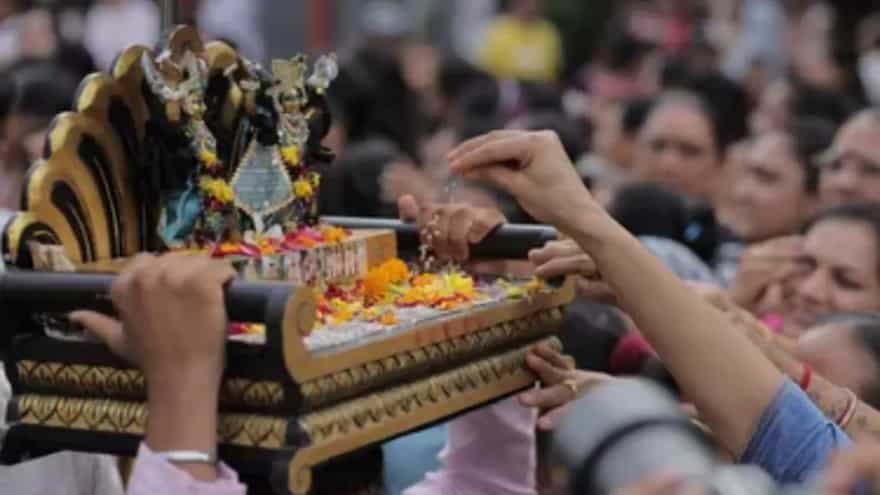
Image credit: Pexels
The celebrations can look very different depending on where you are located. In Mathura and Vrindavan, temples become the focus of elaborate devotional programmes, kirtans and midnight ceremonies. Elsewhere, families may create a small jhula for Bal Gopal, decorate the puja space, draw tiny footprints leading towards the altar and prepare traditional offerings at home.
What Happens At Midnight On Janmashtami?
For many devotees, the midnight birth ceremony is the emotional locus of Janmashtami. The deity is often bathed in an abhishek ceremony, dressed in fresh clothes and placed in a cradle, while conch shells, bells, devotional songs and aarti accompany the celebration. Fasting is also an important part of the observance for many devotees. The precise rules differ according to sampradaya and household traditions, but grain-free fasting foods are commonly chosen. Some traditions break the fast after the midnight celebration, while others follow specific tithi and nakshatra-based parana rules. That is where the festive food becomes particularly interesting.
Traditional Janmashtami Foods
Makhan Mishri: The Most Krishna-Like Offering
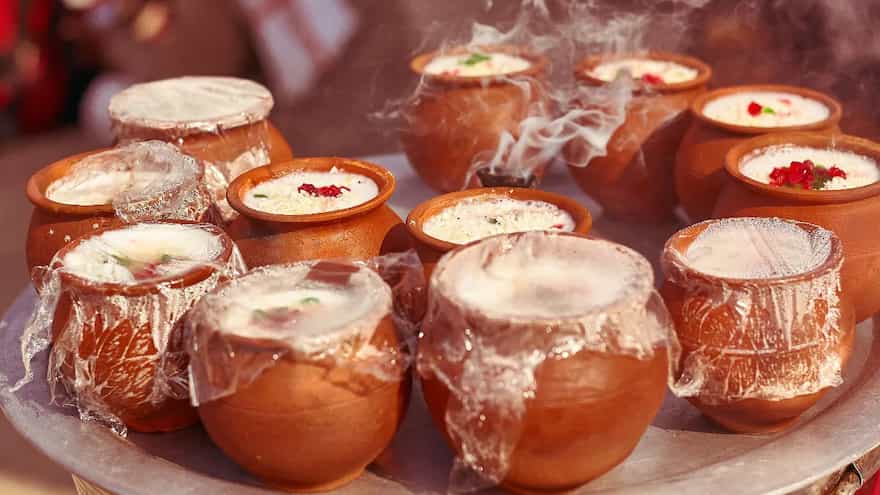
Image credit: Pexels
It is difficult to think of a more straightforward Janmashtami offering than makhan mishri. Fresh white butter is combined with crystalline mishri or rock sugar and offered as bhog before being distributed as prasad. The preparation itself is wonderfully simple: soft butter, mishri and, perhaps, a few nuts or fragrant additions, depending on household tradition. It is also a dish that captures the playful side of the festival. There is something wonderfully childlike about eating butter and sugar crystals straight from a bowl. Also, this is the right time to realise that Krishna was not wrong in choosing this as his absolute favourite during childhood.
Dhaniya Panjiri: The Fasting-Friendly Favourite
If there is one Janmashtami preparation worth making at home, it is dhaniya panjiri. Unlike regular panjiri, which is usually made with wheat flour, dhaniya panjiri uses roasted coriander seeds ground into a powder. This makes it particularly suitable for many Janmashtami fasting traditions where grains and cereals are avoided. The preparation is then enriched with ghee, sugar, makhana, nuts, melon seeds, and cardamom. The resultant texture is crumbly and nutty, while roasted coriander gives it a distinctively warm and slightly citrusy aroma. It is also the sort of prasad that travels easily from a temple or family kitchen into small servings for everyone to partake in.
Sabudana Khichdi: The Savoury Side
Janmashtami food does not necessarily have to mean an endless parade of sweets. Sabudana khichdi is a very popular and familiar fasting preparation made with soaked tapioca pearls, peanuts, green chilli, ghee, and sendha namak. The khichdi is soft, lightly chewy, and nutty, with the roasted peanuts providing a delightful crunch. This is highly useful for those observing a long vrat because it feels like a proper meal rather than a mere collection of snacks.
Makhana Kheer And Panchamrit
Milk-based offerings have a natural place in Janmashtami celebrations, based on Krishna’s immediate surroundings and family lifestyle. For example, makhana kheer combines roasted foxnuts with milk, sugar and nuts, while cardamom and saffron add more flavour and fragrance. Slow cooking allows the milk to become creamy while the makhana softens without disappearing completely. An easy kheer without breaking any vrat rules. Then there is the panchamrit, the traditional mixture of milk, yoghurt, ghee, honey, and sugar, often accompanied by tulsi. It has much deeper ritual significance beyond being just another sweet drink and is closely associated with Janmashtami traditions.
How Janmashtami Is Celebrated Across The Country
A Bengali Janmashtami Has Its Own Sweet Personality
For Bengali households, Janmashtami carries a distinctly seasonal flavour in terms of bhog and traditional dishes. One of the most anticipated preparations remains taler bora, made from the pulp of ripe palmyra fruit. The seasonal fruit is combined with ingredients such as rice flour, jaggery or sugar, and coconut before being shaped and fried into delectable fritters. Its crisp exterior and soft, fragrant centre make it particularly memorable for all.
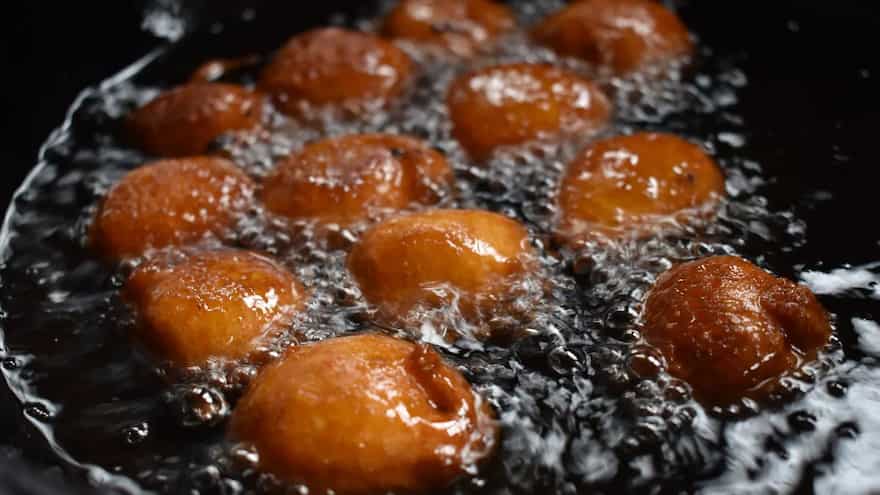
Image credit: Pexels
The timing of tal is part of its charm. Palmyra fruit becomes available around the monsoon, making taaler bora intrinsically linked with the middle and end of the season. Another Bengali preparation closely associated with Krishna bhog is mohon bhog, a fragrant semolina halwa made with ghee, sugar, as well as saffron and nuts. The dish itself is connected to lord Krishna, Mohan being one of his many names. Another nostalgic yet iconic seasonal Bengali interpretation is taler payesh, essentially made from palmyra pulp, milk, and sweeteners.
Maharashtrian Gopalkala And The Spirit Of Simplicity
In Maharashtra and parts of western India, Gopalkala brings together ingredients such as beaten rice, cucumber, coconut, curd, spices, and other simple additions. It is closely associated with Krishna's pastoral childhood and is traditionally prepared around Janmashtami. The dish is humble rather than elaborate, which is precisely why it feels so fitting. Janmashtami food traditions are not uniformly about expensive ingredients or elaborate cooking. In fact, simple ingredients prepared with devotion and honesty are considered perfectly suitable and meaningful offerings.
From Mathura Peda To Chappan Bhog
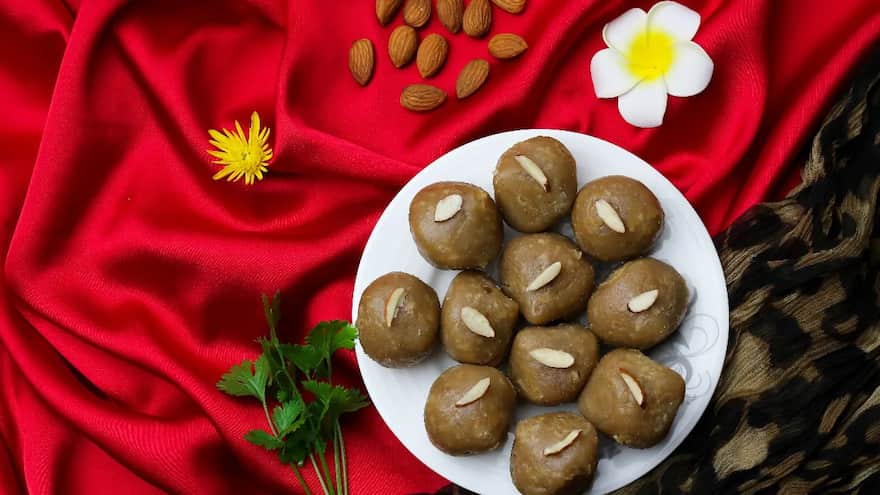
Image credit: Pexels
Regional variety is perhaps the most fascinating bit about Janmashtami food. For instance, in the Braj region, Mathura peda is an obvious favourite. Across other parts of India, the festive table may include malpua, shrikhand, makhane ki kheer, sabudana preparations, rava laddoo, churma, tal er bora, and other vegetarian or fasting-friendly dishes. However, some traditions also speak of Chappan Bhog, or an offering of 56 preparations. The popular story connects the number of preparations with the legendary story of Lord Krishna and the Govardhan mountain, although specific bhog traditions can vary between temples as well as communities. Perhaps that is the best way to approach Janmashtami food this year, not as a fixed menu, but as a collection of regional traditions shaped by devotion, seasonality and family memory.




