


 Share
Share

Sliced apples turning brown may be a normal appearance, but to many, they just look old, distasteful, and a little sad. You slice them with love for the tiffin box, a fruit bowl, or for the evening snack, only to find they turn dull and brown by the time you reach for them. And once they lose that fresh, crisp look, most people - especially kids - are likely to be put off by the colour, no matter how sweet they taste. But what if we told you, you don't have to rush through the process of eating them or avoid the pre-cutting altogether.
With a few smart, clever kitchen tricks, you can keep the apple slices looking fresh, as if just cut, white, and appealing. These simple tricks help you pack apples for lunchbox, parties, or even for snacking later in the day without thinking much about that unattractive brown hue.
Why Do Apples Turn Brown?
Apples turn brown due to a natural process called oxidation. When the apple is cut or a bite is taken of it, its cells break and expose an enzyme (polyphenol oxidase) to oxygen. This reaction causes the flesh to darken, but it does not mean the apple has gone bad immediately after cutting it.
Lemon Water Dip
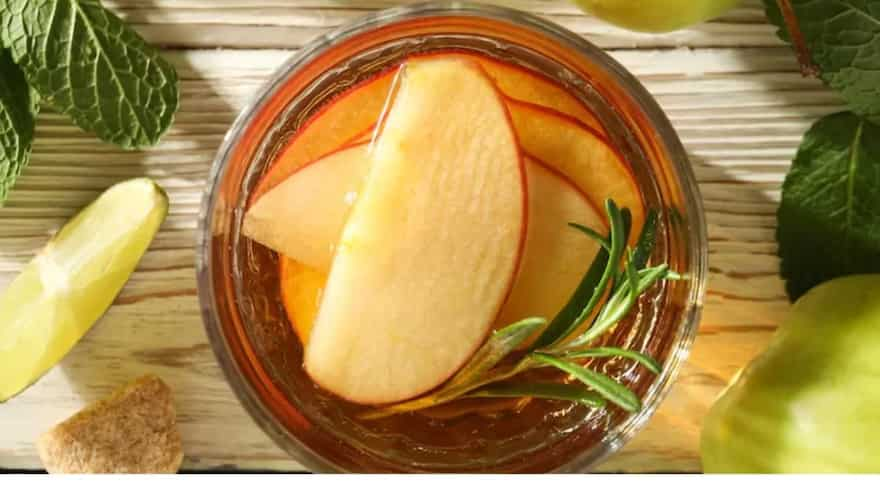
The moment apples are cut and sliced, their uncovered surface reacts with oxygen and begins browning. An easy way to prevent this is a quick lemon-water dip. Mix 1 to 2 tablespoons of lemon juice in a cup of water at room temperature and dip the apple slices for a minute. The mild acidity and vitamin C slow down the oxidation without making the apple taste too sour. Pat them dry and put them in a container immediately. This technique works particularly well for tiffin boxes and office snacks, where you want apples to appear freshly cut even after a few hours.
(Image Credit: Freepik)
Honey Water Soak
If you are not a fan of the tang of lemon, honey can be your rescue. Stir 1 tablespoon of honey into 1 cup of water and soak the apple slices for a couple of minutes. Honey has combinations that slow down the browning enzymes, while also delivering a mild sweetness. This method is perfect when you want to serve them on fruit platters, overnight snack boxes, or party bowls where the appearance matters. The apples remain light in colour, taste a little sweeter, and also don't appear as 'treated' like lemon-soaked slices sometimes can.
Salt Water Rinse
Adding a tiny pinch of salt can go a long way in preserving apples from turning brown. Mix just about 1/4 tablespoon of salt in a cup of cold water and dip the slices for about 1 to 2 minutes. Hereafter, rinse them quickly in plain water so that they do not taste too salty. The mild saline solution slows down the browning reaction without changing flavour if performed correctly. This hack works great for lunchboxes or even as travel snacks when you do not have lemons or honey, but still want the apples to look visually appealing, not dull and brown.
(Image Credit: Freepik)
Airtight Storage With A Moist Barrier
Sometimes it's not only chemistry, but the exposure to air ruins the apple slices. After cutting, place them in an airtight box and cover with a slightly wet paper towel before sealing. The moisture wall and limited air circulation lower oxidation and drying, keeping the slices crispy and fresh-looking for a longer duration. This technique works fine if you have prepped apples one night before for smoothies, oats, or tiffin boxes. You wake up to apple slices that look presentable, not dull and brown around the edges.
Cut Just Before Eating
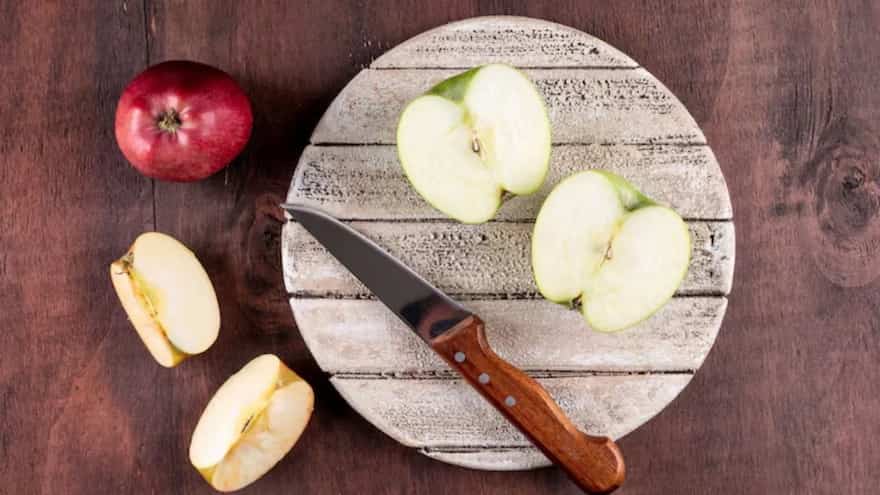
If you do not want to indulge in the process of any dips or soaks, smart prep is your best friend. Carry the whole apples and a small knife or slicer wherever possible, and simply cut them right before you want to eat them. At home, you can just pre-wash apples, keep them in the fridge, and cut them in the end while packing lunch or plating for breakfast. Minimising the time between cutting and eating naturally reduces the browning of the apple surface.
(Image Credit: Freepik)




