


 Share
Share

Food museums throughout the world are seriously underappreciated. They are about storytelling, not merely perusing old cutlery or reading lengthy boards. Tales of how people developed entire cultures based on what was available to them, including how they ate, cooked, farmed, and preserved food. These places, which range from museums of cheese and chocolate in Europe to museums of kimchi, ramen, and fermentation in East Asia, demonstrate the connections between food and tradition, science, history, and even emotions. When you visit a food museum, you might frequently feel as though you are wandering through someone's kitchen over the ages, discovering the significance of certain flavours and how food has influenced daily life. India fits into this global food-museum story in its own quiet but powerful way. With such deep agricultural roots and diverse regional cuisines, it’s slowly beginning to document food beyond recipes — and one beautiful example is the Beecraft Honey Museum in Kerala.
Located in Wayanad, this museum is all about bees, honey, and the ecosystem around them, explained in a very easy, hands-on way. It shows how honey is made, why bees are so important to farming and biodiversity, and how local communities depend on beekeeping. This is the largest honey museum in Asia, with guides who are very informed, and the museum is well-organised. There are many fascinating exhibits at the museum. There are dozens of different types of honey. Visitors are urged to taste honey before making a purchase. Among the delectable varieties of honey offered here are raw honey, forest honey, Sidr, Tulsi, Jamun, Lychee, Ginger, and Garlic honey. There is also putt honey, which is collected from underground hives or from tree trunks.
The Creation Of The Beecraft Honey Museum
With assistance from the Kerala government, businessman Usman Madari founded the BeeCraft Honey Museum. You would all have eaten honey on a regular or seldom basis. Few of you would have known how the honey was made, bottled, and delivered to your tables. Wayanad has a lot to offer in terms of flora and wildlife because it is one of the world's most naturally endowed regions. Perhaps it's museums that focus on natural ingredients like tea and honey that are a continuation of that.
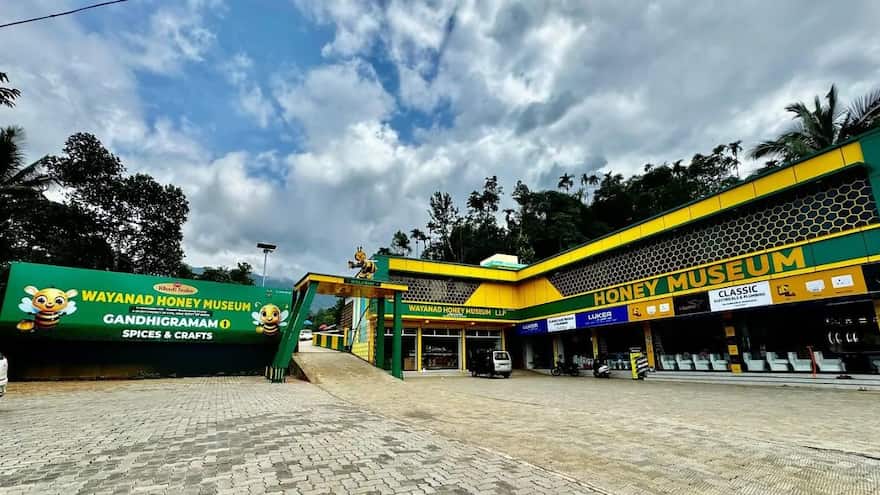
Image Credit: Wikimedia
You get the delightful chance to visit the BeeCraft Honey Museum while you’re in Kerala, and it is a must-do. The Honey Museum provides an interactive excursion into the fascinating world of honeybees and honey production amid the verdant surroundings of Vythiri. Building on the rich history of beekeeping in the area, it is the second honey museum in the world and the first in India.
The Beecraft museum's mission is to educate people about honeybees, beekeeping, and the production of honey. The museum, which is funded by the Khadi Board and government initiatives, emphasises the significance of bees for the environment and the need to preserve them. It is still almost a new kid on the block, having only launched in January 2021. However, its straightforward and captivating method of disseminating knowledge has already generated a lot of excitement and makes it a fun museum for both adults and children.
What You Will Learn Inside The Honey Museum
90% of wild plants and 75% of the world's most important crops rely on animal pollination, according to the Honey Museum. Pollinators like bees are responsible for one out of every three mouthfuls of your food. Pollination-dependent crops are five times more valuable than non-pollination-dependent ones.
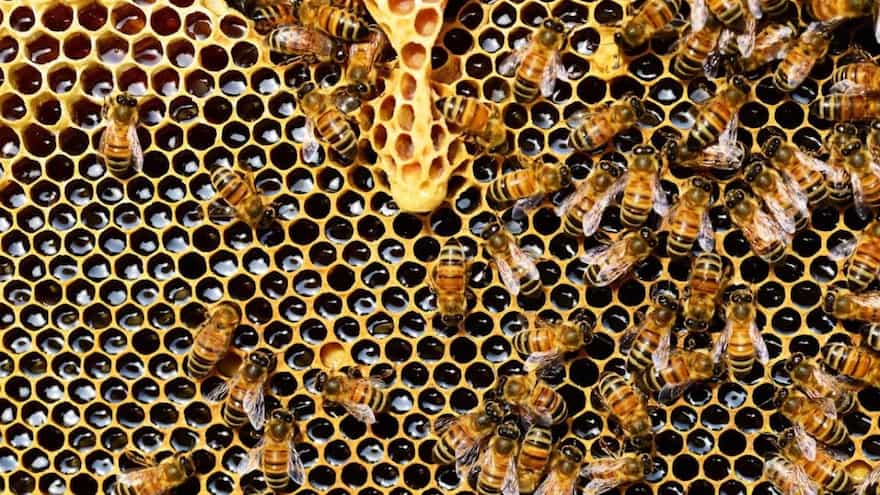
Image Credit: Pexels
At the museum, you learn about how bees are incredible creatures that produce honey, one of nature's most unique edibles. They are referred to be sociable insects since they coexist in colonies. Because they aid in the pollination of almost one-third of the food we eat, bees are crucial to agriculture. You also get a peek into the practice of raising and caring for bees to collect honey and beeswax, which is called apiculture or beekeeping. This tradition is very old and began when people searched for honey in forests. To make just 1kg of honey, bees visit nearly 2 lakh flowers. Then, you learn that based on where it comes from, honey is mainly of three types—forest honey, garden honey, and farm honey.
By directly purchasing the honey produced by farmers at the government-set price, the centre guarantees fair prices for farmers. Before being sold at a discounted price under the brand name, the purchased honey is processed scientifically, and its quality is guaranteed.
An Interactive Exhibit
A cutting-edge honey processing facility is located within the museum. Here, you witness the painstaking procedures used to extract and refine honey, guaranteeing its quality and purity. Observing the process from hive to bottle will enhance your admiration for this sweetness, which you probably been accustomed to since we were young. The museum features numerous interactive exhibits that explore the science of pollination, the life cycle of bees, and the importance of these hardworking insects to the environment. Both adults and children can enjoy the exhibitions, which make complex ideas interesting and accessible to all ages. The galleries' subdued lighting also produces the ideal atmosphere for visualising the apiary operation.
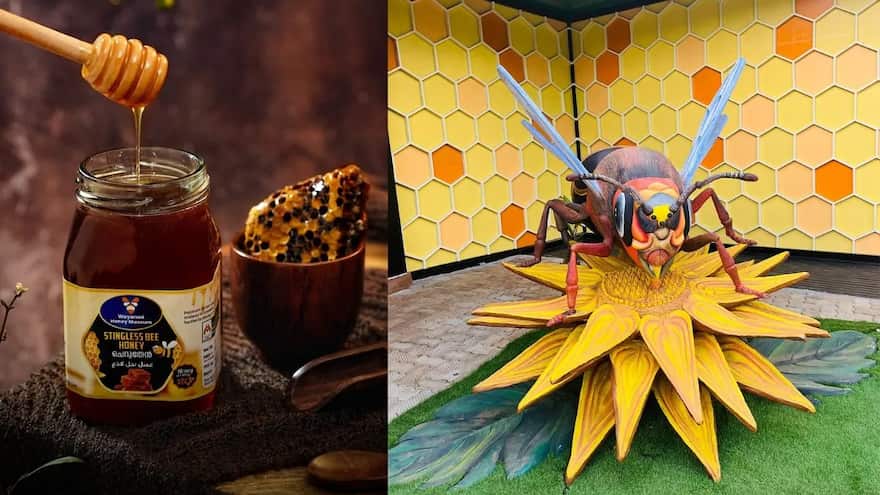
Image Credit: Wikimedia Commons
The best are saved for last at the museum. The honey tasting is the high point of your trip. You can try a variety of unexpected honey types, such as mustard, litchi, garlic, and ajwain. Each kind has unique tastes and health advantages, some of which you have never heard of before. Here are the types of honey you should taste and carry back home with you:
Sidr Honey
Sidr honey has a deep colour and a rich, robust flavour, making it one of the rarest and most valuable types found at the museum. It is frequently regarded as opulent and appreciated for both its flavour and possible health benefits.
Mustard Honey
In contrast to regular sweet honey, this honey is typically light golden in colour and has a little tart or harsh flavour. It is produced by bees that mostly consume mustard blossoms. It is well-liked in areas of northern India where mustard flowers are frequent and has a strong flavour that some people like with tea or bread.
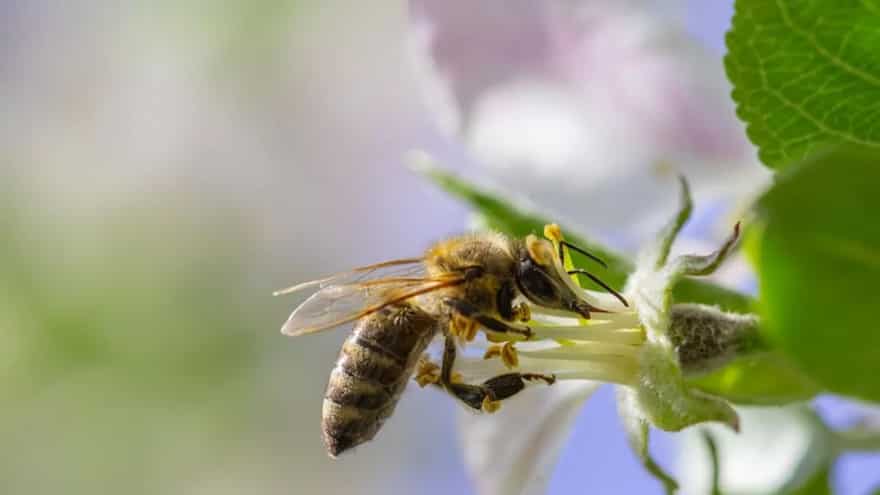
Image Credit: Pexels
Lychee Honey
Made when bees collect nectar from lychee blossoms, this variety is pale and fragrant with a delicate, fruity sweetness that echoes the scent of lychee fruit itself. It’s smooth, light, and often loved by people who enjoy a more floral, subtle honey experience, perfect in desserts or sweet drinks.
Tulsi Honey
This honey combines the natural sweetness of honey with the herbal, revitalising flavour of tulsi blossoms. Similar to a warm herbal tea with a sweet twist, it is often light amber with herbal and somewhat spicy overtones that make it feel fresh and aromatic. Tulsi honey is well-liked in Ayurvedic traditions since it is believed to offer relaxing and health-promoting properties.
Coriander Honey
The flavour of coriander flower honey is light and fresh, with hints of citrus or herbs. It frequently has a somewhat floral scent and tastes a little more complex than regular honey. Because coriander blossoms don’t last long, this honey can be a seasonal treat, and connoisseurs appreciate its nuanced taste.
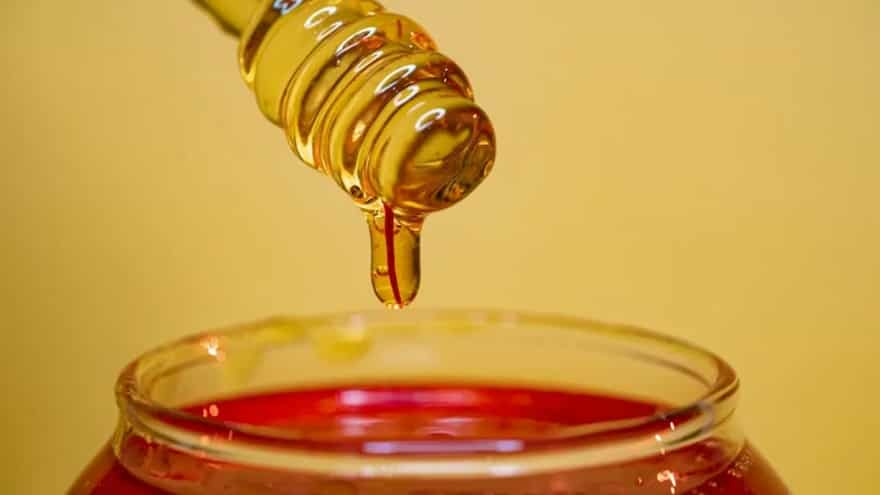
Image Credit: Unsplash
Garlic Honey
In contrast to the others, garlic honey is often prepared by infusing honey with garlic instead of having bees make it straight from garlic florets. This gives it a taste of the savoury, sharp zing of garlic combined with sweet honey, creating a distinctive flavour that people occasionally use as a traditional home cure for sore throats and coughs or simply to add a twist to marinades and salads.
Everybody has a different taste in honey, ranging from delicate and floral to strong and earthy. Depending on the flowers bees visit, each type of honey has a distinct flavour, scent, and texture. This makes discovering various varieties of honey enjoyable at the museum. Visiting the honey museum and learning while savouring the richness of nature sounds like a really fun way to spend an entire day out!
Address: Beecraft Building, 193/6, Old Vythiri, Vythiri, Kunnathidavaka, Kerala 673576
Timings: 9:30 AM - 8:30 PM
Price: INR 30 for adults, INR 20 for children above 5 years. It is free for those below 5 years.




