


 Share
Share

For anyone who grew up around or close to the Ganga, Hilsa is more than just a fish. In Bengal, the arrival of Hilsa, or Ilish, is practically a seasonal announcement that monsoon has arrived. The markets start filling up with fresh arrivals, and somewhere, a plate of steaming rice is waiting for a slice of the iconic fish dressed in mouthwatering mustard. But beyond its culinary reputation, Hilsa also possesses another identity that matters just as much: it is a migratory fish whose movements can tell us something about the ecosystem and connectivity of a river.
However, after remaining virtually absent for years from the middle and upper stretches of the Ganga river, two Hilsa weighing 740 grams altogether were found near the Markandey Mahadev Temple in Chandauli district of Uttar Pradesh. According to the Central Inland Fisheries Research Institute (ICAR-CIFRI), this sighting has taken place nearly three decades after the species disappeared from the upstream reaches. The officials have described it as a significant milestone in river restoration and aquatic biodiversity conservation.
Historically, Hilsa had always migrated from the Bay of Bengal through the Ganga river and its tributaries up to Varanasi, Prayagraj and farther places. But the development of a man-made structure for human life improvement changed its course. In 1975, the commissioning of the Farakka Barrage and its subsequent functioning severely disrupted Hilsa’s migratory pathway, causing a drastic decline in its population and presence in the middle and upper Ganga. This, in turn, also affected the riverine fishing communities, who were dependent on the species.
Since the decline of the Ilish population in those stretches meant significant ecological, cultural, nutritional, and economic distress, the ICAR-CIFRI (Barrackpore) and the National Mission for Clean Ganga (NMCG) launched a long-term scientific programme to restore ecological peace as well as Hilsa. These were not the only organisations; the Central Water Commission and the Farakka Barrage Authority also joined forces in 2016 to re-establish Hilsa fisheries in the middle Ganga at locations including Prayagraj, Varanasi, Patna, Bhagalpur, and Farakka.
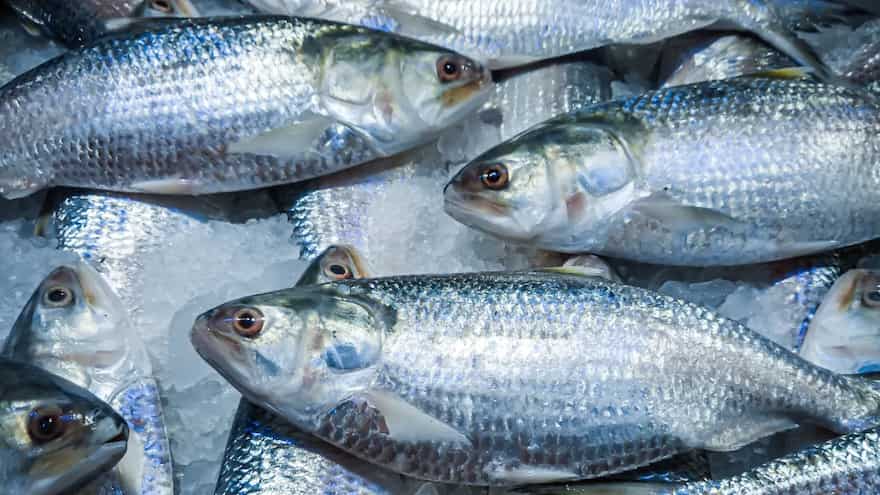
Image credit: Pexels
From 2019 to June of this year, the ICAR-CIFRI further implemented an interesting and multipronged approach involving river ranching, stock enhancement, artificial breeding, the release of fertilised eggs as well as hatchery-produced spawn, tagging, post-release monitoring and stakeholder participation. Till now, more than 3.85 lakh juvenile as well as adult hilsa have been ranched, while over 40 lakh fertilised eggs and around 9.4 lakh hatchery-produced spawn, aged between two and six days, have been released upstream of the Farakka Barrage.
Why Is Hilsa’s Return A Hopeful Sign?
According to a very recent ICAR-CIFRI report, an ongoing 2020 project on Hilsa ranching and stock enhancement reached a major milestone this year by successfully releasing 110 juvenile Hilsa fish into the river. But releasing them is not the endgame. Tagging and systematic monitoring are essential, as it provides data on the fish's migration, survival, and movement. Between 2023 and 2025, monitoring had led to records of ranched hilsa moving upstream as far as Mirzapur, indicating a gradual restoration of the species' historic migratory path.
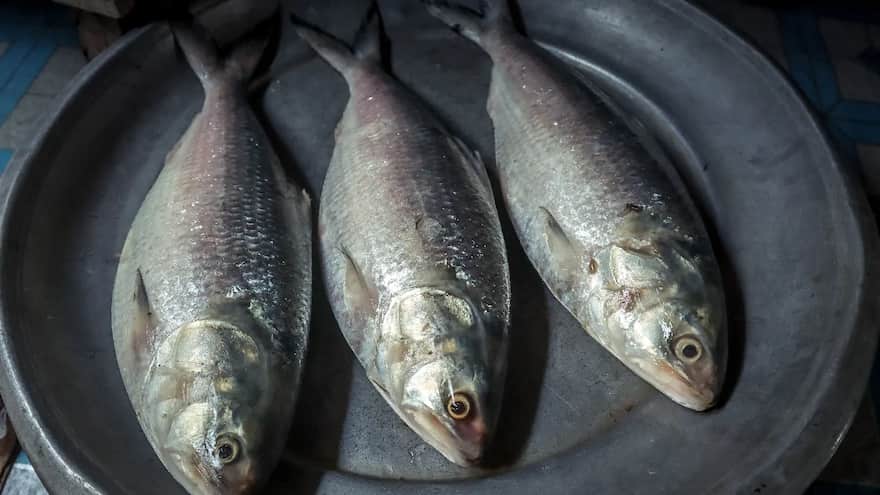
Image credit: Pexels
There is another reason why environmental scientists and river researchers watch migratory fish like Hilsa closely. A river is not simply a channel carrying water from one place to another. It is a connected ecosystem involving fish, aquatic plants, plankton, insects, sediment, wetlands, tributaries, and floodplains. When long-absent migratory fish can return and move through different sections of a river, it indicates that at least some degree of ecological connectivity remains or is being recreated.
That is why the return of Hilsa is interesting beyond the dinner plate. As Ilish is a sensitive migratory species, its presence is an important ecological indicator of both river connectivity and habitat suitability. Its return could be the sign everyone was waiting for of the Ganga's improving ecological conditions and functionality.




