


 Share
Share

How ‘fishy’ Bengalis can be? Well, if dedicated poems and songs were not enough, they have ‘Mechho Bhoot’ (an imaginary ghost that loves fish) asking for ilish from passersby on secluded lanes. As the rains pour, the drizzling showers are affectionately called ‘Ilshe Guri,’ a poetic tribute to the fish that embodies both the spirit of the season and the soul of Bengali cuisine. Growing up in a Bengali household, none of my childhood monsoon days were ever complete without a plate of gorom bhaat r Ilish bhaja (hot rice with fried Hilsa) – the crispy, golden-brown fish paired with steaming rice could easily beat any other culinary experience. 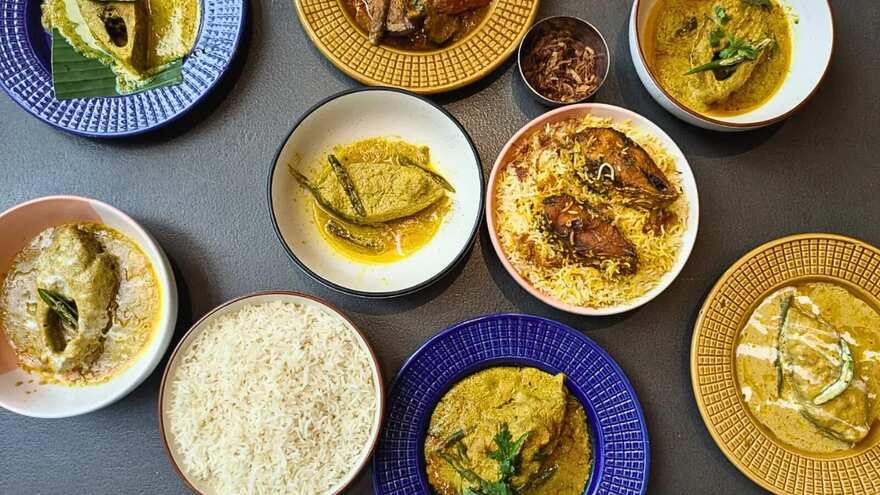 Image Courtesy: Saborni Saha
From Satyendranath Dutta’s nostalgic poem Ilshe Guri to Manik Bandopadhyay’s portrayal in his novel Padma Nadir Majhi, Hilsa has been celebrated in Bengali literature for generations. Its connection to the monsoon is so profound that even the legendary poet Buddhadeb Basu called it the “Silver harvest of the river.”
For a Bengali, the arrival of the monsoon season is incomplete without the prized Hilsa (Ilish) fish on the dinner table. From khichuri with ilish maach bhaja to polao with kolapata diye ilish paturi, Bengalis’ love for ilish is no less than a patriot!
Novotel’s Ilish Ache Festival: A Celebration of Hilsa
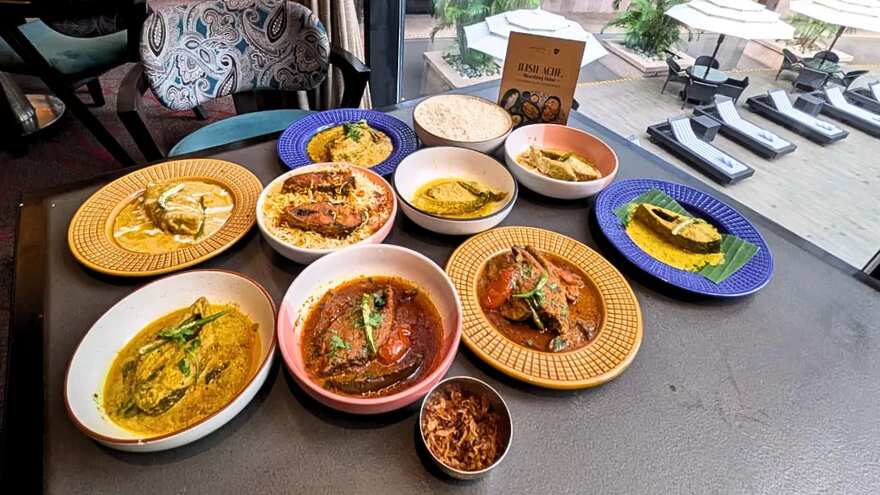
Image Courtesy: Saborni Saha
Novotel Kolkata Hotel & Residences is once again hosting an exquisite culinary festival that pays tribute to this iconic fish. The festival, titled "Ilish Ache, Bhuribhoj Hobe," will be held from 18th to 27th July, offering a range of classic and innovative Hilsa preparations curated by Chef Rana Mukherjee, Executive Sous Chef. The menu boasts traditional favourites such as Shorshe Ilish, Doi Ilish, Ilish Pulao, Kanchalonka Dhonepata Ilish, Ilish Bhapa Paturi, Ilish Korma, and Ilish Begun Diya Jhol. These dishes are deeply rooted in Bengali culinary traditions, with recipes that have been handed down through generations, celebrated for their rich flavours and nostalgic appeal.
Chef Mukherjee described the event as a celebration of Hilsa that honours both tradition and refinement. "Hilsa is not just a fish — it’s an emotion embedded in the Bengali soul," he said, focusing on the cultural ties between this fish and Bengali identity.
Chef Rana Mukherjee: A Culinary Journey with Hilsa
We had the privilege to speak with Chef Rana Mukherjee about his personal connection with Hilsa and how it continues to inspire his culinary journey.
According to Chef Mukherjee, Hilsa is a tradition. "The joy of eating Hilsa is in the experience—it's about the delicate bones, the skill of the cook, and the rich, buttery texture of the fish. It connects generations and cultures," he shared.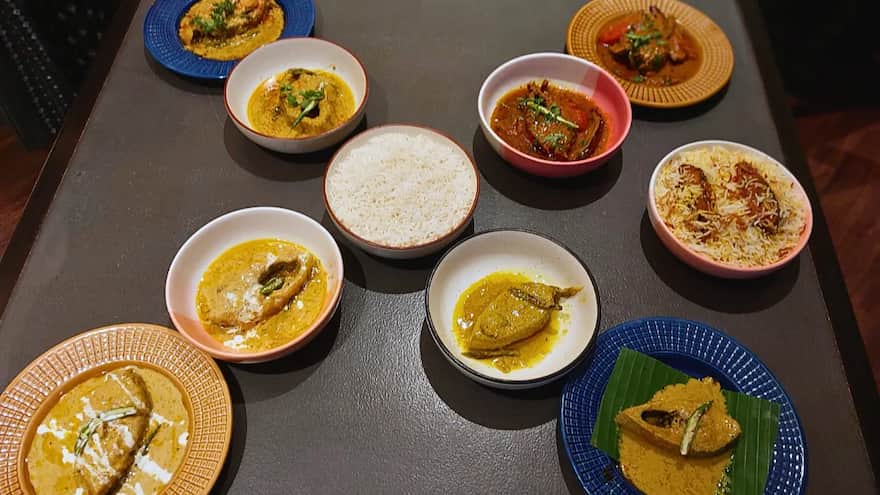 Image Courtesy: Saborni Saha
Slurrp had the pleasure of speaking with Chef Rana Mukherjee about his thoughts on Hilsa and its significance in Bengali cuisine. Here’s a glimpse.
Slurrp: What makes Hilsa such an iconic dish in Bengali cuisine?
Chef Rana Mukherjee: Hilsa is more than just a fish for Bengalis — it’s an emotion. The rich, buttery texture, the aroma of mustard oil, and the nostalgia that comes with every bite are what make it iconic. It connects generations through time-honoured recipes and festive memories.
Slurrp: What’s your personal favourite way to prepare Hilsa?
Chef Rana Mukherjee: The best way to prepare Hilsa is the traditional method — Shorshe Ilish, where it’s cooked in mustard paste. But personally, I have a special fondness for Ilish Paturi. The slow-cooked Hilsa wrapped in banana leaves with mustard and coconut is a childhood memory I cherish.
Slurrp: Any memorable childhood experience with Hilsa that you’d like to share?
Chef Rana Mukherjee: The first day of the monsoon season stands out. My mother would send my father to buy the freshest Ilish from the market. The house would smell of mustard oil, and we would gather as a family to enjoy the fish, carefully removing its bones. It was a simple yet beautiful ritual.
Slurrp: Have you experimented with any new twists on Hilsa?
Chef Rana Mukherjee: Absolutely. At Ministry of Kebabs, I’ve created Smoked Hilsa Kebabs and Hilsa Biryani. These dishes surprise our guests while staying true to the flavours Bengalis love. I think it’s important to evolve without losing the soul of the dish.
Slurrp: What’s your view on Hilsa’s role in Bengali culture?
Chef Rana Mukherjee: Hilsa is more than food; it’s a shared experience. It brings people together, especially during the monsoon. The excitement of the first catch, the discussions around cooking, and the stories passed down make it a ritual that binds us all.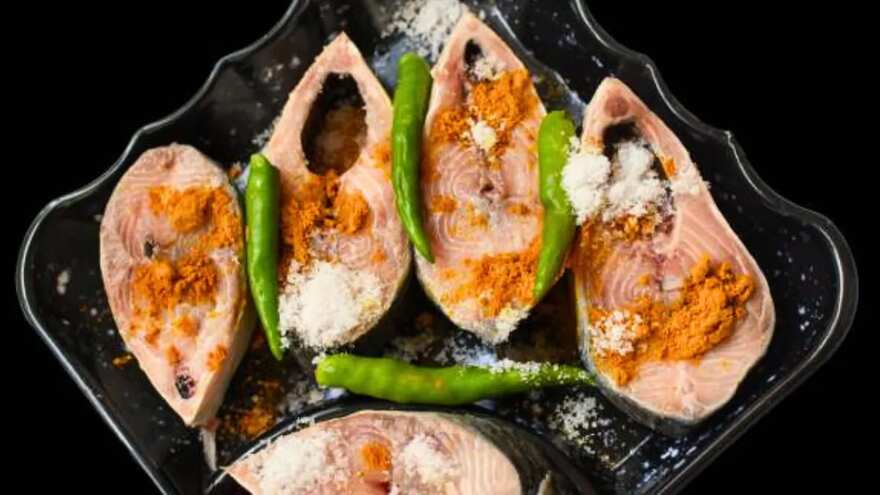
Image Courtesy: Adobe Stock
Slurrp: What’s the most challenging part of working with Hilsa? Are there any particular tricks or techniques you use to get the best flavour and texture?
Chef Rana Mukherjee: Hilsa is a culinary treasure, but it’s also one of the most challenging fish to work with. Its delicate flesh and intricate bone structure require a gentle hand and a trained eye. The challenge is achieving the perfect balance with a silky texture without breaking it apart.
One trick I swear by is marinating the fish in salt and turmeric for a short while before cooking — it firms up the flesh slightly and enhances its natural flavour. And when working with mustard-based gravies, the key is to use freshly ground mustard paste and never let it boil aggressively, or it turns bitter. Slow cooking and respecting the fish’s natural oils — that’s the secret.
Chef Mukherjee has also introduced the Smoked Hilsa Kebab with Gondhoraj Lime and Hilsa Biryani during this festival, where the rich oils of the fish infuse the rice. "These are modern twists on classic Hilsa preparations, paying homage to tradition while adding a fresh perspective," he explained.
East Bengal vs. West Bengal: The Saga Of Ilish Rivalry
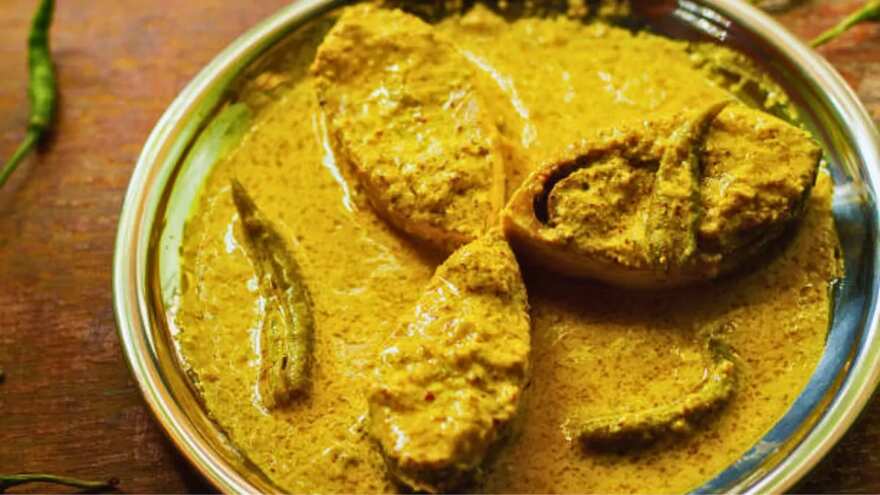
Image Courtesy: Adobe Stock
The rivalry between East and West Bengal over Hilsa is legendary, and the fish has long been the subject of fierce debate in kitchens across both regions. While both sides claim supremacy in how the fish should be prepared, there are distinct differences. In East Bengal, preparations like Ilish Bhapa (steamed Hilsa) and Ilish Paturi (Hilsa wrapped in banana leaf) are staples. On the other hand, in West Bengal, the use of mustard oil and mustard paste is more prominent, leading to dishes like Shorshe Ilish (Hilsa in mustard gravy) and Ilish Bhaja (fried Hilsa).
The division, however, is both culinary and cultural. The Bangals (people from East Bengal) and Ghotis (people from West Bengal) continue to argue over which side has the best Ilish recipe. While East Bengal's Ilish Paturi, wrapped in banana leaves and slow-cooked with spices, is a prized possession, West Bengal holds dear its Shorshe Ilish with a sharp, mustard-laden gravy that awakens the senses.
Takeaway: 7 Best Ilish Recipes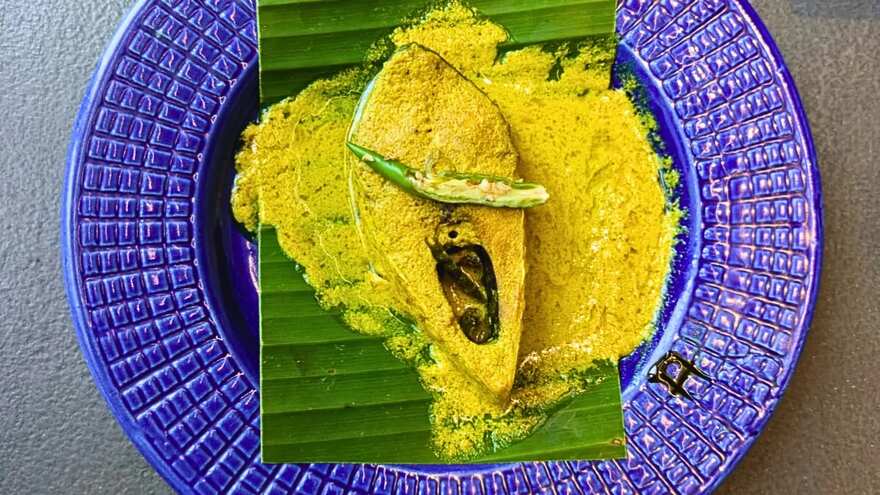 Image Courtesy: Saborni Saha
As a proud Bengali, I can swear that there's a certain connection to the monsoon, the rainy season, and of course, Ilish (Hilsa). Each shows nostalgia and love.
Shorshe Ilish (Hilsa in Mustard Gravy)
Hilsa cooked in a tangy mustard paste, mustard oil, and green chillies, creating a spicy, fragrant gravy that pairs perfectly with steamed rice.
Ilish Bhapa (Steamed Hilsa with Mustard and Coconut)
Hilsa is marinated in mustard paste and coconut, then steamed to let the delicate fish absorb all the flavours.
Ilish Paturi (Hilsa Wrapped in Banana Leaves)
Hilsa is marinated in mustard, coconut, and spices, wrapped in banana leaves, and slow-cooked for a rich, smoky aroma.
Doi Ilish (Hilsa in Yoghurt Gravy)
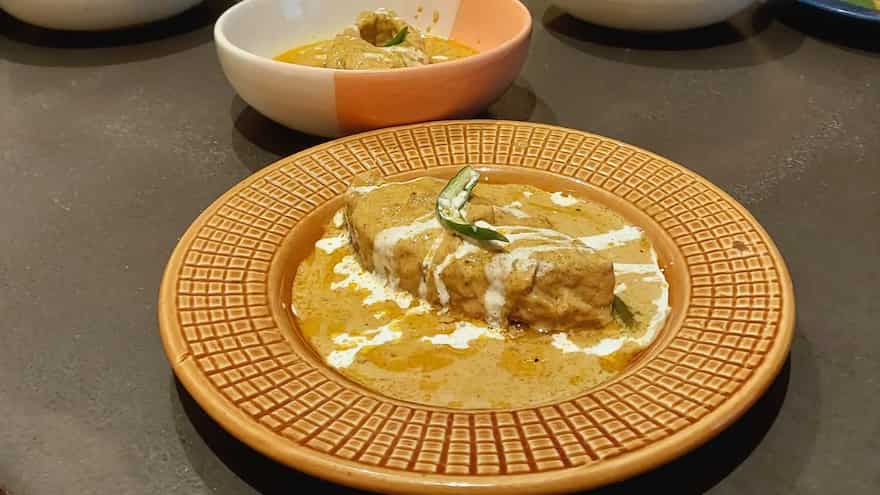 Image Courtesy: Saborni Saha
Hilsa is cooked in a tangy yoghurt gravy spiced with turmeric and green chillies for a creamy texture.
Ilish Tel Jhal (Hilsa Cooked in Mustard Oil)
Hilsa is fried in mustard oil, then simmered with green chillies and kalonji for a spicy and pungent curry to be served with rice.
Ilish Korma (Hilsa in Creamy Gravy)
Hilsa is cooked in a rich, creamy gravy made with yoghurt, ground nuts, and spices. This luxurious dish offers a delicate balance of traditional Bengali flavours with a creamy, comforting texture.
Ilish Bhuna (Hilsa in a Dry Spicy Gravy)
Fried Hilsa is cooked in a dry, spicy gravy made with onions, tomatoes, and aromatic spices like cumin and garam masala. This flavourful, thick sauce coats the fish, enhancing its taste.
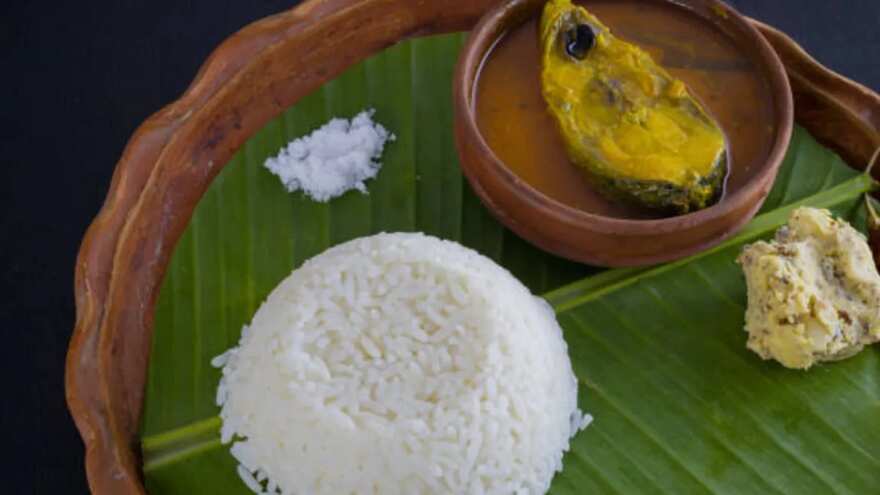
Image Courtesy: Adobe Stock
Kochu Paatai Ilish (Hilsa with Taro Root)
Hilsa is cooked with tender pieces of taro root (kochu), spiced with mustard paste, turmeric, and green chillies.
Ilish Bhorta (Hilsa Mash)
Deboned Hilsa is mashed with green chillies, garlic, and mustard oil for a flavourful, rustic mash.
The Scarcity Of Hilsa
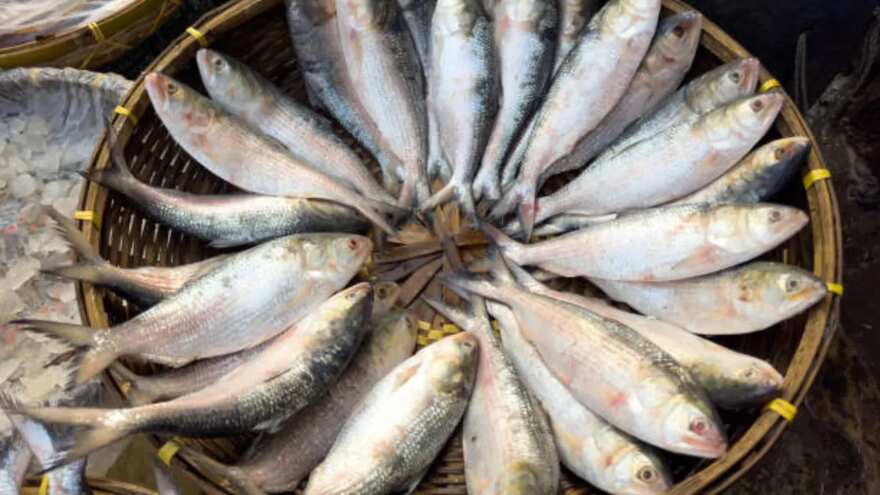 Image Courtesy: Adobe Stock
Despite its iconic status, Hilsa has become increasingly scarce in recent years, and the fish's population is steadily declining. This scarcity is primarily driven by overfishing. Fishermen, motivated by the growing demand for Hilsa, are catching the fish during its breeding season, often using destructive fishing practices that threaten its reproductive cycle.
While talking to Moijul Raheman, the fourth-generation fisherman in Sundarban, he elaborated on the situation, saying, “The biggest concern is the catching of jatka, the juvenile Hilsa. It severely hampers the fish's ability to regenerate. People need more hilsa in the market, and thus, catching khoka ilish even before the season starts has become a common matter. This situation is turning into a threat to the fishing communities' livelihood.”
“The problem is compounded by climate change,” added Ganesh Maji, another fisherman from Diamond Harbour, on how the climate has been a foe.
“Rising water temperatures and changing rainfall patterns are disrupting Hilsa's migration. Traditionally, Hilsa travels from the ocean to the freshwater rivers to spawn, but altered river flows and warmer waters have made it difficult for the fish to thrive. Also, due to industrial waste and unregulated dredging are damaging vital river ecosystems. It’s getting harder for Hilsa to find suitable breeding grounds.”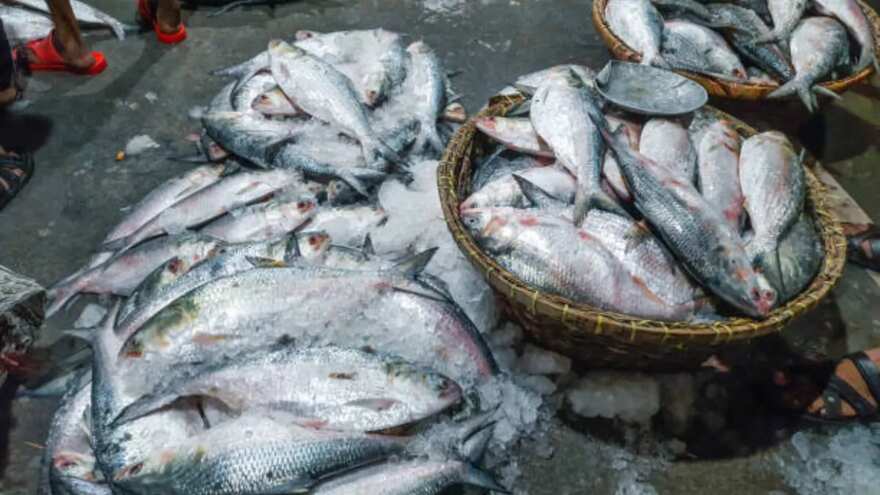
Image Courtesy: Adobe Stock
Fishermen in Bangladesh and West Bengal have voiced concerns about the reduced catches. Fishermen from areas like Pirojpur in Bangladesh and Patharghata in India are returning with nearly empty nets.. They report that the fish simply aren’t migrating in the same numbers, and the lack of rainfall has made rivers too shallow for Hilsa to stay.
As a result, the price of Hilsa has soared, often exceeding Rs 1700-2000 per kg, turning this once-affordable delicacy into a luxury item. A seller from Lake Market Kolkata mentions, “Currently, frozen khoka ilish are available at 700-800 INR. But the larger ones, the price limit exceeds 2000.”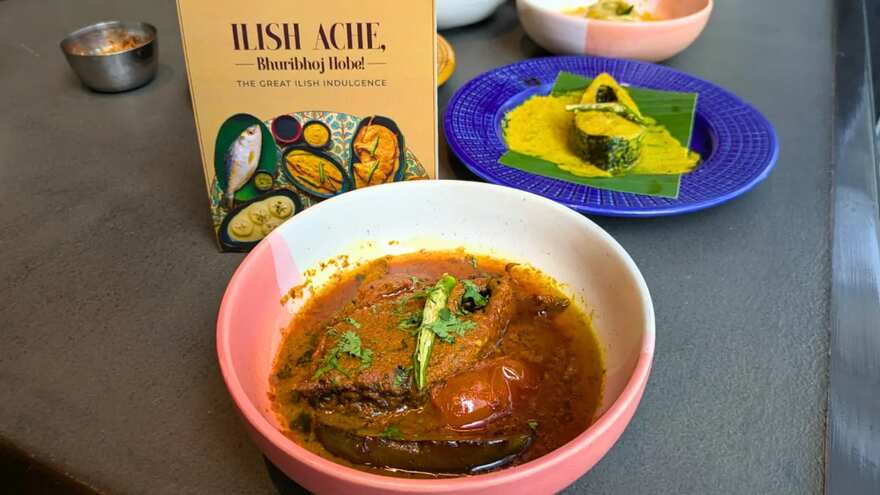 Image Courtesy: Saborni Saha
In these rainy months, as the heavens pour and the earth comes alive with a soft, earthy scent, it is the Ilish that accompanies us in our nostalgia. Its rich, silken texture, infused with the tang of mustard and the warmth of mustard oil, becomes an experience.
Food, monsoon, and Ilish form an inseparable triad that stays in the Bengali soul. It is in the slow-cooked Shorshe Ilish, the fragrant Ilish Bhapa, or the humble Ilish Bhorta that we taste, And as long as the monsoon rains continue to nourish our earth, so will the timeless legacy of Ilish, binding us in an eternal dance of flavour, memory, and pride.




