


 Share
Share

For Kashmiri Pandits, Mahashivratri is not just a religious festival but a deeply cultural and historical one, locally known as Herath. Unlike the one-day celebration seen elsewhere in India, Herath is observed over several days in Kashmir and is dedicated to Lord Shiva, whom Pandits worship as Vatuk Bhairav. The festival has roots in ancient Shaivite traditions of the valley, reflecting Kashmir’s long-standing spiritual connection with Shaivism. A major aspect of Herath is food. As part of family feasts and ritual sacrifices (naivedya), special delicacies are made.
In keeping with Pandit culinary traditions, non-vegetarian dishes of fish, lamb, meat and many vegetarian dishes are prepared without the use of onions or garlic. It is a very basic idea that encourages purity and simplicity. These components are said to stimulate physical desire and disturb calmness. In order to keep people calm and focused on their prayers to Lord Shiva, the cuisine is supposed to be satvik. Avoiding garlic and onions makes the cuisine lighter, simpler to digest, and more appropriate for a religious gathering. Doon, a ritual plate with water-soaked walnuts that symbolise cosmic elements and divine energies, is among the most symbolic objects. These walnuts are then given to family members as holy prasad or utilised in cooking.
The Kashmiri Pandits' tale is likewise one of suffering, uprooting, and tenacity. One of the biggest internal migrations in contemporary Indian history resulted from the forced flight of numerous Pandit families from their motherland over the decades, particularly in the late 20th century, as a result of violence and unrest. While some Kashmiri Pandits relocated to the US, UK, and Europe, others scattered throughout the nation and the world, rebuilding their lives in places like Delhi, Jammu, Pune, and Bengaluru. However, they brought Kashmir with them through food, language, and memory, even while they were living in exile.
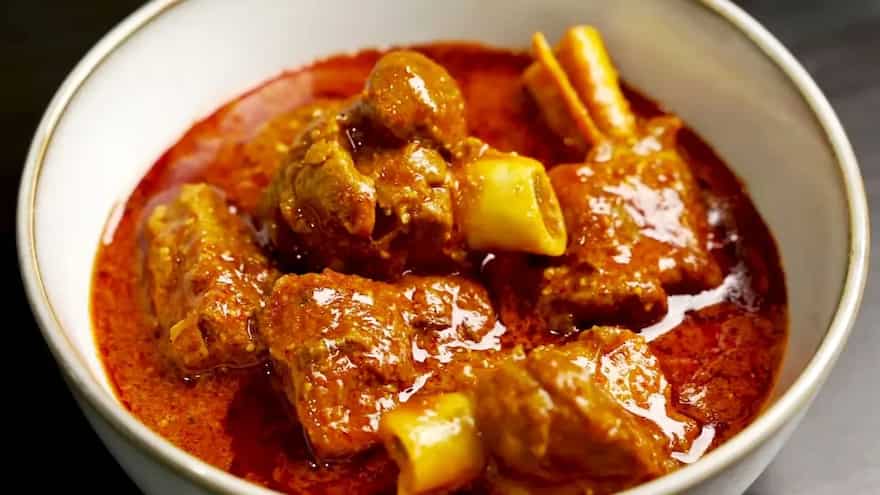
Image Credit: Wikimedia Commons
Consider the Bengaluru family of Sanjeev Bindroo, a Kashmiri Pandit, and his Bengali wife, Pradeepta Bhattacharya, who have been married for 10 years and have combined two cultures in one home. Their kitchen transforms into a hallowed space during Herath, where traditional Pandit cuisine is lovingly prepared to preserve customs that have been carried down through the ages. Cooking during Herath is a very emotional, almost meditative, activity that provides displaced families with a taste, aroma, and tradition of a homeland they may no longer physically inhabit. We asked Sanjeev to take us back to his childhood and share the recipes his family traditionally enjoyed during Mahashivratri, and he says there are a lot of them.
‘To name a few Tamulvor (made with rice flour, two lots, one sweet and one salty), mongvor, khazur, mathris, kashmiri roth, poori. Well these are tea snacks. For lunch and dinner, we relish Roganjosh, Kali, Masch, Hakh, Palak and much more.’ He then explains that these dishes are the heartbeat of their culture. He looks forward to them all year long, and honestly, just thinking about the spread right now is enough to make his mouth water! They truly define the spirit of Herath (Mahashivratri) for him.
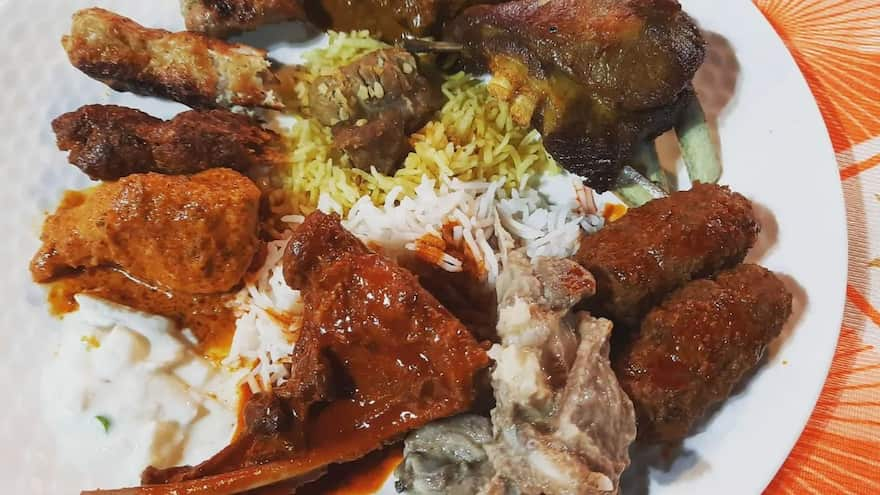
Image Credit: Wikimedia Commons
We also asked Sanjeev about the emotional significance of the day for him, now that these dishes are cooked by his Bengali partner. “Well I respect my Bengali partner for embracing the culture and traditions of Kashmir. Watching her prepare these traditional Herath dishes with such care makes the day feel even more special,” he vocalised.
For Sanjeev, it creates a new sense of belonging while also bringing back memories of home. He acknowledges that he misses the customary rhythms, rituals, and family time that characterised the Herath atmosphere in Kashmir. At the same time, the event now has a new emotional significance because he celebrates it with his wife, child, and close friends. While the customs are still followed, the environment has evolved, enabling him to create new memories centred around the same foods. Life goes on, as he states quietly, and a Kashmiri Pandit may be the best person to know that.




