


 Share
Share

Gir lies in the western Indian state of Gujarat, across a landscape of dry deciduous forest, scrubland, rivers, and grazing areas that together form the Gir National Park and Wildlife Sanctuary. The region is internationally known as the last natural habitat of the Asiatic lion, and safari tourism has shaped much of the travel infrastructure in and around Sasan Gir. Alongside wildlife conservation, Gir is also a lived landscape, home to farming communities, pastoral groups, and tribal populations whose food traditions remain closely tied to geography and land use. Food in Gir reflects this reality directly. Across resorts, lodges, and homestays that have emerged around the protected forest, meals draw from locally farmed produce, millets, lentils, dairy, and spice-forward preparations that have long formed the backbone of Kathiawadi cooking. These establishments function not only as places of stay for safari travellers, but also as sites where regional food practices are carried forward within a hospitality setting.
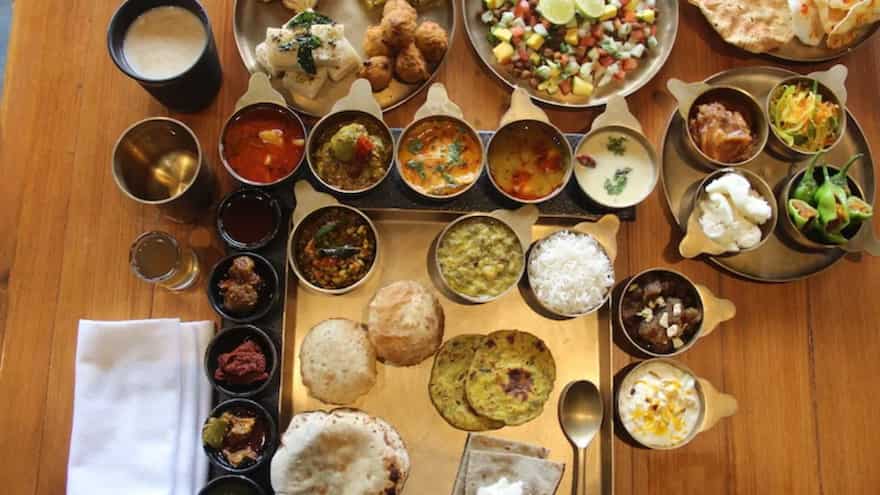
Image credit: Woods at Sasan
Woods At Sasan, On The Edge Of The Forest
One such property is Woods at Sasan, a forest-facing resort located close to the Gir National Park boundary, known for positioning itself around regional culture and ecology. Its dining space, Swadesh, centres its menu on staple diets and ingredients cultivated in and around the deeper forest regions of Gir. A spokesperson from the Woods at Sasan team explains that the intention is to reflect regional food habits rather than reinterpret them. “The cuisine at Swadesh draws inspiration from Saurashtra, also known as Sorath or Kathiawar, which includes Junagadh, Rajkot, and the Gir–Somnath belt,” says the property’s representative. “Our food is rooted in what people here have traditionally eaten, using locally farmed ingredients and time-tested cooking practices.”
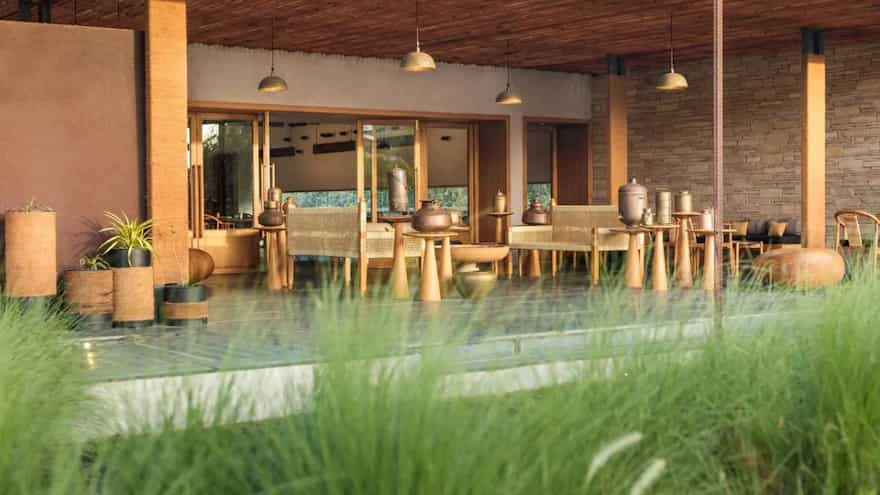
Image credit: Woods at Sasan
The Woods at Sasan team also points to Gujarat’s long cultural history as a guiding reference. “Gujarat is a flourishing state with deep cultural diversity, and its food traditions go back to the Harappan period,” the spokesperson adds. “At Swadesh, we look at cuisine as a reflection of arts, beliefs, customs, and local values rather than a standalone experience.”
The Maldhari Influence On Kathiawadi Food
Kathiawadi cuisine, as presented at Swadesh, is inseparable from the history of the Maldhari community, whose presence in Gir has shaped both agriculture and diet. The Maldharis, traditionally nomadic herdsmen from Charan, Bharwad, and Rabari communities, settled largely in and around the Gir Forest region over time. Their food practices developed through seasonal movement and livestock-based living, relying on ingredients that travelled well and sustained physical labour. Millets, white butter, buttermilk, garlic chutney, and simple lentils formed the core of daily meals, with pulses such as mung and tuvar appearing frequently. Seasonal vegetables shifted according to availability, ranging from gourds and beans to winter greens and root vegetables.
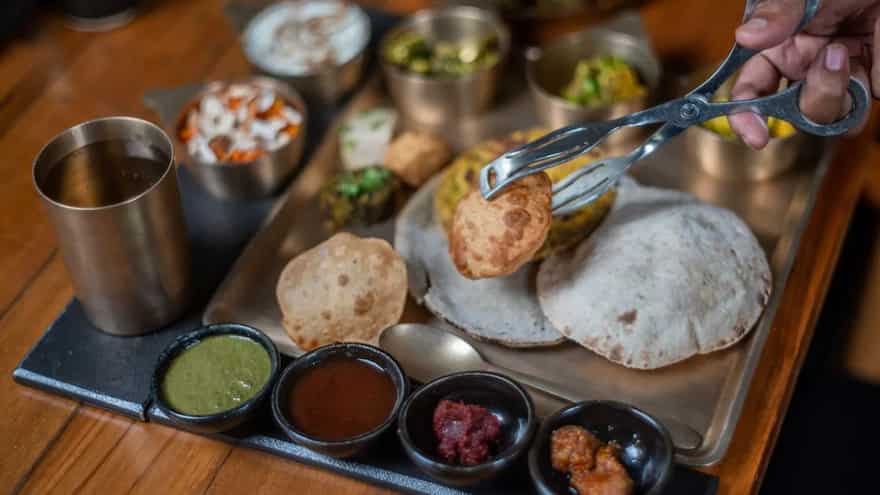
Image credit: Woods at Sasan
Cooking at Swadesh follows these foundations closely. Slow-cooking techniques are used alongside ingredients such as organic jaggery, peanuts, and red chillies, creating dishes that balance savoury flavours with measured sweetness. Traditional farsans accompany meals and evening masala chai, while Kathiawadi dal appears alongside desserts such as sukhdi, mohanthal, and churma ladoo. According to the spokesperson, “The Maldhari way of eating has influenced Kathiawadi food more than people realise. Their reliance on millets, dairy, and simple lentils continues to shape how food is cooked in this region.”
Another aspect that Swadesh emphasises is restraint and seasonality. “Our focus is always on what is grown locally and what makes sense for this landscape,” the spokesperson says. “The idea is not to add or remove elements, but to cook in a way that stays close to how food has been prepared here for generations.”
Gir Serai And Its Focus On Regional Cooking
Another key hospitality address in the region is Gir Serai, a safari resort located near the forest edge, known for focusing on regional cuisine as part of the guest experience. At Gir Serai, Kathiawadi food is presented without modification or embellishment. Lead chef Jagdish Joshi describes the approach as direct and regional. “A Kathiawadi thali represents the bold, rustic and fiery flavours of the Kathiawad region,” he says. “It is known for spicy, smoky, millet-based preparations, minimal sweetness, and hearty home-style dishes.”

Image credit: Gir Serai
A Kathiawadi Thali As A Complete Meal
At Gir Serai, the Kathiawadi thali is served as a complete, everyday meal. Millet rotlas form the base, with bajra no rotlo and jowar rotla prepared fresh and finished with ghee or white makkhan. “Rotla is essential,” Joshi explains. “It is what people here eat daily. Bajra and jowar come from our land.” The accompanying dishes include vegetable preparations such as ringan no olo, sev tameta, lasaniya bataka, papdi or valor nu shaak, and at times bajra khichdi. Lentils appear in the form of adad ni dal and arhar dal, alongside kadhi, rice, and khichdi.
Condiments are treated as integral to the meal. “Garlic chutney is the heart of Kathiawadi cuisine,” says Joshi. “Lasaniya chutney is very spicy, and it brings the meal together.” Pickles, onions, salad, and chaas are served alongside the thali, with sweets such as sukhdi, mohanthal, lapsi, or basundi appearing in limited quantity. “Kathiawadi food is not naturally sweet,” Joshi adds. “The sweets are simple and part of the tradition.”
Fafda And Jalebi In Local Breakfast Traditions
Breakfast offerings across Gir often follow regional habits shaped by early safari schedules. One of the most recognisable combinations is fafda and jalebi, which remains a regular feature at Gir Serai. Fafda is made from gram flour seasoned with turmeric, ajwain, and salt, rolled thin and fried until crisp, and served with papaya sambharo and green chilli chutney. Jalebi accompanies it. “Fafda and jalebi is a beloved breakfast in Saurashtra, including Gir,” Joshi says. “Many guests expect it, and it has always been part of the local food culture.”
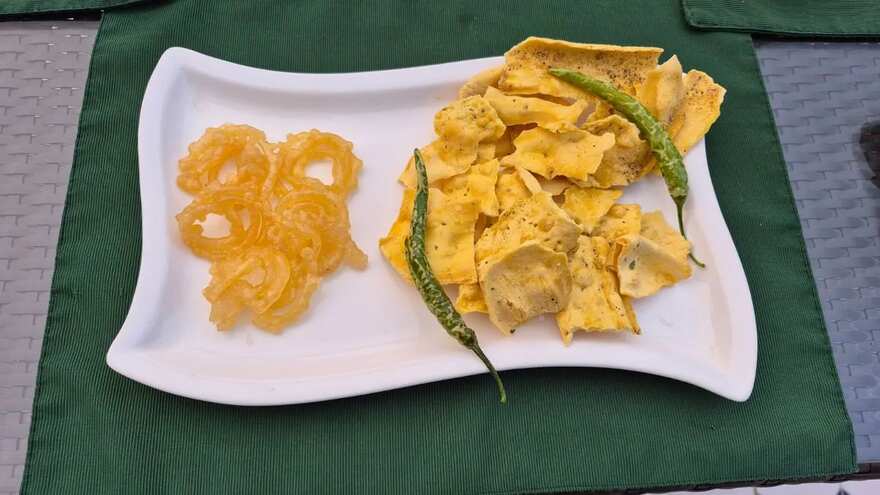
Image credit: Gir Serai
The Siddi Community And Gir’s Wider Cultural History
Beyond resort kitchens, food across Gir’s homestays and village homes follows the same agricultural logic. Meals rely on millets, lentils, vegetables, dairy, and straightforward spice combinations, shaped by long-standing practices rather than written recipes. This broader food culture exists alongside the traditions of pastoral Maldhari communities and tribal groups who have lived in and around Gir for centuries.
Among these communities are the Siddis, an Afro-Indian group whose history in Gujarat dates back several centuries. The Siddis trace their ancestry to East and Central Africa, arriving in the Indian subcontinent through Indian Ocean trade routes, military service, and forced migration under Arab and later Portuguese systems. Today, Siddi communities live in parts of Gujarat near Gir, maintaining cultural practices that combine African heritage with regional Indian life.
Siddi food traditions are preserved largely within households and community gatherings. Rice forms a central part of meals, paired with lentils, vegetables, and, when available, meat or fish. Ingredients such as tamarind, coconut, and kokum reflect regional influences, while forest produce, wild greens, fruits, and honey historically supplemented diets. Cooking is communal, and meals reinforce social ties and cultural memory. Food remains one of the strongest carriers of Siddi identity, sustaining histories that are not always recorded elsewhere.
Gir’s food landscape is shaped by these intersecting histories; agricultural, pastoral, tribal, and diasporic. Kathiawadi cuisine anchors everyday meals, while resorts such as Woods at Sasan and Gir Serai show how regional food continues within contemporary hospitality. As Chef Jagdish Joshi puts it, “Our food comes from what people here actually eat. It comes from the land around us.”
Eating in Gir offers insight into the region beyond its wildlife, revealing a food culture built on continuity, community, and long-standing relationships with land and forest.




