


 Share
Share

Right now, somewhere on your feed, a warm, flaky croissant is being split open and stuffed with a Magnum ice cream bar. Its chocolate shell cracks against the pastry as it's sliced in half for the camera. The croissant-Magnum, part bakery classic, part frozen-dessert favourite, and entirely engineered for a fifteen-second video, is the latest Instagram trend.
Though for those who don't know, a crossover of desserts is not something completely new. It is, in fact, a decade-old trend, and it was born the moment a French-trained chef in a narrow New York City bakery decided a croissant could be fried like a doughnut. Along the way, it's also a study in how virality itself has changed, from queues and scarcity to something far easier to replicate, and far harder to predict.
Ground Zero
Source: Pexels
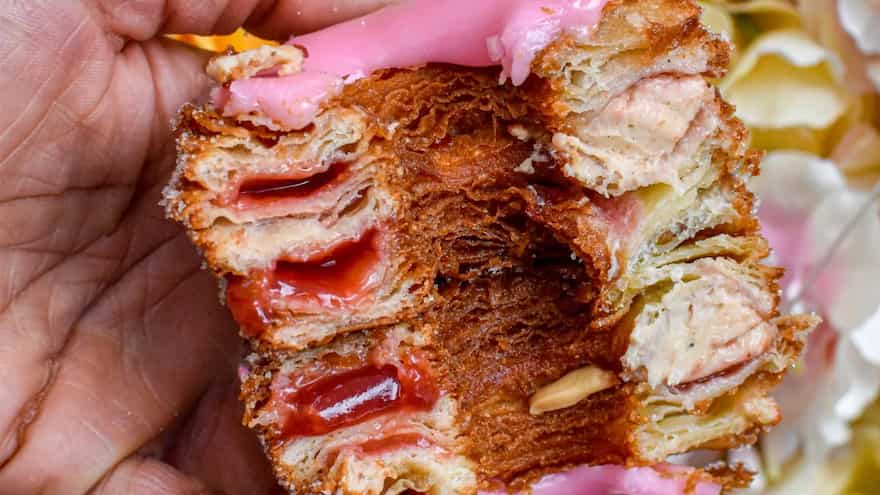
Every origin story has a mad scientist with a mad obsession who starts it all. For pastry hybrids, that was Dominique Ansel, a French chef working from a small shop in SoHo. He spent two months and roughly ten failed attempts trying to laminate croissant dough, fry it like a doughnut, and stuff it with cream. When it finally worked, he called it the Cronut. He introduced it at the Dominique Ansel Bakery, and a blogger covered it that night. The post quickly got people talking online, and a line of more than 100 people formed before sunrise.
Cronut wasn't just a product now but a headline and, for bakers everywhere, a challenge. Dominique trademarked the name within 9 days of its introduction. The lesson learned from this wasn’t really about doughnuts or croissants. It was about collision, putting two familiar things together to create something new and exciting.
The Parodists Arrive
Source: Pexels
Bakeries that had spent years perfecting a single, quiet speciality suddenly found themselves in an arms race of portmanteaus.
- The Townie - a tart crossed with a brownie.
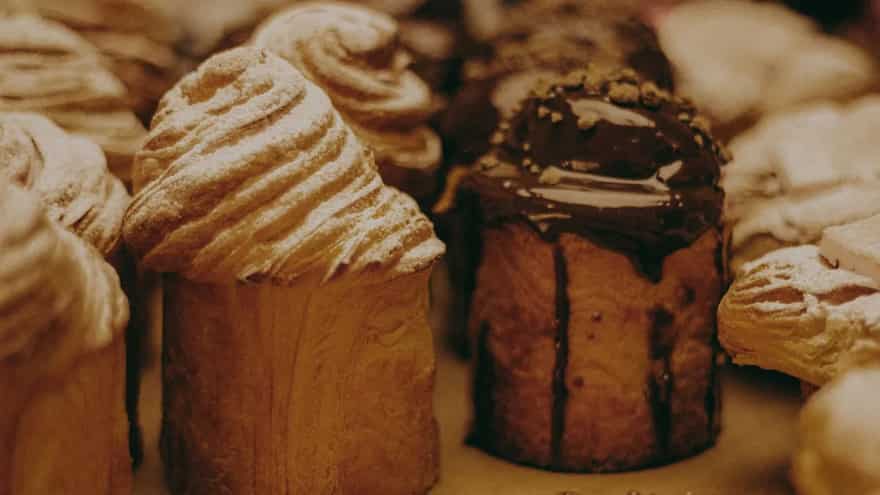
- The Cruffin - croissant dough baked in a muffin tin, crunchy on the outside, hollow and fillable within.
- The Brookie - brownie and cookie, looks like two desserts refusing to pick a side
- The Duffin - half doughnut, half muffin, baked rather than fried
Each one followed a similar formula of limited batches each day, long queues that created buzz, and catchy names made for headlines.
Also Read: Mumbai Vlogger Wows Internet With Donut And Croissant Samosas
Why Do “Viral Bites” Work?
- The performance of the wait - Waiting in line was a part of the package of the experience being sold. People weren't just buying pastry as they were buying a story to tell, a badge of having been early, awake, and willing.
- Familiarity plus originality - Nobody has to be sold on what a croissant is or what a doughnut is. The hybrid borrows trust from both parents while offering something neither could, a texture never seen before.
- The Theatre of Not Enough - Was Dominique Ansel's two-per-customer cap just inventory management, or was it staging? Because a pastry you might not get is a pastry worth talking about, whether or not you ever tasted it.
- It's all about the name - Cruffin, duffin, etc.; these words are almost onomatopoeic. They sound like what they are before you've read the description, which makes them travel well across languages and platforms.
Then There Is, The Croissant-Magnum
Source: Pexels
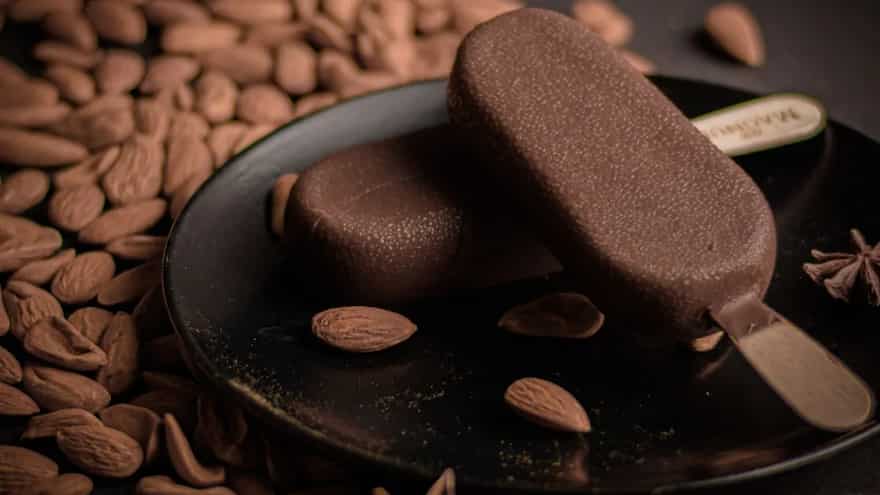
Which brings you, a decade on, to the most recent and perhaps most literal entry in the lineage, the croissant-Magnum. Nobody needs an introduction to what that is because the name says it all: a warm, split-open croissant stuffed with a Magnum ice cream bar. It is, structurally, less a doughnut cousin and more a straightforward act of collage of two favourites, fully formed products, one hot and one frozen, jammed together rather than reinvented.
Where the cronut required two months of failed lamination experiments, the croissant-magnum requires a bakery knife and a freezer. But it inherits the same underlying logic as everything before it, two familiar formats forced into a single bite, built as much for the camera as for the tongue. Also, the croissant-magnum needs no new technique at all. It is just the right two products and the right moment of assembly.
However, it says something about where the genre has travelled. The cronut's innovation was technical. A decade later, the innovation is almost entirely presentational by creating a contrast of hot and cold, the crack of chocolate against warm pastry, the reveal, captured live, on cue, in a fifteen-second video.
What keeps the trend circulating isn't complexity but replicability. Nearly anyone can attempt a croissant-magnum with a bakery croissant and a magnum bar from the corner store. This means the format spreads not just through professional kitchens but through thousands of individual kitchens and phone cameras. Herein, each one is a small act of marketing for the format itself. In that sense, it is less a pastry innovation and more an example of how food hybrids go viral today–not through scarcity and long queues, like the Cronut, but because they are so easy to recreate and yet finger-licking good.




