


 Share
Share

Food has never been only about what reaches the plate. That is just the tip of the iceberg. Look deeper, and you shall see that it is a powerful tool. It can represent who holds power, who goes hungry, who controls the land, or who gets to decide what an entire community is allowed to eat. In moments of political unrest, even an everyday ingredient or food can acquire a meaning far beyond its nutritional value. That connection feels particularly relevant in India right now. On 10 October 2026, New Delhi witnessed a major confrontation between authorities and supporters of the Cockroach Janta Party (CJP), a youth-led movement that emerged from political satire.
The protests were centred on demands for Chief Election Commissioner Gyanesh Kumar's resignation over controversial revisions to electoral rolls. Protesters believe that the changes threatened voting rights, while the government and its supporters have disputed the accusations. Police have detained hundreds of demonstrators, imposed restrictions around central Delhi and prevented protesters from reaching their intended gathering point at Jantar Mantar. The three heads of CJP, Abhijeet Dipke, Ashutosh Ranka, and Saurav Das, had been missing and have just been released amid great controversy.
The CJP demonstrations are primarily about electoral accountability, not food. Yet their wider context raises a familiar question: what happens when ordinary people use everyday necessities, shared meals or the denial of food, to express political discontent? India's history offers powerful answers. From salt that challenged colonial taxation to communal kitchens sustaining farmers on Delhi's borders, food has repeatedly helped turn individual grievances into a collective voice and action.
5 Times Food United People To Become A United Voice Against Power
Salt: Gandhi's Everyday Weapon Against Colonial Rule
Salt became one of the most recognisable symbols of Indian resistance when Mahatma Gandhi came up with the Dandi March in March 1930. By reaching the eponymous coast of Gujarat and making salt in defiance of British law on April 6, Gandhi head-on challenged a vast colonial monopoly over an everyday necessity. The choice was also politically astute as salt was not an obscure commodity reserved for the wealthy. It was essential to everyday life, and the tax burden fell very heavily on poorer households.

Image credit: Pexels
The protest translated an elaborate argument about imperial power into an act that ordinary people could understand and repeat with guidance. As historian Miles Taylor explores in The Ungrudging Indian: The Political Economy of Salt in India, c. 1878 to 1947, salt taxation had a long and complicated history before Gandhi made it central to mass civil disobedience. Its political significance lay in connecting colonial economic control with something that people consumed in every meal.
Rice: A Fight Against Forced Collection in Rewa
Food protests are not always about taxes on ingredients. Sometimes, they also concern the right to retain what an individual has grown themselves. In the princely state of Rewa, in present-day Madhya Pradesh, farmers protested against the collection of rice as land revenue during the 1940s. According to the Government of India's Digital District Repository, authorities valued the rice below market prices, provoking obvious resistance among cultivators. When collection was enforced, the dispute escalated.
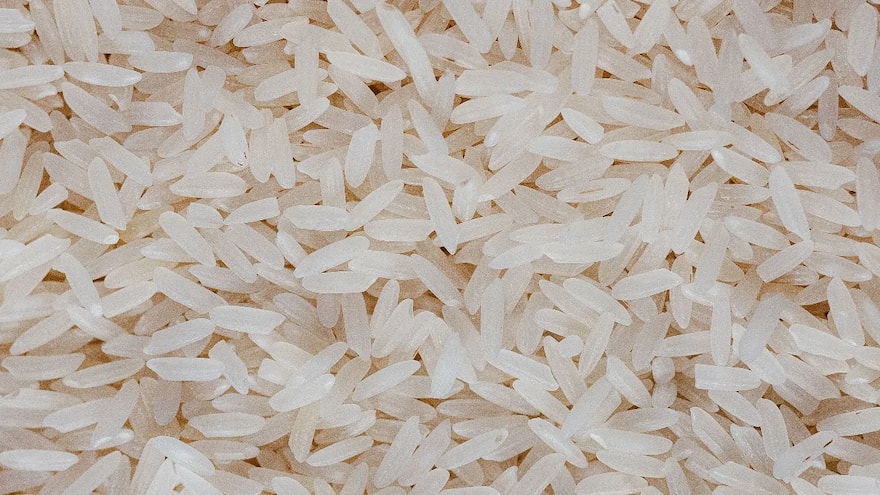
Image credit: Pexels
On 28 February 1947, farmers gathered at Badwar to protest the forced collection. Police responded with a lathi-charge and arrests, followed by firing that killed one human, according to the repository's historical account. Here, rice was not a mere staple. It represented the proceeds of agricultural labour, and the struggle concerned who had the authority to claim them: the one who grew the crops or the one who allowed the farmers to exist. This episode offers a stark reminder that food-related dissent is often inseparable from land, livelihood and economic justice, especially for the underprivileged masses.
Arrack: The Drink Rural Women Refused to Accept
In the early 1990s, women in Andhra Pradesh began organising against arrack, a locally produced alcoholic drink whose consumption was contributing to serious problems in many rural households. The movement grew out of literacy classes and grassroots discussions, with rustic women in Dubagunta village in Nellore district playing an important role. Their objections were not framed merely as a demand for personal temperance. Women spoke out against the financial hardship, domestic violence, and family distress associated with excessive drinking.
By organising collectively against liquor sales, they challenged a trade that brought revenue to the state while imposing costs and undeniable consequences on their households. The movement spread beyond its starting point and became a major example of women's political mobilisation at the grassroots level. Its impact on liquor policy in Andhra Pradesh showcased the fact that people who were often excluded from formal political decision-making could bring their concerns into the public spotlight and debate when true need arose.
R. Pande's academic paper, From Anti-Arrack to Total Prohibition: The Women's Movement in Andhra Pradesh, India, published in Gender, Technology and Development in 2000, documents the movement's origins and political consequences. Arrack was the focus of the protest, but the deeper dispute concerned who bore the cost of the liquor economy: the authorities benefitting from the sales and taxes, or the households whose men could not hold their tipple. Refusing to accept the normalisation of alcohol-related harm became a way for women to challenge both local power structures as well as callous state policy.
Also read: What To Read: On Food, Hunger, & Protest
Langar: Feeding a Movement on Delhi's Borders
More recently, food became one of the most visible expressions of solidarity during the 2020 to 2021 farmers' protests against three agricultural laws that were eventually repealed. As farmers camped at Delhi's borders through the winter, community kitchens and langars served meals to protesters and visitors. Volunteers prepared and distributed food, while supplies arrived from supporters and communities from places far beyond the protest sites.
The kitchens were practical necessities for a movement that lasted for months, but they also communicated something larger: the people gathered there intended to sustain one another for as long as the struggle continued, and that was precious. The protests raised concerns about agricultural markets, farmers' livelihoods as well as the future of state support for agriculture.
Therefore, food occupied two roles at once. It was the subject of the political dispute, and it was also the means through which protesters could remain united and taken care of. The People's Archive of Farmers' Protests preserves a record of the movement and its many forms of mobilisation.
Onions: When Farmers Turned a Kitchen Staple Into a Political Protest
In India, an onion can become a political issue long before it reaches the chopping board. The vegetable is indispensable to countless everyday meals, but its price has consequences far beyond the kitchen. For consumers, a sudden increase can strain the overall household budget significantly, especially if they rely on the vegetable in everyday cooking. For farmers, a fall in wholesale prices can mean selling a harvest for less than what it cost to grow the same. The onion crisis of 2023 to 24 brought both sides of this dilemma into sharp focus under our current government.
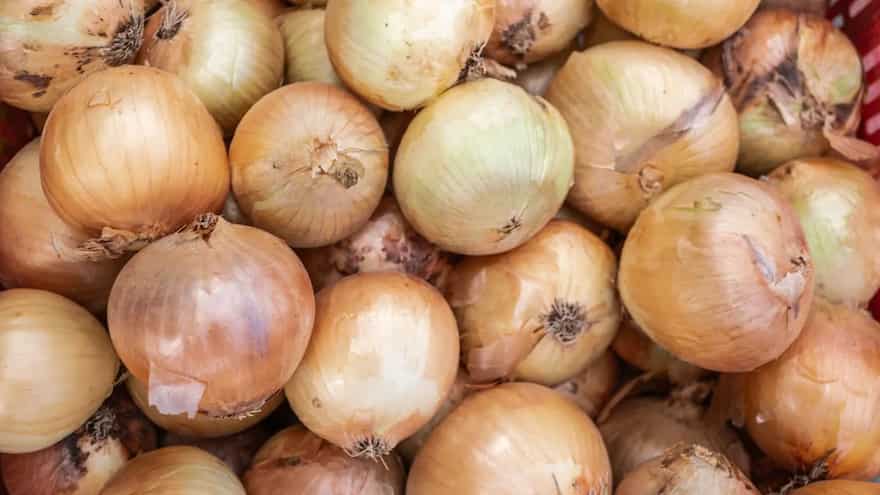
Image credit: Pexels
In December 2023, the Centre prohibited onion exports in an effort to improve domestic availability and contain prices ahead of the general election. The restrictions remained in place until May 3, 2024. Although the policy was intended to protect consumers, it created serious discontent among growers in Maharashtra, particularly in the Nashik belt, one of India's major onion-producing regions. Farmers argued that restricting access to overseas markets weakened demand for their produce and pushed wholesale prices down, resulting in losses. In March 2024, onion growers in Nashik warned of political consequences over their losses, turning the export ban into an issue of electoral accountability.
The discontent did not end when the export ban was lifted. In May 2024, onion farmers protested against low prices at wholesale markets in Maharashtra, with trading suspended at some markets. The episode exposed the tension at the heart of agricultural price policy: keeping onions affordable for urban consumers while securing remunerative prices for farmers are not always compatible objectives in the short term.
The government's subsequent policy changes also underline how politically sensitive the vegetable remains. In August 2026, it announced the sale of buffer-stock onions at ₹35 per kilogram through retail outlets and mobile distribution points across Delhi-NCR to ease consumer price pressures. These measures reflect the continuing efforts to try to balance market availability, affordability and farmer returns. The onion's role in this episode was not symbolic in the abstract. It was the actual object of the dispute
That is what makes the onion a food of dissent in contemporary India. The protests were not simply about whether onions should be cheap or expensive. They were about who shall bear the cost when a government intervenes in a volatile market, and whether the interests and welfare of growers receive as much attention as the concerns of consumers. When farmers took their grievances to wholesale markets and threatened to express their anger at the ballot box, the humble onion became a vehicle of a much larger argument about livelihoods, state policy and political accountability.




