


 Share
Share

In many Parsi homes, Christmas announces itself long before the tree goes up or the table is set. It arrives through the slow soaking of fruit for cakes, the return of familiar roasts, the sound of church bells carried into the kitchen, and the certainty that food will gather people before anything else does. Across generations and geographies, Christmas in Parsi households has been shaped less by rigid tradition and more by memory, adaptability, and an ease with welcoming influences from beyond the community. At its centre sits the table, where family, friends, and inherited recipes continue to meet each year.
Anahita Dhondy: Christmas As It Was Cooked By Her Mother
For chef and author Anahita Dhondy, Christmas begins with her mother's kitchen. She recalls that her Christmas table was defined entirely by what her mother cooked, saying, “The dishes that are essential to my Christmas table are the things my mom makes. Roast meat, carrot cake, glazed pork, which was our Christmas favourite, served with green beans and a salad with apples and walnuts. Whatever my mom makes has always been a part of our Christmas table.”
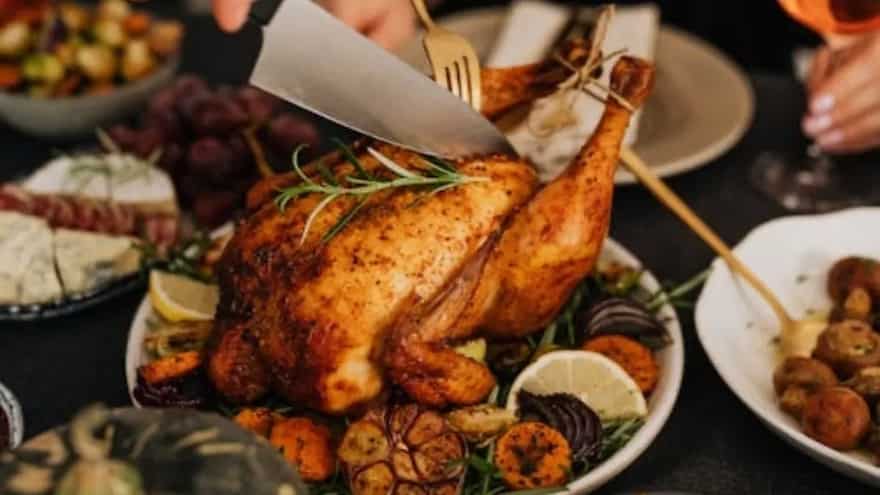
Image credit: Pexels
That table carried earlier generations with it. “The Christmas recipes that have been passed down in my family include mutton chops that my Nani used to make, and we cherish them to date. Those are recipes I will always enjoy and return to.”
She situates Parsi Christmas cooking within a broader European vocabulary that Parsis made their own over time. “Christmas cooking in a Parsi home is usually some form of Western cooking, with a little British influence, like roast potatoes and roast chicken, and sometimes even Greek, Spanish, or French influences, so it is largely European. When we want to make something Parsi, we make pork vindaloo or jardaloo sali chicken. We love food that is sweet, jammy, bright in colour, and any meat that is nicely braised and warming.”
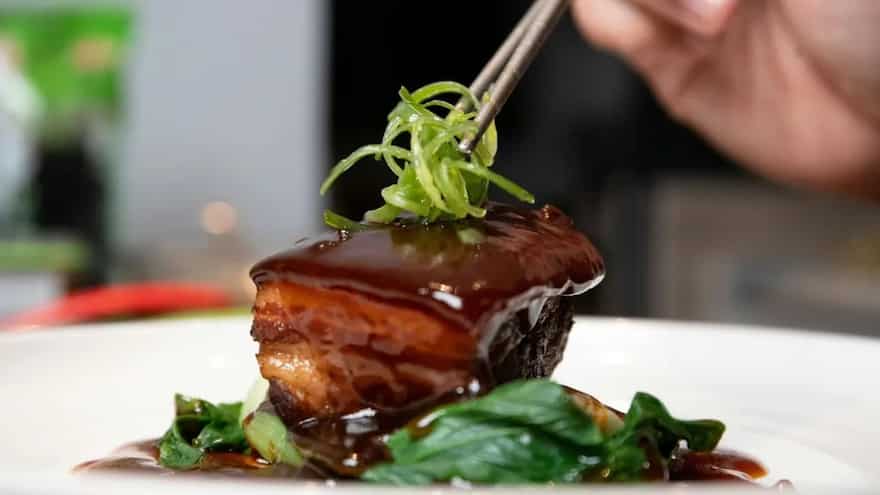
Image credit: Pexels
For Dhondy, Christmas is inseparable from place and childhood ritual. “Christmas in the Parsi community always reminds me of my grandmother in Allahabad. We had a church right in front of our house. We would go for the midnight mass, and we would celebrate with beautiful Christmas trees, real ones that we potted and decorated with cotton, handcrafted ornaments, and wool. We spent many of our Christmases there, and we would wake up the next morning to many gifts.”
What she hopes to carry forward now feels even more intentional. “The rituals at home that I hope to pass on include decorating the Christmas tree together, putting it up as a family, and having hot chocolate in the evening. I want my son to grow up with the house smelling of stewed apples and cinnamon, with something warm always cooking in the kitchen. Christmas dinner with family is very special to me, and baking and cooking for Christmas is something I want him to see, experience, and grow up with, just as I did.”
Niloufer Mavalvala: Cakes That Outlive Time And Borders
Chef and author Niloufer Mavalvala’s Christmas memories begin with a cake that has quietly outlived decades. “The Christmas cake that was my mum’s creation, made with whisky, walnuts, and a few local dry fruits, continues to this day from the time she got married in 1960. It is always associated with a house full of family and close friends, and the aromas of delightful food.”
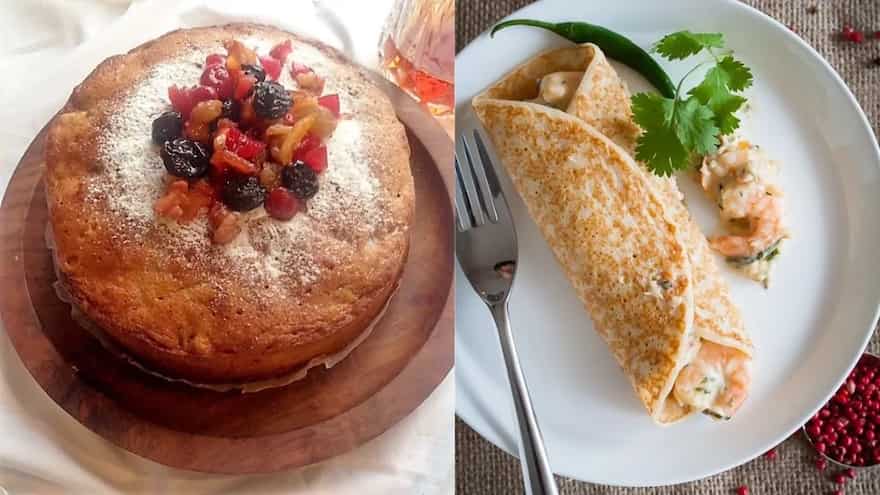
Image credit: Niloufer Mavalvala
Other holiday bakes came from a wider circle of women. “My aunt used to make a spice and rum cake with oranges or clementines, which I have learnt to bake, along with ginger puddings and bread for the holidays. Eggnog with brandy is something I have dropped completely.”
Mavalvala frames Parsi Christmas food as part of a larger cultural instinct to celebrate through cooking. “Parsis love an opportunity to celebrate. We are known to have a food for every occasion and an occasion for every food. Having taken a bit of this and a little of that from the colonial era, we even have a term for anything Western, which we call ‘a bake’. It could be baked corn, chicken, or crêpes filled with prawns or kheema, basically anything with a white sauce, and these dishes were usually made on special occasions.”
That creativity often meant reshaping European forms. “Being creative is what Parsis did. We love a bit of spice in our food and everything we find bland we add a dash of tabasco and green chillies to. Like for example, Parsis love puff pastry, and if you think about salmon en croute, we have one with coconut green chutney, a sweet and spice tomato sauce and fish in puff pastry. We call it pastry ma chutney ni macchi – exactly what it is! We also love crêpes and fill them with Parsi flavours. In our home, it is a prawn filling with both akurino masalo and white sauce. This was my own creation and has become a favourite among my circle of friends in Canada. I remember my aunts filling pancakes with Parsi kheema and sauce as well.”

Image credit: Niloufer Mavalvala
Her Christmas memories extend beyond the home into community spaces. “We always had Christmas celebrations at our Parsi club, with a large Christmas tree, a Santa for the kids, and gifts for every child. It was usually afternoon tea with chutney sandwiches, chicken patties, fruit cake, and pound cake for the children. One of the hotels owned by a Parsi also offered Christmas lunch and dinner, both in-house and as catering.”
Those club gatherings shaped how she celebrates even today. “Today, I like to host a small gathering on Christmas Day. In the West, people do not always have family nearby, so it feels traditional to invite friends who are single, do not have children, or are students. I cook the main dish, and they bring the sides. I like to change the menu every year and lay out a Christmassy table with poinsettias. We play games where we exchange presents.”
Kurush Dalal: A Festival That Belonged To Everyone
For archaeologist and culinary anthropologist Kurush Dalal, Christmas reflects a deeper cultural openness that has long been part of Parsi life. “I have always been very happy celebrating Christmas, because Parsis are very open to celebrating other cultures, even if they are not part of our own religion.”
His strongest memory centres on a pudding that was never rushed. “One of my fondest memories is my mother making a traditional Christmas pudding, which was flambéed before serving. The recipe is very special to our family and has been passed down through generations. The fruit soaking starts in January and continues through the year, and the cake is made in December. Whatever syrup is left after draining the fruit is added to the next batch, and this process has been going on for over thirty years, creating a very unique flavour for our fruit cakes.”
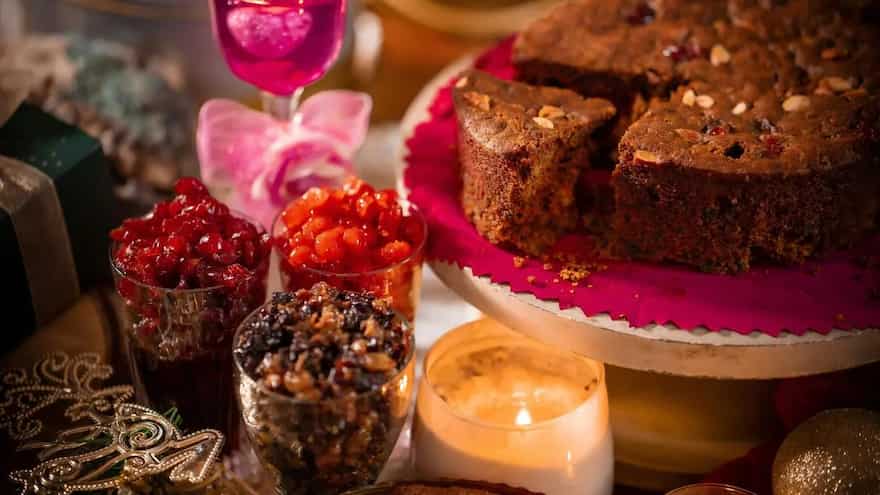
Image credit: Pexels
Growing up in Bandra, Christmas meant extended family and shared neighbourhoods. “We would gather at large family homes, and one of my grandmother’s brothers would dress up as Santa and distribute gifts. I had Catholic and East Indian friends, and we visited each other’s homes. The festival felt like one large family celebration.”
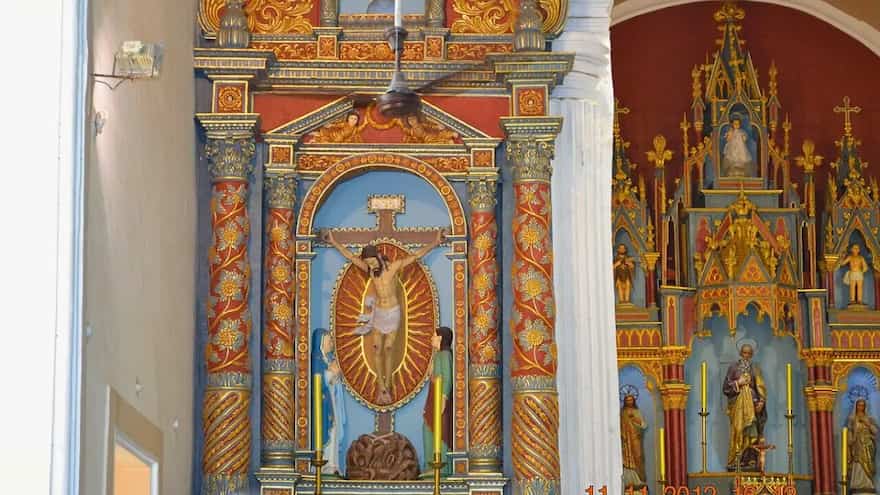
Image credit: Wikimedia Commons
Even today, he associates the season with a very specific part of the city. “Today, families are more scattered and Christmas has become a busy time for business, but Bandra still holds that spirit. If you are around Bandra at Christmas, you should experience the carol singing, the Christmas fairs, the Bandra Gymkhana market, and the Christmas mass at St. Andrew’s Church. It is a church that is older than the Taj Mahal, and Christmas there has a very special atmosphere.”
Peri Avari: Carrying Parsi Christmas Across Continents
That same adaptability appears, with a distinctly diasporic turn, in the work of Chef Peri Avari, now based in the US. Her Christmas table carries Parsi food memory, adjusted gently to a new cultural setting. “As a chef living in the US for over two decades, one of my main focuses has been making Indian and Parsi cuisine more approachable for Western audiences. Many of my products and recipes draw from my Parsi traditions, adapted to suit how I serve customers and entertain friends and family today.”
She sees Parsi food as naturally suited to the holiday spread. “One of the most interesting aspects of Parsi cuisine is how easily it adapts to Christmas and holiday celebrations. My holiday brunch menus always include a frittata-style papeta per eedu, which is potatoes cooked with well-beaten eggs, or a shakshuka-style tamota per eedu, where eggs are poached in tangy, spicy tomatoes. Eggs are a staple of global brunch culture, and these dishes fit naturally while still feeling celebratory.”
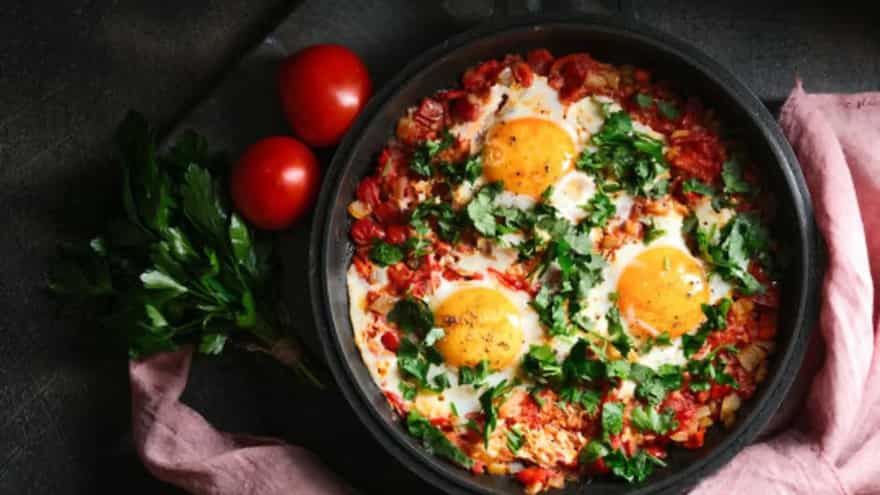
Image credit: Adobe Stock
She also returns to a lesser-known classic. “Another favourite I enjoy working with is the Parsi chapat, or crêpes, which I pair with different flavoured creams, festive preserves, and toppings, reimagined for my holiday table.”
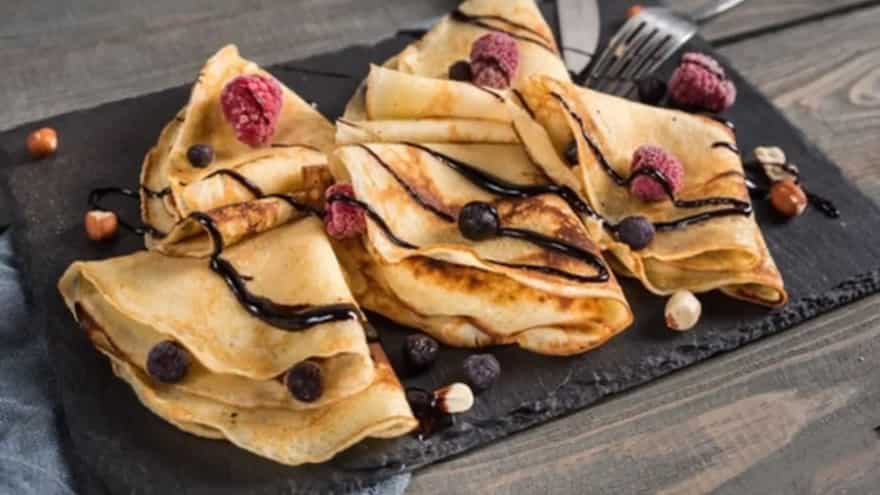
Image credit: Adobe Stock
Taken together, these voices show that Parsi Christmas food is not preserved in a single menu or era. It moves easily between roast meats and fruit cakes, club halls and home kitchens, Bandra and the Bay Area. What remains constant is the love for food itself, built through memory, generosity, and a belief that celebration tastes better when shared.




