


 Share
Share

Parsi food carries memories of Persia and blends them with Indian flavours picked up in Gujarat and Maharashtra. Over generations, this mix of cultures has created a rich food tradition. At the heart of it lies one ingredient that always appears: the humble egg. In a Parsi home, an egg is often the answer to what’s for dinner. One of the most iconic ways it is used is through par eedu. This method turns a cooked vegetable or dry preparation into a full meal by cracking an egg on top and gently steaming it until just set. It adds richness, comfort, and a sense of generosity. This habit can be traced back to the Parsi approach to eating, where food must always be nothing but satisfying and wholesome.
How Par Eedu Works In The Kitchen
Par eedu dishes follow a pattern. The base is made first and cooked well. Then an egg is cracked on top. The dish is covered with a lid and cooked on a low flame until the egg sets. The white becomes firm but the yolk stays soft. The egg does not mix into the dish. It rests above it. This method is used on everything from masala potatoes to leftover bread. The trick lies in timing. You must cook the base till it is almost ready. Then add the egg so that it finishes cooking with the steam. This is often done in a heavy-bottomed pan. Some people also use the oven for more even heat. The egg should never be overcooked. A soft yolk is part of the charm. A reliable explanation of this method can be found in Niloufer Ichaporia King’s book My Bombay Kitchen, which includes traditional recipes and family-style techniques.
Here are five variations of par eedu are easy to try at home. You can make them with common ingredients that are already in your kitchen. Each one is built on the same idea: cooking a flavourful base and then adding eggs on top. The recipes are comforting, flexible, and full of taste. They’re a great way to turn simple ingredients into a complete meal.
1. Salli Par Eedu (Eggs On Potato Straws)
This is perhaps the most well-known version. Parsis deep‑fry thin potato matchsticks called salli until crisp and golden. In a pan, warm oil or ghee and add cumin seeds, chopped green chilli, garlic and sliced onion. Cook until fragrant, then stir in chopped tomato and cook till soft. Add the cooked potato straws atop the base, gently spread and press to even it out. Make small hollows and crack eggs into them, sprinkling a little salt and freshly crushed pepper over each. Cover with a lid and cook on low heat until the egg whites are just set and yolks remain soft. Garnish with fresh coriander. This dish balances crisp, tomato, spice and egg. It is often served with bread or Pav and a cup of chai.

2. Tameta Par Eedu (Eggs On Tomato‑Onion Masala)
This variation uses a thick, spiced tomato‑onion base as the foundation. Begin by heating oil and sauté finely chopped onion until translucent. Add chopped ripe tomato, green chillies and perhaps ginger‑garlic paste. Season with salt, turmeric, red chilli and a pinch of sugar if desired, then simmer until it reduces into a rich masala with oil separating. Flatten this base and gently crack eggs over, maintaining some distance between each. Put on the lid and steam on low heat till the egg whites are firm and yolks slightly runny. This simple combination is comforting and quick, perfect for a light dinner or brunch. Serve with toasted bread, pav or chapati.

3. Bhinda Par Eedu (Eggs On Stir‑Fried Okra)
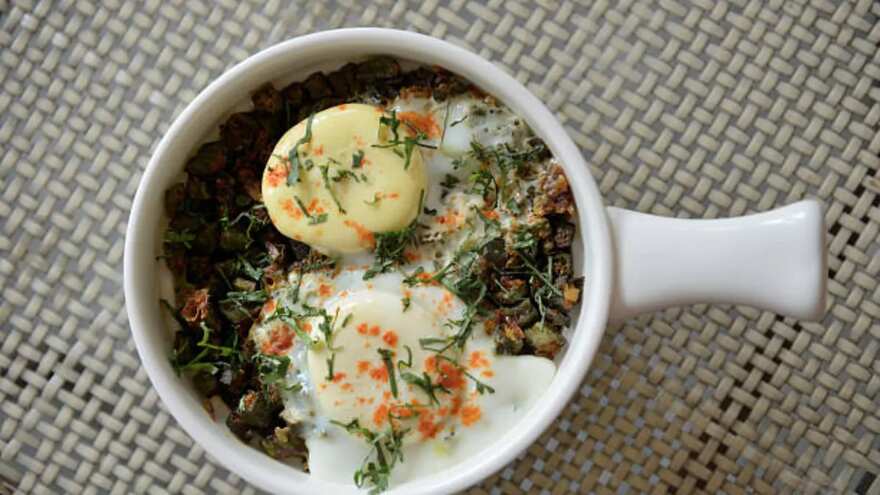
To make this version, wash and dry fresh okra thoroughly then slice it thin. Heat oil in a pan and fry cumin seeds. Add the okra along with chopped onion, green chilli, salt and turmeric, cooking on medium‑high heat so that the okra turns golden and crispy and avoids sogginess. Once the browning is complete and the sabzi is dry, level the mix and crack eggs over it. Cover and steam on gentle heat. The egg white firms over the okra while the yolk sits soft above. This variation works well with both roti and bread. It is a common weekday meal in many Parsi kitchens for its ease and balance of flavours.
4. Papeta Par Eedu (Eggs On Spiced Potato Slices)
Slice potatoes thinly and fry lightly or sauté in oil till they begin to soften. Remove and drain excess oil, then return to the pan and add chopped onion, garlic, tomato, turmeric, chilli powder, cumin powder and salt. Add a splash of water, cover and cook until the potatoes absorb the spices and the masala thickens. Once it is almost dry, level the mixture and crack one or two eggs over the top. Cover and let it steam on low heat until the whites set and the yolk remains soft. Some cooks sprinkle coriander or dhana‑jeera powder at the end. Eaten with pav or rotis, this is heartier than tameta but lighter than salli.

5. Kheema Par Eedu (Eggs On Mutton)
For non-vegetarians, kheema par eedu is one of the most filling egg meals in Parsi cooking. The base is made with minced meat, usually mutton or chicken. Cook the kheema with onions, garlic, ginger, tomatoes, and a standard mix of spices like cumin, coriander powder, and garam masala. Add green peas or diced potatoes if you want to bulk it up. Once the mixture is dry and the oil starts to separate, flatten it with a spoon. Crack eggs over the kheema, keeping a little space between each one. Cover the pan and allow the eggs to steam slowly. The meat remains juicy underneath, while the egg adds a soft upper layer that cuts through the spice. Serve this with plain paratha or laadi pav. It also tastes good with just a few raw onion slices on the side.




