


 Share
Share

For a Bengali, kosha mangsho is never just another mutton curry. It is the ultimate Sunday lunch since childhood that drew everyone to the dining table; it was the dish cooked or ordered for a birthday treat, and it was the indulgence that made a Durga Puja meal feel gloriously replete. The dark, clinging gravy, tender chunky pieces of mutton, and the potatoes fully soaked in spice have a way of turning even an ordinary meal into an occasion. With Durga Puja here, pandal hopping is followed by elaborate lunches and dinners.
And kosha mangsho often becomes part of that familiar, comforting idea of pet pujo (fully satisfying the stomach) during Pujo. Yet Bengali cooking has never been a one-curry affair. Its vast repertoire includes dishes distinguished by roasted spices, unusual aromatics, and different cooking traditions. So, there is no reason to let kosha mangsho or your everyday mangsher jhol monopolise your festive table. This Pujo, give these characterful preparations a turn in your kitchen. Your taste buds shall not be disappointed.
Durga Puja 2026: 5 Festive Non-Veg Dishes That Every Bengali Foodie Swears By
1. Mutton Dak Bungalow
Few dishes bring such an old-world, hearty quality to your festive meal as resplendently as mutton dak bungalow. Associated with the kitchens of colonial-era travel rest houses, this preparation is known for its generous, rustic spice blend, alongside potatoes and boiled eggs. The exact origin stories vary, but the dish has retained its universal appeal as a substantial, homely curry.
Ingredients (Serves 4)
- 750g bone-in mutton
- 2 potatoes, halved
- 2 boiled eggs
- 2 onions, sliced
- 1 tbsp each ginger and garlic paste
- 100g yoghurt
- 3 tbsp mustard oil
- 1 tsp turmeric
- 2 tsp coriander powder
- 1 tsp cumin powder
- 1 tsp garam masala
- 1 bay leaf
- 1 small cinnamon stick
- 3 cloves
- 3 green cardamoms
- Salt and chilli powder to taste
- Water as needed.
Method
- Start by marinating your mutton with yoghurt, ginger, garlic, turmeric, coriander, cumin, chilli, and salt for at least an hour in the refrigerator.
- In the meantime, heat mustard oil and fry the potatoes until lightly golden before setting aside. Then add in the whole spices, followed by your onions, and cook until golden.
- Time to pour in the mutton and cook until the masala clings to the meat. After that, add water, then cover and simmer until the mutton is nearly tender.
- Then add your potatoes last and cook until both are fully cooked. Finish with garam masala and serve with halved boiled eggs on top or on the side.
2. Chui Jhal Mutton
For a Pujo meal that needs a little more fire, you can give chui jhal mutton a try. This preparation uses the pungent, peppery stem of Piper chaba or Piper chilli, an aromatic creeper that grows on mango trees and is found and used in parts of West Bengal and Bangladesh. Its flavour is very unique, along with its oddly familiar heat akin to that of dried red chilli, which lends your curry a bold, complex bite. The National Council for Hotel Management and Catering Technology’s culinary documentation records chui jhal as a regional Bengali preparation that is highly coveted.

Image credit: Wikimedia Commons
Ingredients (Serves 4)
- 750g mutton
- 50 to 75g chui stem, peeled and cut into short lengths
- 2 onions, sliced
- 1 tbsp each ginger and garlic paste
- 3 tbsp mustard oil
- 1 tsp turmeric
- 1 tsp cumin powder
- 1 tsp coriander powder
- 2 green chillies
- Salt and water as needed.
Method
- Start by marinating your mutton with turmeric, cumin, coriander, and salt. Then heat mustard oil in a heavy pan, add your onions, and cook until golden.
- Stir in the ginger and garlic pastes, and then pour in the meat pieces and sear them well. After that, tip in the chui stem, green chillies, and a little hot water.
- Cover and cook slowly, adding water in small amounts until the meat becomes tender and the gravy thickens.
- Finally, serve with plain steamed rice, allowing the unique chui flavour to take centre stage.
Also read: Celebrate Navroz With Parsi Mutton Kebabs At Home
3. Thakur Bari-Style Mangsho'r Safed Korma
If kosha mangsho is all about dark gravy and an assertive spice profile, then safed korma offers a milder, more aromatic alternative. Associated with the culinary traditions of the Tagore household, this preparation uses dairy and whole spices to create a pale-hued, rich sauce. It is highly suitable for a leisurely Pujo lunch with fragrant pulao or paratha.
Ingredients (Serves 4)
- 750g mutton
- 2 onions, finely sliced
- 150g yoghurt
- 150ml milk
- 1 tbsp each ginger and garlic paste
- 3 tbsp ghee
- 1 small cinnamon stick
- 4 green cardamoms
- 4 cloves
- 2 green chillies
- Salt and water as needed.
Method
- Start by marinating your mutton in yoghurt, ginger, garlic, and salt for an hour in the refrigerator. In the meantime, heat ghee in a heavy pan and add your whole spices.
- Now add the onions and cook until they become soft but not deeply browned. Time to pour in the marinated mutton pieces and cook slowly, stirring regularly and carefully so that the yoghurt does not split.
- Then add a little hot water, cover the pot, and simmer until the meat is tender.
- Finally, lower the heat and stir in warm milk before cooking gently until the sauce becomes creamy. Avoid vigorous boiling after adding the milk.
4. Bhaja Moshla Mutton
Unlike kosha mangsho, where patiently browned onions help create the characteristic dark gravy, bhaja moshla mutton puts freshly roasted spices in the spotlight. Coriander seeds, cumin, and dried red chillies are roasted and then ground together to produce a fragrant, slightly smoky masala. The result is a robust and mouthwatering curry that works extremely well with plain steamed rice, allowing the spice blend to speak for itself.
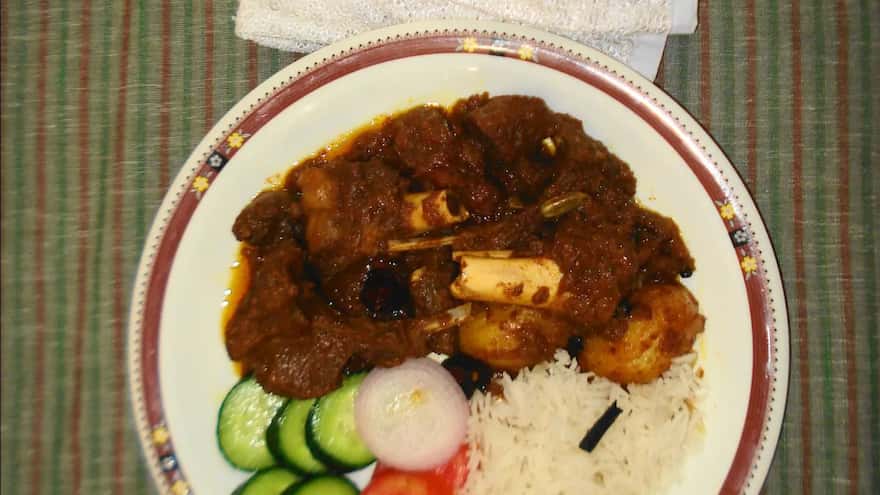
Ingredients (Serves 4)
- 750g bone-in mutton
- 2 onions, sliced
- 1 tbsp ginger-garlic paste
- 2 tbsp mustard oil
- 1 tsp turmeric
- Salt to taste
- 1 tsp coriander seeds
- 1 tsp cumin seeds
- 3 dried red chillies
- ½ tsp garam masala
- Hot water as required.
Method
- Start by dry-roasting your coriander seeds, cumin seeds, and dried red chillies over a low heat until they turn fragrant. Now cool the lot and grind into a coarse powder.
- After that, heat mustard oil in a heavy-bottomed pan and brown your onions. Then pour in the ginger-garlic paste and cook briefly before adding your mutton pieces, turmeric, and salt.
- Fry until the meat is properly coated in the masala, then stir in the freshly ground spice blend.
- Time to mix well and cook for a bit before adding hot water, covering and simmering until the mutton becomes tender, adding more water if required. Finish with garam masala and serve hot.
Also read: India’s Best Mutton Curries
5. Niramish Mangsho: The Onion-and-Garlic-Free Mutton Curry
The name sounds contradictory, but niramish or bhoger mangsho has a very special place in Bengali cooking. Here, niramish refers to the omission of onion and garlic, not the absence of meat or non-vegetarian protein itself. Instead, the deeply nostalgic and religious curry builds its flavour around ginger, whole spices, asafoetida and, in some household versions, yoghurt as well. It is associated with Pujo cooking for various embodiments of Shakti and Maa Kali, as well as for various religious, festive occasions, though the precise customs and ingredients differ between families and regions.
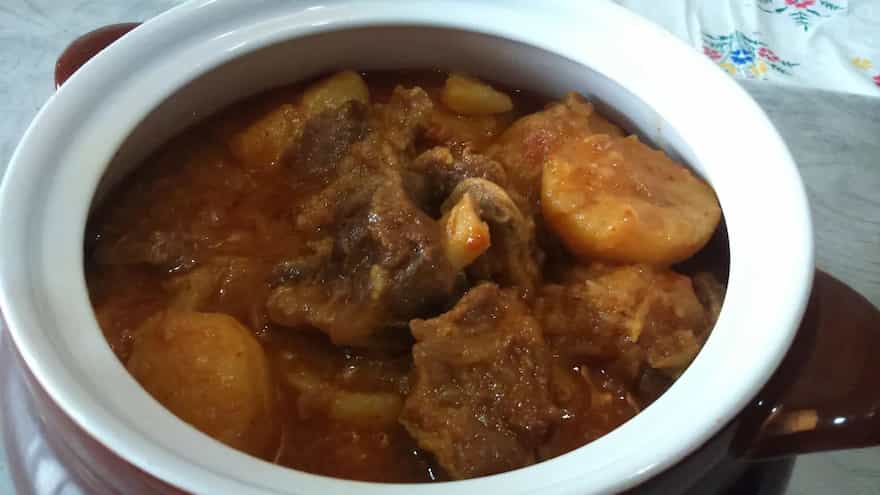
Image credit: Wikimedia Commons
Ingredients (Serves 4)
- 750g mutton
- 3 medium potatoes, halved
- 150g plain yoghurt
- 2 tbsp ginger paste
- 3 tbsp mustard oil
- 1 tbsp ghee
- 1 bay leaf
- 1 small cinnamon stick
- 4 cloves
- 3 green cardamoms
- ½ tsp asafoetida
- 1 tsp cumin powder
- 1 tsp coriander powder
- ½ tsp turmeric
- Salt and chilli powder to taste
- Hot water as required.
Method
- Begin by marinating your mutton with yoghurt, ginger, turmeric, cumin, coriander, and salt for at least two hours in the refrigerator. In the meantime, heat mustard oil and lightly brown your potatoes, then set them aside.
- After that, add ghee and whole spices to the pan, followed by the asafoetida or hing. Time to add the marinated mutton pieces and cook over a medium-low heat, stirring carefully.
- Once the masala thickens, add hot water, cover, and simmer the whole pot until the meat is almost tender.
- Now, pour in the potatoes and continue cooking until both are soft and the gravy has thickened a lot more. Finally, serve with steamed rice or luchi.




