


 Share
Share

You may enjoy Banaras to the fullest thanks to its distinctive surroundings. With the sound of the Ganges providing the appropriate backdrop, a great morning at Brijrama would involve carrying your cup of tea or coffee to their balcony and watching the city come to life. However, evenings wouldn't be complete without going to the Ganga aarti at Dashashmev Ghat, which is just a short stroll away. The Brijrama Palace, where mornings start with musicians in the bada aangan (huge courtyard) filling the air with their raagas, is the best example of this. The day in the palace begins with their notes. Beautiful kathak performances that narrate stories from Radha and Krishna's love narrative take place in the evenings. These components reveal and preserve the city's culture, culinary roots and customs, despite the fact that they are frequently viewed as entertainment. At the Brijrama Palace, dance and music therefore unite mornings and evenings, making each moment a significant encounter with Banaras' cultural core.
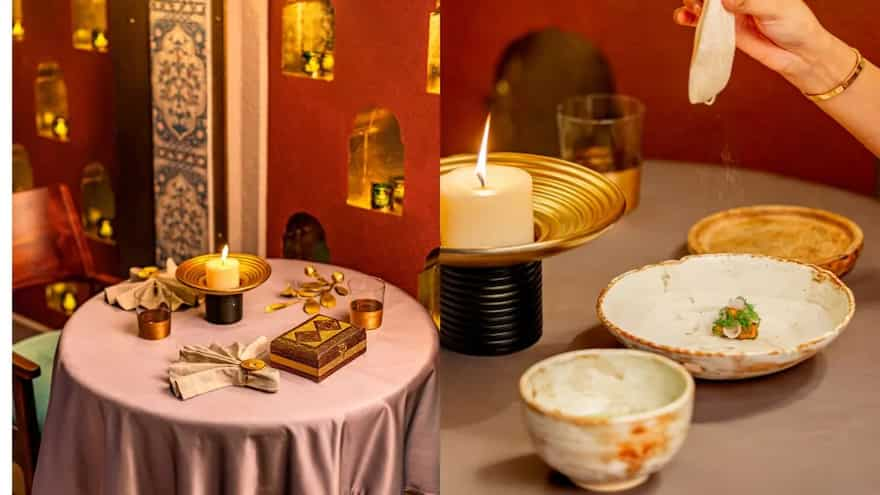
Image Credit: BrijRama Palace, Varanasi
Life Inside Varanasi’s Oldest Riverfront Palaces
It’s more like entering a chapter of history when you arrive at the Brijrama Palace Varanasi than it is like checking into a hotel. The palace, one of Varanasi's oldest attractions, was built in 1812. Throughout the one-night stay, every hallway, archway, and carved balcony seemed to whisper tales of the past. A traditional wooden bajra canoe waits for you at Bhaisasur Ghat, where the voyage starts. The magnificent façade of the palace rising above Darbhanga Ghat is gradually unveiled during the leisurely 10-minute ride along the Ganges. Situated approximately four kilometres from the city's railway station and just two minutes' walk from Dashashwamedh Ghat, the palace is a remarkable example of Maratha architecture.
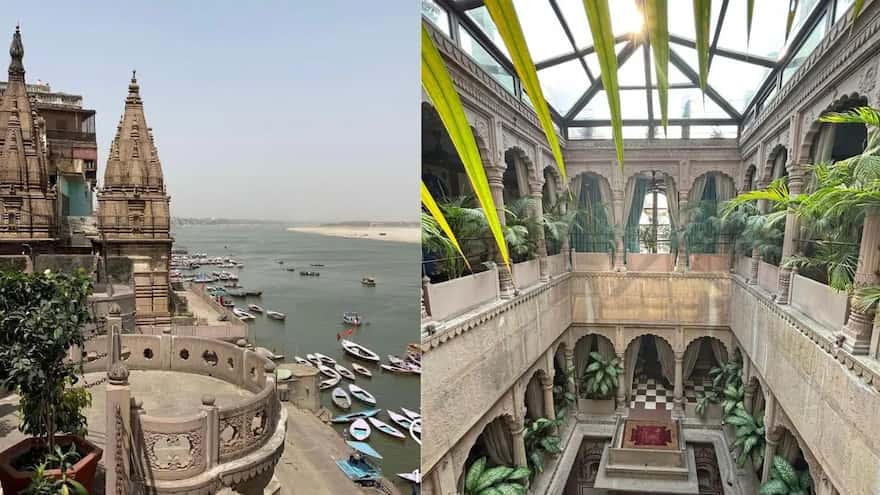
Image Credit: Rajlakshmi Dastidar
The interior's elaborate features, serene gardens, and river vistas create a setting where hospitality and history collide. The cuisine itself seems to be a part of the palace's centuries-old history, and even the dining experience carries that legacy forward. The flavours on the plate feel firmly anchored in the region. As implied by its name, Aangan is situated around one of the Brijrama Palace's courtyards. Thanks to Chef Devansh and his staff, Varanasi's best vegetarian food is now served in a fine-dining setting in what was once the king's stage for cultural acts.
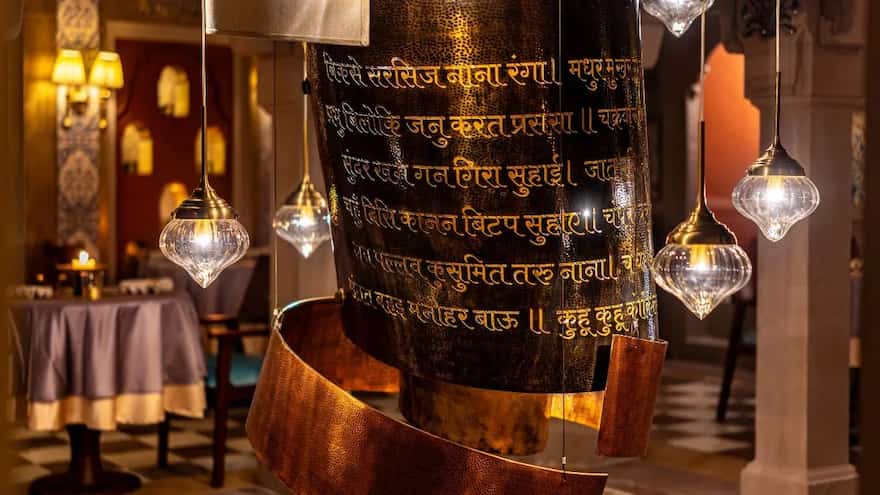
Image Credit: BrijRama Palace, Varanasi
Three dining spaces in the palace only serve vegetarian food. Operating as an all-day dining establishment, Darbangha offers a menu that includes Italian and Chinese cuisine in addition to traditional Banarasi specialities. Notably, Aangan, their recently launched restaurant, is well worth the time. Here, a 2.5-hour tasting menu consisting of 10 courses honours the palace's guiding lights, such as Das, Bahadur, and Munshi. Every meal is thoughtful, skilfully prepared, and creative.
And Then, The Palace Began To Speak Through Food At Angaan
As soon as you walk in, you notice a big, cylindrical metal chandelier with a Sanskrit shlok carved on it. Your gaze will trail the shlok, and then you’ll be astounded by the ceilings and walls, which shine and sparkle with thikri craftsmanship. The vegetarian food at Angaan is fit for a king or queen. First on the menu is a sizable achappam in the shape of a kalachakra, which is a crisp, savoury cracker served as an amuse-bouche. The stuffing of the achappam is slightly sweet and has a mild crunch. The meal honoured Sridhar Narayan Munshi's interest in celestial patterns. The flavours were balanced and the texture so delicate that you would almost ask for another portion.
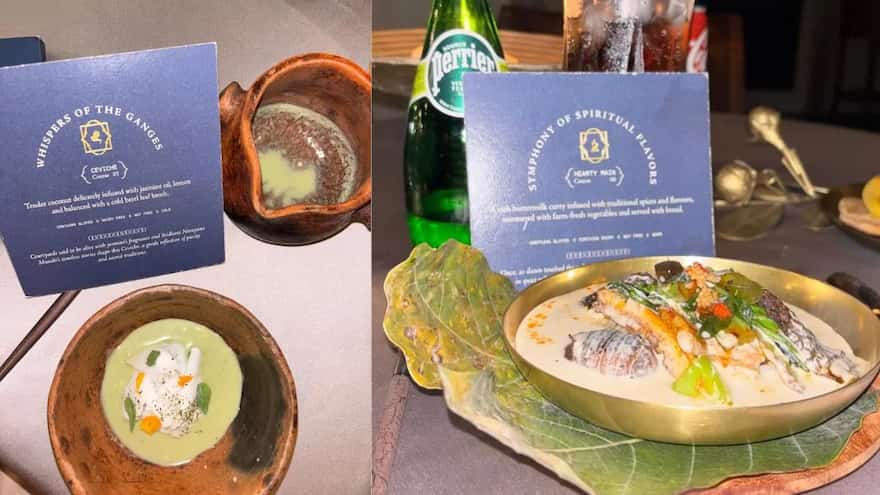
Image Credit: Rajlakshmi Dastidar
Next, an innovative take on ceviche turned many taste buds around. It is served in a betel leaf broth with soft coconut chunks infused with lemon and jasmine oil. You might not be sure at first how the flavours of paan, coconut, and jasmine would blend. But surprisingly, though, it ended up being one of Slurrp’s favourite dishes of the night. It was simple, yet full of flavour. The following three dishes honoured Darbhanga's King Rameshwar Singh Bahadur. A hearty main entrée consisting of potatoes, carrots, and cauliflower in a creamy, spicy buttermilk curry was served as the sixth meal.
Laccha parantha, phulka, and sheermal roti, a sweet flatbread prepared with flour, milk, ghee, saffron, and cardamom, were included in the basket of breads. The smokiness of the veggies and the aromatic spices in the curry were what really brought the dish together. Chef Devansh recommends ripping a piece of laccha parantha and immersing it in the curry. You’ll become a fan after just one bite. He later explained that the curry used panch phoron, a traditional five-spice mix often found in Bihari kitchens. By the 8th course, it was time for desserts.
Desserts usually make us feel like a kid at a candy store. The dessert always leaves the biggest impression on most. It included a lovely syphon malaiyo, a contemporary take on the traditional winter dessert from Uttar Pradesh, particularly Varanasi. Each mouthful, served in an earthen sikora, tasted like clouds infused with saffron. The meal honoured Babu Brijpal Das, who was rumoured to savour this treat on peaceful winter evenings. The fluffy malaiyo was topped with a crisp pista tuile. Although it didn't add much flavour, it gave the dish a nice crunch.
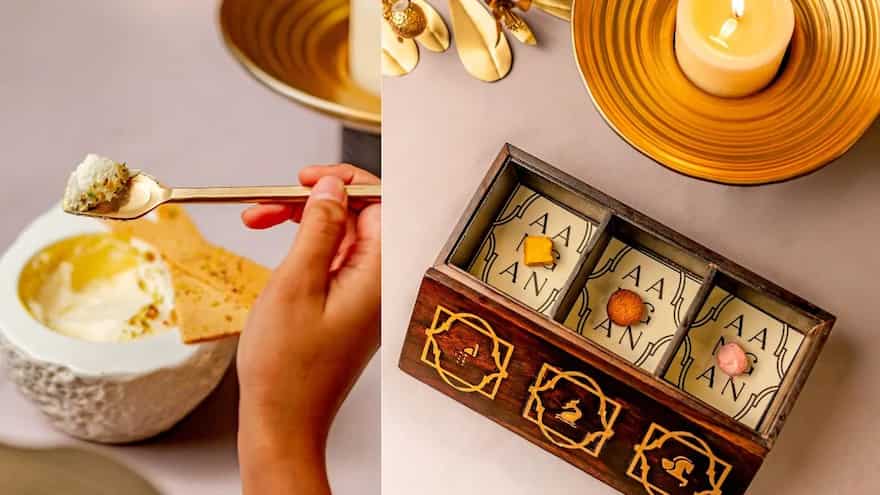
Image Credit: BrijRama Palace, Varanasi
A Sweet Interlude Before The Curtain Fell
Just when you think you are satiated, another dessert is set on the table in front of you. Aangan's rasmalai tres leches was a work of art. It included a delicate jaggery jelly, dried rose petals as a decoration, and a soft cake enhanced with khoya that was bathed in sweet milk laced with saffron. The appearance, flavour, and perfume all blended wonderfully. The tasty, well-known Banarasi paan is served as the final course. For those who are in the mood for international cuisine, the chef can also prepare Chinese, Italian, Mexican, or Thai specialities.
Aangan's menu is unique not only because of its tastes and Chef Devansh's inventiveness, but also because of its close ties to the city's and the palace's past. It seemed as though additional diners from a different era joined the table with each entrée. It almost felt as if you were having a bite of these dishes with Rameshwar Singh Bahadur and the malaiyo with Shridhar Narayan Munshi.
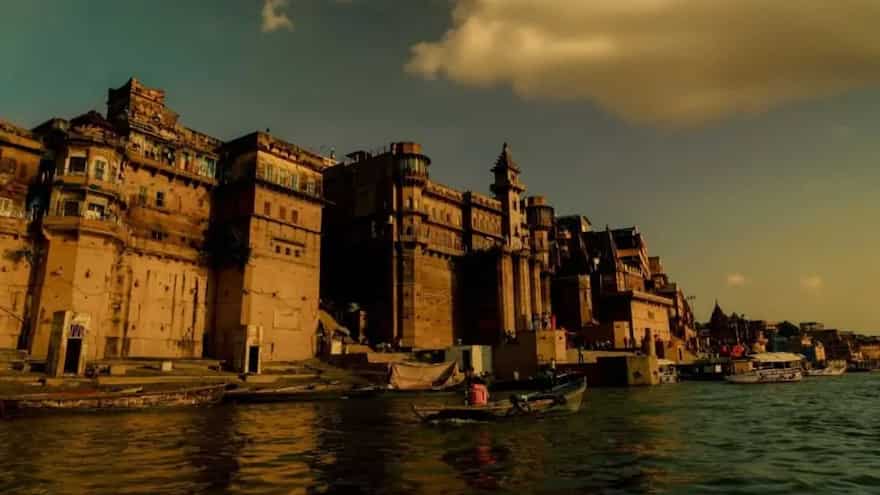
Image Credit: BrijRama Palace, Varanasi
Anything Else?
The 32 well-equipped rooms on the property are categorised into five groups. The Maharaja suite and the Varuna Burj suites, which have views of the sacred Ganges, are two of their highlights. The rooms in Vasundhara, Dhanudhara, and Nadihara comprise the remaining three groups. The walls were painted by artists from Jaipur, Jodhpur, and Varanasi. All of the furniture came from Kolkata, but the wall brackets and chandeliers came from Jaipur. The historic river is visible from a verandah at the reception, which is a sight to remember. The walls of the rooms have classic décor with a modern twist, and are decorated with exquisite paintings and traditional lighting. The 300-square-foot Varuna Burj Room, commonly referred to as ‘The Bastion,’ is a semi-circular space that is an extension of the palace wall if you're looking for a view. Visitors can explore the Ganges and take in a breathtaking 180-degree view of the crescent here.
Address: Darbhanga Ghat, Dashashwamedh, Uttar Pradesh 221001
Timing: Open 24 hours for guests
Price: Angaan for INR 14,000+taxes for two; INR 30,000+taxes per night




