


 Share
Share

Insects are prevalent on earth and can be found everywhere, from tropical rainforests to arid deserts and cool mountains. Some weird us out, some strike us as pretty, and some, apparently, look like a delicacy. Several cultures around the world view insects as food. People eat insects fried, barbequed, or boiled and seasoned with spices. Of course, not all insects are popular, or even easy to find, for a home cook who wants to try them at home. Here are a few ways insects are consumed from across the globe.
Kai Chutney, India
One of the most celebrated dishes in Odisha, India, is kai chutney, prepared by roasting red ants. The spicy chutney is savoured with other regional delights, and it has also received the Geographical Indication Tag (GI) in 2024. Red ants are collected and roasted over fire before being ground into a coarse paste using a mortar pestle. A few local spices and herbs are added to elevate the flavour. Some people fry the red weaver ants until crispy and add spices after grinding them. These ants are commonly found in the Similipal forests, constituting Asia's second-largest biosphere. The chutney is prepared by grinding a blend of salt, ginger, garlic, and chillies. Similar red ant chutneys are also found in neighbouring states like Jharkhand and Chhattisgarh.
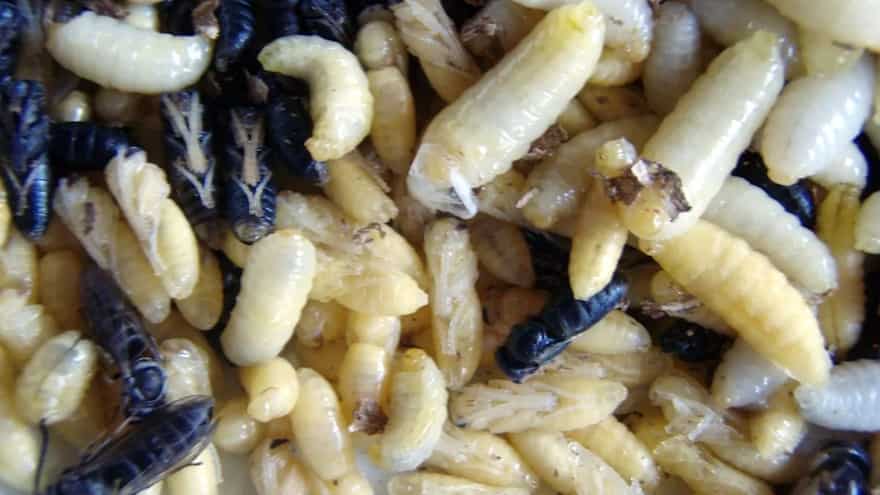
Image Credit: Wikimedia Commons
Inago And Hachinoko, Japan
Inago and hachinoko are larvae of bees and wasps. They look quite similar to the cocoon in which a butterfly develops its wings before flying. Many people's meals were supplemented with inago and hachinoko, particularly during their harvest in the chilly winter months and following the devastation of World War II. The custom of eating inago and hachinoko declined after the middle of the 20th century, as industrial pest control became more common and high-quality food became widely accessible to the general public. Due to their widespread availability in packaged form, eating both of these insects is currently experiencing a renaissance.
Silkworm Pupae, Korea
Korean food is not confined to barbecued meat, ramen, kimchi, and bibimbap. It is much more diverse and vibrant. In Korea, silkworm pupae or beondegi are either steamed or boiled before they are seasoned and served as a snack or side dish. One can find street vendors serving this delight on their stalls along with other snacks. Even though clothes are made from silkworms in India, in South Korea, silkworms are used for snacks and are considered one of the favourite dishes. The steamed or boiled food is served with toothpick skewers in paper mugs.
Crispy Crickets, Thailand
Crickets are consumed in many parts of the world, including India, Japan, Thailand, South Africa, and Singapore. Crispy crickets, as the name suggests, are prepared by deep-frying crickets until they are crispy. After draining excess oil, the insects are seasoned with chilli, soy sauce, and lime to infuse sweet, spicy, sour, and umami tastes. Locals relish it as a street food snack, rich in fibre, protein, and vitamins. Thailand is world-renowned for its flavorful, exotic, and diverse street food, and for good reason. Thailand's street food has something for everyone, from the most basic to the most adventurous dishes.
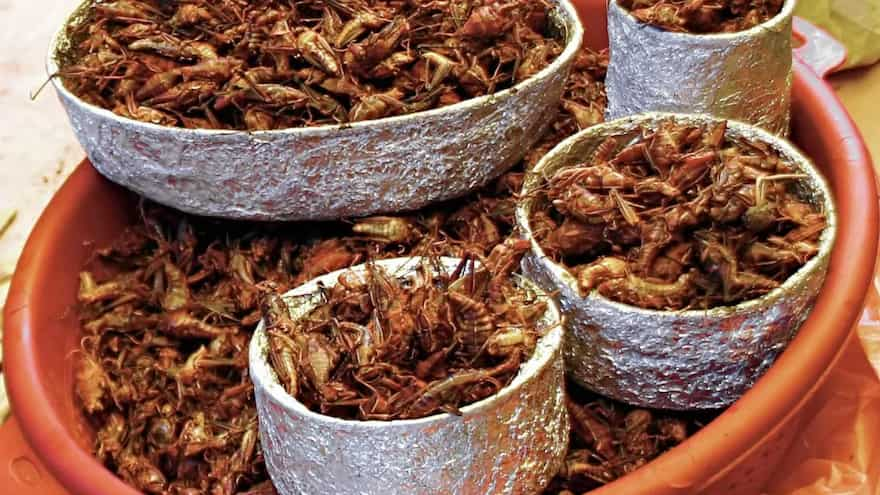
Image Credit: Wikimedia Commons
Chapulines, Mexico
Chapulines are a species of grasshoppers which are first toasted on a griddle and then seasoned with lime juice, garlic, salt, and chillies. It is a crunchy snack often served with guacamole or as a topping on tacos. Another popular insect dish consumed in the country is escamoles or Mexican caviar. These are edible larvae and pupae of ants which are sauteed in butter, seasoned with spices, and served with omelettes or tacos.
Eri Polu, India
If you have visited Assam or the seven sisters in the Northeast, you would know the crucial role of insects in regional cuisines. Eri polu is a popular dish prepared in Assam using pupae of the Eri silkworm. They are cooked with local herbs and spices along with bamboo shoots. Other must-try dishes across Northeastern states include silkworm pupa curry, bamboo worm fry, and grasshopper fry. The regional cuisines also use hornet larvae, beetle larvae, muga silkworm, and dragonfly nymphs to prepare delicacies.




