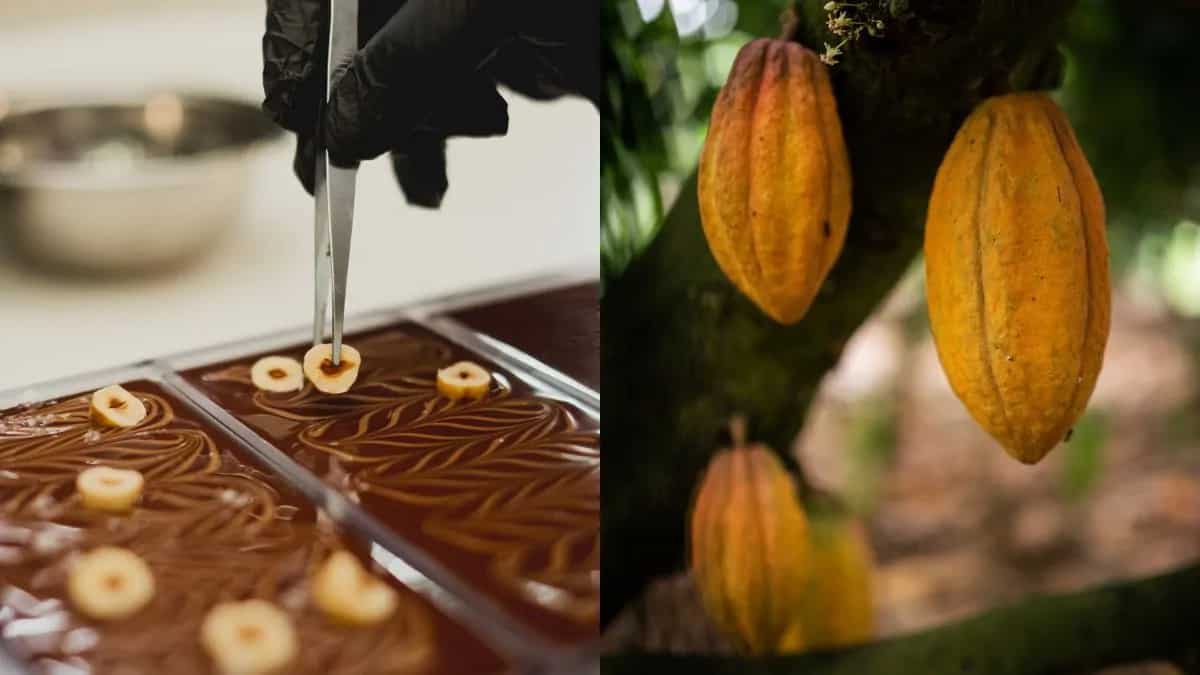
For decades, the Indian consumer's relationship with premium chocolate was defined by an Eurocentric bias. A gold stamp of validation required the inclusion of imported European couverture or milk chocolate solids, leaving domestic cultivation relegated to mass-market confectionery or industrial fillers. However, a profound paradigm shift has quietly taken over the subcontinent, turning the traditional consumption dynamics completely on their head. Driven by an ambitious community of chocolate makers, agricultural innovators, and increasingly discerning palates, the Indian bean-to-bar movement has matured from a niche, experimental trend into a roaring culinary renaissance that celebrates the unique geography and agricultural diversity of India.
The Paradigm Shift: From Generic Commodity To Proud Provenance
The fundamental transformation of the Indian chocolate industry lies in how the core ingredient itself is perceived by the modern market. Rather than treating local harvests as cheap base materials to be masked by heavy processing, consumers and creators alike are looking at cacao through the highly nuanced lens of agricultural history and quality. Industry experts note that this ongoing cultural awakening is backed by explosive economic projections and an entirely new standard of consumer awareness. Mr Vimal Sharma, Founder of SMOOR, highlights how the narrative has evolved away from simple geography to focus on genuine craftsmanship. "The biggest shift is that Indian cocoa is no longer seen simply as a raw material. It is increasingly being recognised as an origin with its own identity," Sharma observes. "For years, premium chocolate in India drew much of its credibility from imported ingredients. Today, that conversation has shifted towards provenance."
Image credit: SMOOR
This change in consumer interest has directly impacted how everyday connoisseurs engage with the product, moving the conversation away from generic sweetness toward absolute transparency. Buyers now want to understand the intricate journey of their food. "Consumers are increasingly interested in where cocoa is grown, how it is fermented, what makes one origin different from another and whether the chocolate is made using authentic couverture," Sharma explains. "That evolution mirrors what we've already seen in coffee, tea and craft spirits, where origin has become synonymous with quality rather than just geography."
As a result, this cultural shift has triggered unprecedented commercial expansion, drawing the attention of global market analysts. The demand for transparently sourced, high-quality confectionery is reshaping retail shelves across the country. "This growing appreciation is also reflected in the market. According to IMARC Group, India's premium chocolate market reached USD 1.25 billion in 2025 and is projected to grow to USD 2.24 billion by 2034, signalling a consumer who is increasingly willing to pay for craftsmanship, authenticity and quality," Sharma adds. "The rise of bean-to-bar makers and single-origin chocolates has accelerated this shift, bringing Indian cocoa into sharper focus."
Crucially, this evolution is not just a marketing triumph; it is a fundamental re-evaluation of agricultural potential. Chef Ruby Islam, Head of Product & Innovation at Manam Chocolate, points out that the domestic industry is finally giving local terroir the academic and culinary respect it deserves. "What excites us most is that Indian cacao is finally being discussed as an origin in its own right, not as a substitute or novelty," Islam states. "West Godavari cacao has distinct terroir characteristics, and we're only beginning to understand its full potential."
Image credit: Manam
Rather than simply uncovering existing resources, the current movement requires intense, proactive collaboration with farming communities to elevate the baseline quality of the crop before it ever reaches a roasting machine. "The opportunity for us... is that Indian cacao isn't being discovered; it's being developed," Islam notes. "Through our proprietary, science-led post-harvest fermentation processes and drying, we're allowing the unique flavour profiles of the beans with quality that didn't previously exist. That's genuinely exciting from a product development perspective because the core ingredient is at an enhanced level."
The Agricultural Alchemy Of Indian Terroir
The Southern peninsula offers highly diverse microclimates that give local crops distinct environmental traits. By taking charge of the entire supply chain, modern bean-to-bar brands are completely rewriting the rules of engagement between the laboratory and the farm. This ensures the inherent potential of the crop is highlighted rather than lost during post-harvest processing. The focus on specific districts allows makers to map the vast, untapped geographical diversity of the Southern states. "One of Indian cocoa's greatest strengths is that it offers something the global chocolate industry increasingly values: authenticity, traceability and a genuine sense of place," Sharma highlights. "Known for its distinctive notes of red fruit and citrus, the cacao allows us to showcase the richness and unique character of Indian-origin chocolate through our bean-to-bar craftsmanship."
By standardising processing techniques within the country, chocolatiers can finally extract the delicate tasting notes natively embedded in the soil, translating the environment directly into the finished product. "Every step of the bean-to-bar journey, from sourcing and roasting to refining, tempering and moulding, is carried out in-house to preserve the character of the cacao," Sharma details. "Cocoa grown across Andhra Pradesh, Karnataka, Kerala and Tamil Nadu develops distinct flavour profiles shaped by local terroir, climate and post-harvest practices. As fermentation and drying standards continue to improve, Indian cacao is increasingly capable of producing the fruity, nutty and floral notes expected of fine chocolate."
Image credit: SMOOR
By building direct relationships with agrarian communities, modern chocolate houses ensure that innovation begins out in the open fields rather than the manufacturing facility. This profound connection with the soil means that the core flavour elements of a chocolate bar are deliberately cultivated, nurtured, and preserved long before the mechanical refining process even begins. "The bean-to-bar approach fundamentally changes how we think about product development. It means understanding that innovation doesn't begin in the lab; it begins in the field with the farmers," Islam states. "When product development is rooted in direct relationships with over 200 farmers across 3,000 acres... it develops into something fundamentally different from commodity-based work."
This granular level of control enables chocolatiers to intentionally guide the flavour development of the bean from its very inception, moving away from the reactionary methods of traditional commercial manufacturing. "That relationship with the land itself informs every decision we make," Islam explains. "Understanding how soil chemistry, genetics, and harvesting practices influence what emerges in the bean changes how we develop chocolate couvertures and, from that, the world of endless chocolate confections."
Image credit: Manam
Establishing dedicated facilities in the heart of farming districts grants artisans unprecedented authority over the delicate fermentation and drying cycles, which are notoriously difficult to standardise in tropical climates. "Our cacao Fermentery in Tadikalapudi in West Godavari District of Andhra Pradesh gives us direct control over post-harvest processing, which means we're not starting from wet beans or commodity beans," Islam shares. "We're starting from the harvest itself. That control means we can shape a bean's flavour potential right from the start, and then build our chocolate-making process around that potential, instead of the usual approach of adjusting the process later to compensate for whatever the beans arrive with."
Ultimately, this shifts the creative paradigm entirely. The artisan becomes an interpreter of the harvest rather than a dictator of artificial flavour. "When we're developing a new chocolate or confection, the question shifts entirely. Rather than asking 'What flavour should we add to make this work?', we ask 'What flavour is this cacao bean already offering, and how do we preserve and articulate that through the correct chocolate-making and chocolatiering?'" Islam concludes. "That shift changes everything. It makes our product development slower, more intentional, and far more aligned with the actual quality and character of the fine flavour cacao beans that we are receiving."
Image credit: Manam
Hyper-Local Innovations And Global Flavours
The next generation of flavour innovation successfully balances two distinct consumer impulses: a health-conscious demand for high-cocoa percentages, and a deep desire for adventurous, ultra-indulgent profiles. The contemporary chocolate bar has evolved into a highly sophisticated culinary canvas, reflecting both global trends and deeply rooted regional nostalgia. "The next phase of Indian chocolate innovation is evolving away from predictable flavour profiles toward a more nuanced landscape driven by dual, often contrasting consumer desires," Sharma explains. "On one hand, there is a clear movement toward mindful indulgence, with growing interest in high-cocoa percentages, low-sugar alternatives, and clean-label integrity."
To address this trend, culinary innovators are intentionally fusing heritage traditions with modern global textures to engage adventurous palates, triggering a wave of complex flavour pairing that pushes the boundaries of traditional sweet making. "On the other, consumers are seeking out deep culinary curiosity, where premium chocolate acts as a canvas for adventurous storytelling," Sharma adds. "From an industry perspective, this has triggered a wave of hyper-localization and complex flavour pairing. This experiments with authentic Indian estate cocoa and infuses it with regional ingredients, blending the warmth of Rajasthani chilli, the comforting notes of local dates and cinnamon, or the brightness of coconut and citrus to appeal to a sophisticated palate."
The definition of a premium product is therefore expanding to bridge completely separate culinary spaces, proving that fine chocolate can seamlessly integrate with entirely different gastronomic categories. "Beyond localized ingredients, the definition of a premium chocolate experience is expanding to include lifestyle-led and cross-category innovations," Sharma observes. "We are seeing a convergence of distinct culinary worlds, highlighted by strategic collaborations... which pairs the sophistication of cream liqueurs with fine confectionery. Ultimately, this suggests that the future of the Indian market will not be dominated by a single trend, but rather by a spectrum of choices where consumers oscillate between functional, better-for-you options and ultra-indulgent, experiential flavour profiles."
Image credit: SMOOR
The creative integration of indigenous ingredients requires structural balance, ensuring that regional staples are treated as architectural components rather than superficial garnishes. This meticulous pursuit of compositional harmony forces creators to embrace patience and ongoing refinement over quick novelty. "Experimentation... always begins with the chocolate itself. Before we introduce any new ingredient, we want to consider how the flavours are naturally present in the cacao beans and how an ingredient can integrate with the natural flavour profiles of the beans rather than overshadow them," Islam details. "India offers an incredible pantry to work with, from regional spices and fruits to herbs, nuts, and traditional ingredients that naturally lend themselves to chocolate."
Product development in the craft sector relies heavily on balancing these robust local elements against the delicate chemistry of the cocoa butter and solids. "We spend a great deal of time testing combinations, adjusting proportions and evaluating how flavours evolve over time, because balance is everything," Islam shares. "Some of our ideas come from travel, others from conversations with farmers, chefs and artisans, while many are inspired by nostalgic Indian flavours reimagined through the lens of craft chocolate. Not every experiment makes it to the shelf, and that's an important part of our creative process."
This philosophy has directly inspired groundbreaking approaches to incorporating regional agricultural assets into the raw beans during the earliest stages of processing, completely bypassing standard inclusion techniques. "Our Creative Fermentation Series emerged directly from this question. By fermenting cacao with Mango-ginger, Pedda Rasalu Mango, and Chakkarakeli Banana, we create differentiated enzymatic reactions at the bean level itself," Islam explains. "The chocolate that emerges carries Indian flavour logic from the start; it's not chocolate imposing itself on Indian tradition."
Image credit: Manam
By elevating familiar household ingredients, craft chocolate establishes an authentic connection with the domestic sweet-making heritage, proving that spices belong in chocolate just as much as they belong in a curry. "We've also explored spiced inclusions like our Guntur Chilli Drinking Chocolate. Paired with West Godavari cacao's natural fruity notes, the chilli amplifies what already exists in the bean," Islam notes. "Curry leaf has been another one worth pushing on. It shows up across our bonbons, truffles, and cookies now, and it works the same way the chilli does; it's not a garnish on chocolate, it's an ingredient chocolate has to answer to."
Ultimately, changing formats allows consumers to envision local cacao as a core culinary element rather than an exotic, imported novelty, seamlessly weaving it into their daily dietary traditions. "We've taken the same approach with cane jaggery in place of refined sugar, and with chai spices in one of our inclusion tablets," Islam concludes. "None of these are novelties to Indian palates. They're kitchen staples that contemporary chocolate making in India hasn't fully caught up to yet. When craft chocolate intersects authentically with Indian sweetmaking, it's because both pursue the same thing: complexity built on intention, not novelty."
The Experiential Era: Beyond The Wrapper
As the movement matures, premium chocolate is transitioning into an immersive lifestyle journey where value is derived from direct interaction. Brands are opening monumental physical destinations to turn casual buyers into educated connoisseurs, recognising that modern luxury is defined by transparency and active participation. "The bean-to-bar movement is fundamentally shifting India's chocolate industry from a volume-driven market to a value-driven culture centered on transparency and premiumization," Sharma explains. "By educating consumers on origin and craftsmanship, it forces mainstream commercial brands to elevate their sourcing standards to stay relevant."
To actively host this transition, the industry is investing heavily in massive consumer-facing spaces that lay the manufacturing craft completely bare, breaking down the secretive walls that traditionally surrounded commercial chocolate factories. "Ultimately, this movement is establishing a new benchmark for Indian confectionery, ensuring that the future market is defined by authentic culinary storytelling rather than just mass-produced sweetness," Sharma points out. "However, the next chapter of India's bean-to-bar movement will be driven by experientialism, as consumers seek a deeper, more interactive relationship with what they consume. Premium chocolate is transitioning from a passive retail product into an immersive sensory journey, where the value lies in how the consumer is interacting with the product."
Image credit: SMOOR
These sprawling sensory factories bring multiple dining and learning concepts together under one collaborative roof, allowing the public to smell, touch, and taste the evolution of the bean. "We have demystified the complete bean-to-bar process inside our monumental 68,000 sq. ft. Experience Centre... a living cocoa museum," Sharma adds. "Under one massive roof, we bring together a live chocolate factory, an artisanal bakery, an all-day café, interactive labs, and a retail boutique. Here, the journey from raw Indian cacao bean to finished luxury creation is laid entirely bare."
This level of operational transparency builds immense consumer trust and fundamentally alters how people value artisanal goods. "Visitors don't just consume; they participate by witnessing authentic couverture being crafted, exploring regional flavour profiles at our Indian cocoa tasting tables, and stepping into the craft via chef-led masterclasses and hands-on custom chocolate-making sessions," Sharma concludes. "Ultimately, this shift toward experiential destinations is what turns casual buyers into educated connoisseurs, making the physical experience of chocolate the ultimate hallmark of modern luxury."
The diversification of formats represents another major frontier, with liquid applications establishing daily, ritualistic consumption habits similar to specialty coffee. By expanding across the cold and warm beverage spectrum, the bean reveals entirely unique sensory profiles that distinctively vary from standard solid tablets. "The biggest opportunity for innovation in India's craft chocolate space lies in reimagining chocolate as a beverage category," Islam notes. "While chocolate has traditionally been viewed as a confectionery or dessert, beverages offer an entirely new way for consumers to experience fine Indian cacao throughout the day."
Image credit: Manam
Craft beverage bars are treating melted couverture and cacao dust with the exact same reverence a highly skilled barista applies to freshly roasted espresso beans. "From our signature Guntur Chilli Drinking Chocolate and Dark Chocolate Orange to the Hazelnut Praline Latte, Custard Matcha Iced Latte, Raspberry Brownie Fudge Shake, and Blueberry Oat Iced Chocolate, each drink highlights a different expression of flavour, texture, and craftsmanship," Islam shares. "What makes this category particularly exciting is that the same cacao tells a completely different story in a beverage than it does in a chocolate bar."
This pivot towards functional, daily consumption secures a much wider audience, proving that fine cacao doesn't need to be restricted to special gifting occasions. "Chocolate beverages create new consumption occasions, much like specialty coffee has done over the years, while offering endless possibilities for seasonal flavours, regional ingredients, and innovative formats," Islam states. "We believe this is one of the most exciting frontiers for craft chocolate in India, making fine Indian cacao more approachable, experiential, and a part of everyday life."
Image credit: Manam
Securing A Lasting Seat At The Global Table
The long-term journey toward global prominence relies heavily on establishing absolute agricultural consistency and discovering overlooked regional elements within the culinary toolkit. As Indian chocolate makers continue to study their own raw materials, new applications are being discovered that challenge conventional kitchen practices. "If I could introduce consumers to just one aspect of Indian cocoa that is still widely overlooked, it would be natural house pressed cacao butter as an alternative fat used in our kitchen pantry," Islam suggests. "It’s rich in flavour. It’s an anti-inflammatory with very high levels of antioxidants. Apart from being an incredible polymorphic crystalline structure, it makes a delicious alternative medium for cooking."
Image credit: Manam
Rather than positioning themselves as an alternative to long-established foreign regions, the domestic sector must build confidence around its distinct identity. The key to long-term international prestige lies in solidifying rigorous quality standards across every harvest cycle, ensuring that the terroir is respected year after year. "I also think India has an advantage because our cocoa story is still being written. The opportunity now is to build recognition through consistency," Sharma observes. "Cocoa production in India is currently estimated at around 25,000 to 30,000 tonnes per year. As we continue investing in farmer partnerships, post-harvest excellence and origin-led storytelling, Indian cacao has the potential to earn recognition not as an alternative to established origins, but as a distinctive premium origin in its own right."
The foundation for this success is already in place, driven by a combination of ideal geography and a highly motivated generation of agricultural entrepreneurs. "Recognition will come through consistency. India already possesses many of the building blocks needed to become a respected cocoa origin, including suitable growing regions, entrepreneurial chocolate makers and an increasingly sophisticated domestic consumer base," Sharma emphasizes. "The next challenge is ensuring consistent quality across harvests through better fermentation, stronger post-harvest infrastructure, farmer training and rigorous quality standards."
Ultimately, the global industry values genuine provenance over imitation, setting up a bright landscape for distinctively local narratives to thrive without relying on European approval. "Equally important is how India chooses to tell its story internationally. We should not position ourselves as an alternative to established cocoa origins simply because we are newer," Sharma concludes. "Instead, we should build confidence around what makes Indian cocoa unique, whether that is its flavour diversity, traceability or ability to combine exceptional craftsmanship with regional ingredients. The global chocolate industry increasingly values authenticity over imitation. As more Indian brands gain international recognition and more consumers discover the depth and character of Indian-grown cocoa, the conversation will naturally shift from 'Can India make great chocolate?' to 'What makes Indian chocolate different?' That is where lasting recognition begins."