Adidas Originals recently launched a unique campaign titled Adidas OGs to celebrate the spirit of community and cultural legacy. Ahead of a new store opening in Connaught Place, the brand chose to step outside the usual promotional playbook and instead shine a light on the historic establishments that have shaped the character of central Delhi. The first episode of this campaign transforms familiar landmarks into shared cultural moments. It features Gillu Florist, a beloved floral decorator known for its exotic arrangements, alongside local heritage brands like Nirula's, Mahatta and Co, and Radio and Gramophone House. But for food enthusiasts, the undisputed highlight is the focus on Nizam's Kathi Kabab, a legendary eatery that has anchored Connaught Place for 42 years.
This campaign brings forward an interesting conversation about what it means to be a neighbourhood OG. The term refers to an original establishment that is intrinsically linked to the postal code it occupies. They are the keepers of public memory. You know you have found a true neighbourhood institution when the staff recognises your order before you speak, when the flavours remain stubbornly identical decade after decade, and when the space itself feels like an extension of the local community. These places offer absolute reliability in a rapidly modernising city. Taking inspiration from the Adidas initiative, it is worth looking across Delhi to map out the eateries that define their respective neighbourhoods. These spots are the culinary vocabulary of the capital.
Nizam's Kathi Kabab, Connaught Place
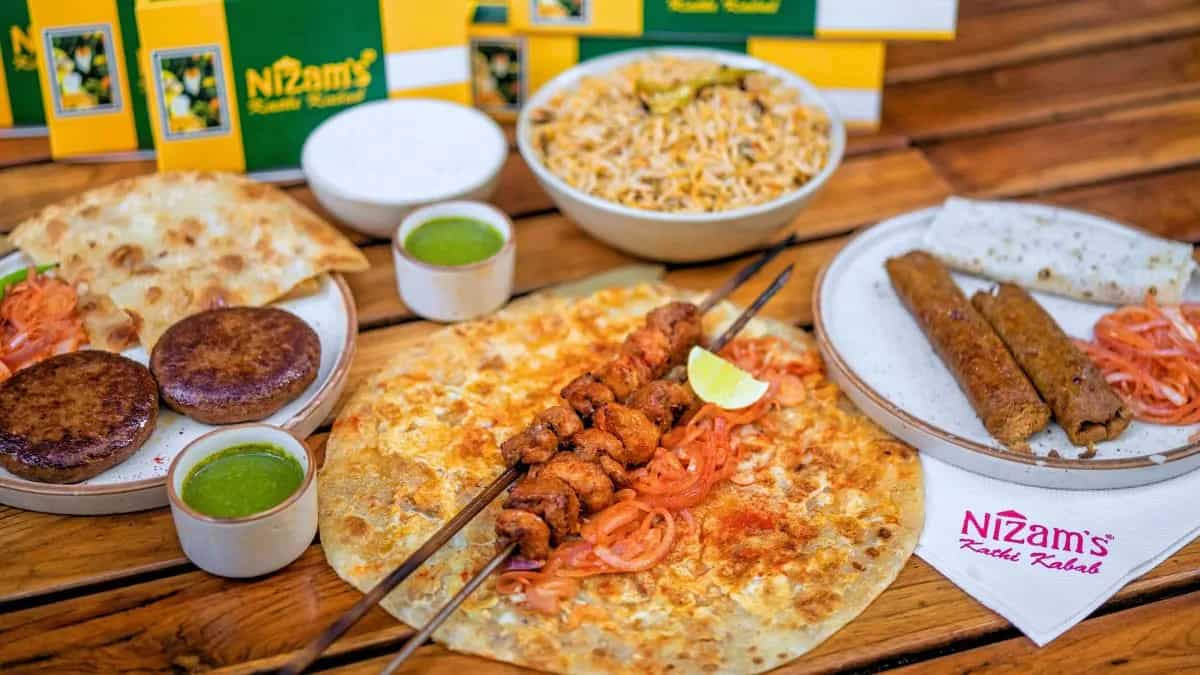
As the obvious starting point following the Adidas campaign, Nizam's is an absolute pillar of the Connaught Place experience. For over four decades, this establishment has perfected the art of the kathi roll. The flaky parathas, the smoky char on the chicken and mutton chunks, and the sharp bite of raw onions tossed in lime juice create a flavour profile that is instantly recognisable. Located in the bustling corridors of central Delhi, Nizam's serves as a meeting point for students, office workers, and tourists alike. It is a place where generations of Delhi residents have shared quick lunches and late evening meals.
Old Famous Jalebi Wala, Chandni Chowk
Situated at the intersection of Dariba Kalan and Chandni Chowk, this historic sweet shop is a testament to the enduring appeal of simplicity. The family running this corner shop has been frying thick, deeply caramelised jalebis in pure desi ghee for over a century. Unlike the thin and crispy variants found elsewhere, these jalebis are plump, soft on the inside, and dripping with a dark, rich sugar syrup. Standing on the crowded street corner with a warm plate of these sweets is a quintessential Old Delhi experience that has not lost its charm.
Image credit: Old Famous Jalebi Wala
Jung Bahadur Kachori Wala, Chandni Chowk
Moving slightly deeper into the labyrinth of Old Delhi, you find Jung Bahadur Kachori Wala in Maliwara. This tiny, highly specialised stall perfectly illustrates how a micro-eatery can become the defining flavour of a neighbourhood. They focus almost entirely on crisp urad dal kachoris served with a fiercely spicy and tangy potato curry. The heat of the sabzi is legendary, often leaving patrons reaching for a sweet lassi afterwards. It is a purely functional, standing-room-only operation that has built a fiercely loyal following based entirely on the uncompromising quality of a single dish.
Image credit: Jung Bahadur Kachori Wala
Karim Hotel, Jama Masjid
No conversation about Delhi institutions is complete without mentioning Karim Hotel. Tucked away in a vibrant alley near the Jama Masjid, this restaurant traces its lineage back to the royal kitchens of the Mughal era. Karim's is not just a place to eat. It is a pilgrimage for meat lovers. The slow-cooked nahari, the perfectly spiced mutton burra kebabs, and the delicate sheermaal breads have remained consistent through generations. The identity of Karim's is so deeply tied to the Jama Masjid area that it is impossible to imagine the neighbourhood without the aroma of their roasting meats filling the night air.
Image credit: Karim Hotel
Rehmatullah Hotel, Matia Mahal
Just a short walk from Karim's, Rehmatullah Hotel stands as another historic pillar of the Matia Mahal dining scene. While it might fly slightly under the radar compared to its globally famous neighbour, it is deeply cherished by local residents. Rehmatullah is known for its hearty, traditional Mughlai fare and incredibly comforting desserts. Their sheer khurma and chilled phirni served in shallow terracotta bowls provide the perfect sweet conclusion to a heavy meal. It is a genuine, old-school stop that operates without pretence, feeding the local community with warmth and consistency.
Image credit: Rehmatullah Hotel
Mysore Cafe, Chanakyapuri
To prove that the concept of an original neighbourhood spot is not restricted to Old Delhi or Mughlai cuisine, one must visit Mysore Cafe. Located in the diplomatic enclave of Chanakyapuri, specifically near South Avenue, this humble South Indian eatery has been a sanctuary for politicians, journalists, and local residents for decades. The aesthetic is incredibly basic, but the food is spectacular. Crisp rava dosas, soft idlis, and deeply flavourful sambar are served with quiet efficiency. It provides a striking, peaceful counterpoint to the chaotic energy of the city, fuelled by endless cups of robust filter coffee.
Image credit: Mysore Cafe
Dadu Cutlet Shop, Chittaranjan Park
Down in South Delhi, Chittaranjan Park operates as the epicentre of Bengali culture, and Market 2 houses its most beloved snacking institution. Dadu Cutlet Shop is a modest takeaway joint that commands massive queues every evening. They have mastered the art of the Kolkata-style street snack. The crispy chicken cutlets, perfectly spiced fish chops, and heavy, indulgent Mughlai parathas stuffed with minced meat and egg are iconic. The shop is incredibly pocket-friendly, ensuring that everyone from school children to elderly residents can partake in the daily ritual of evening snacks. Eating a hot fish chop from Dadu Cutlet Shop while standing in the bustling market is an experience that wholly defines the neighbourhood.
Image credit: Dadu Cutlet Shop
Delhi thrives on these culinary anchors. While new restaurants with grand aesthetics open every week, the true soul of the city remains in these modest kitchens. They remind us that the most valuable thing a food establishment can offer is not innovation, but the comforting guarantee that some things will always stay exactly the same. They represent the living history of the capital, preserving regional histories, culinary disciplines, and community bonds one plate at a time.