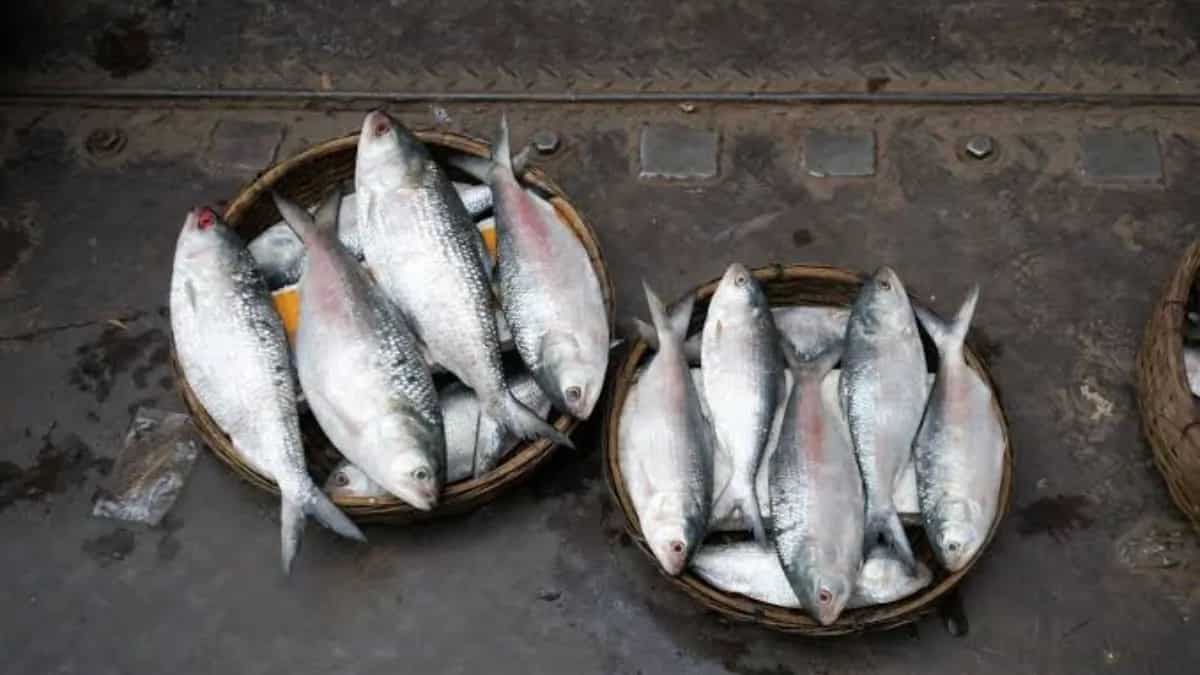
For generations, the narrative surrounding the anadromous migratory fish known scientifically as Tenualosa ilisha was tied almost exclusively to the eastern stretches of the Indian subcontinent. The vast aquatic corridors of the Ganga, Hooghly, and Padma river systems served as the undisputed breeding grounds for this prized species, revered across Eastern India and Bangladesh for its rich texture and distinct flavour. However, environmental transformations in eastern river systems have altered this age-old natural pattern. Constructions such as the Farakka Barrage, accumulated siltation, industrial effluent, shallow river depths, and unpredictable monsoons have severely disrupted upstream spawning migrations in the East. In a dramatic ecological shift, the western maritime state of Gujarat has emerged as an indispensable sanctuary for this species. Environmental changes and shifting monsoonal currents have drawn dense shoals of Hilsa away from their traditional eastern haunts and into the nutrient-dense estuarine waters of the Narmada and Tapi rivers. Driven by optimal salinity levels and heavy freshwater discharge during the monsoon season, the fish now find ideal conditions for breeding along the coastline of Gujarat, triggering an unprecedented production uptick that is reshaping regional aquaculture and commercial export dynamics.
The Numbers Behind The Narmada Surge
The magnitude of this aquatic transformation is clearly reflected in official state production statistics. During the 2025 to 2026 fishing cycle, Gujarat registered a record-breaking total Hilsa harvest of 14,587.72 metric tonnes. This impressive yield represents a sharp turnaround from previous years, where total catches had dropped to roughly 8,209 metric tonnes in 2023 to 2024 and 8,535 metric tonnes in 2024 to 2025. While marine catches along the coast of Porbandar, Valsad, and Devbhumi Dwarka have remained relatively steady, the most staggering increase occurred within inland estuarine environments. Inland Hilsa production in Gujarat skyrocketed from a modest 123.62 metric tonnes in the 2024 to 2025 period to an astonishing 4,645.99 metric tonnes in 2025 to 2026. The absolute epicenter of this phenomenon is Bharuch district, situated along the lower stretch of the Narmada River. Bharuch alone accounted for nearly 51 percent of the total Hilsa output across the entire state of Gujarat, generating over 7,410 metric tonnes combined across marine and inland river landings. Coastal and estuarine zones around Bhadbhut, Hansot, Dahej, and Mahegam experienced seasonal hauls that fisherfolk in the region describe as completely unmatched in recent memory.
Image credit: Pexels
Estuarine Dynamics And Hydrological Alignment
The scientific explanation for this sudden concentration lies in the unique hydrological behaviour of the Narmada estuary. Tenualosa ilisha is an anadromous species, meaning it spends the majority of its adult life in the ocean but must journey inland into freshwater rivers to spawn. During the monsoon months from July through September, heavy precipitation sends vast volumes of freshwater carrying rich terrestrial organic nutrients surging down the Narmada towards the Gulf of Khambhat. mWhere the freshwater of the river collides with the saltwater of the Arabian Sea near Bharuch, a vast brackish mixing zone is created. Scientists from the College of Fisheries Science at Kamdhenu University in Gandhinagar note that this specific salinity gradient, combined with water temperature and current speed, provides the exact environmental triggers required for adult fish to initiate their upstream migration. As eastern estuarine habitats suffer from degraded flows and physical barriers, the lower Narmada stretch has turned into a crucial spawning corridor.
Image credit: Pexels
Reversing Historic Trade Currents
The surge in Gujarat Hilsa production has triggered an extraordinary shift in regional and cross-border seafood commerce. Historically, West Bengal and India at large were dependent on importing Hilsa from Bangladesh to meet high festive demand, particularly during the autumn celebration of Durga Puja. In a historic reversal of trade patterns, India initiated large-scale exports of roe-filled Hilsa directly to Bangladesh, with the majority of consignments originating from Gujarat landings. Hundreds of metric tonnes of high-grade Hilsa caught along the Narmada estuary were processed, chilled, and transported across the country to the Petrapole land customs port on the West Bengal border for export into Bangladeshi markets. The high roe content of Gujarat catches makes them exceptionally sought after in international commercial markets. Concurrently, internal domestic supply chains have adapted to this western surge. Because local culinary preference in Gujarat does not traditionally prioritise Hilsa, the vast majority of the riverine harvest is transported eastward. Wholesale fish markets in Kolkata and Howrah now receive hundreds of metric tonnes of fresh Hilsa shipped directly from Bharuch landing sites each season. This robust supply chain ensures that eastern consumers receive high-quality fish while providing western suppliers with lucrative commercial returns.
Image credit: Pexels
Socioeconomic Uplift For Coastal Communities
For the traditional fishing communities situated along the banks of the Narmada River, this seasonal abundance has served as a critical economic lifeline. More than 25,000 fisherfolk across villages such as Bhadbhut, Jhanor, and Maktampur rely heavily on the four-month monsoon fishing window. In decades past, construction along river systems like the Sardar Sarovar Dam and changing localized water flows had drastically diminished inland catches, forcing many families to travel much further out into open sea or seek alternative employment. The unexpected return of dense Hilsa shoals right to their riverfront doorsteps has revitalised local livelihoods. High demand from traders supplying eastern domestic markets and export houses has driven up dockside prices, elevating household incomes and providing newfound financial stability to traditional fisher families. Modernised fishing operations have also facilitated this record haul. The historical use of small non-motorised crafts and basic drag nets has largely been replaced by motorised boats equipped with specialized gill nets. These technical upgrades allow local crews to cover broader stretches of the estuarine mouth safely and harvest fish efficiently during brief monsoonal windows.
Image credit: Pexels
Research Management And The Road To Sustainability
While the current catch surge brings immense economic benefit, fisheries experts urge cautious optimism and rigorous scientific monitoring. Officials from the Gujarat Fisheries Department emphasize that estuarine ecosystems are dynamic and sensitive to climatic variations. Attributing this boom entirely to a permanent ecological shift requires ongoing multi-year stock assessments and migratory monitoring by organisations like the ICAR Central Inland Fisheries Research Institute. To prevent overexploitation and protect future fish generations, conservation frameworks are becoming increasingly vital. Fisheries scientists advocate for regulating gill net mesh sizes to at least 90 millimetres, ensuring that juvenile fish are not harvested before reaching maturity. Furthermore, identifying key spawning hotspots along the lower Narmada and establishing seasonal fishing pauses during peak egg-laying weeks will ensure that this western sanctuary remains viable for years to come.
Image credit: Adobe Stock
The rise of Gujarat as a central hub for Hilsa production marks a remarkable chapter in Indian marine biology and trade. By blending natural estuarine advantages with organized logistics and scientific stewardship, the state is proving that adaptive ecosystems can create surprising economic opportunities while preserving one of the most cherished aquatic treasures of the subcontinent.