The winter solstice is the point in the solar year when the Northern Hemisphere experiences its shortest day and longest night. For agricultural societies, this moment carried practical importance, marking the slow return of longer daylight hours and offering reassurance during the most difficult stretch of winter. Long before modern calendars and festivals, communities across regions observed the solstice through food. The dishes prepared on this night were shaped by climate, available produce, preservation methods, and long-standing belief systems. Over time, many of these solstice foods folded into later religious and seasonal celebrations, while others remained tied specifically to the solstice itself. Together, they form a record of how different cultures used food to respond to darkness, scarcity, and seasonal change.
Image credit: Pexels
East Asia: The Solstice As A Family Meal
In China, the winter solstice is observed as Dongzhi, a festival that centres on food and family rather than ceremony. The most recognisable dish is tangyuan, glutinous rice balls served in a light syrup or broth. Their round shape symbolises unity and completeness, and eating them traditionally marks the idea of growing one year older. In northern regions, jiaozi, or dumplings, are common, often filled with meat and eaten hot to combat the cold. These are not elaborate meals but intentional ones, designed to be filling, warming, and shared.
Image credit: Pexels
In Korea, Dongji is marked with patjuk, a red bean porridge sometimes served with small rice cake balls. Red bean has long been associated with protection and purification in Korean food culture, and the dish is eaten both for nourishment and symbolic safety. In both cultures, the solstice meal is practical and ritualistic at once, focused on warmth, sustenance, and continuity.
Japan: Seasonal Produce And Customs
In Japan, the winter solstice, or Toji, is observed with fewer communal feasts and more domestic customs. The most common food associated with the day is kabocha, a winter squash that is naturally sweet and nutrient dense. Eating kabocha on the solstice is tied to seasonal eating rather than religious observance, reflecting Japan’s long-standing emphasis on food aligned with the agricultural calendar.
Alongside food, many households observe the tradition of yuzu baths, where citrus fruits are floated in hot water. While not edible, the ritual sits alongside solstice food customs as part of a broader approach to health, warmth, and wellbeing during the coldest period of the year.
Iran And Central Asia: Eating Through The Night
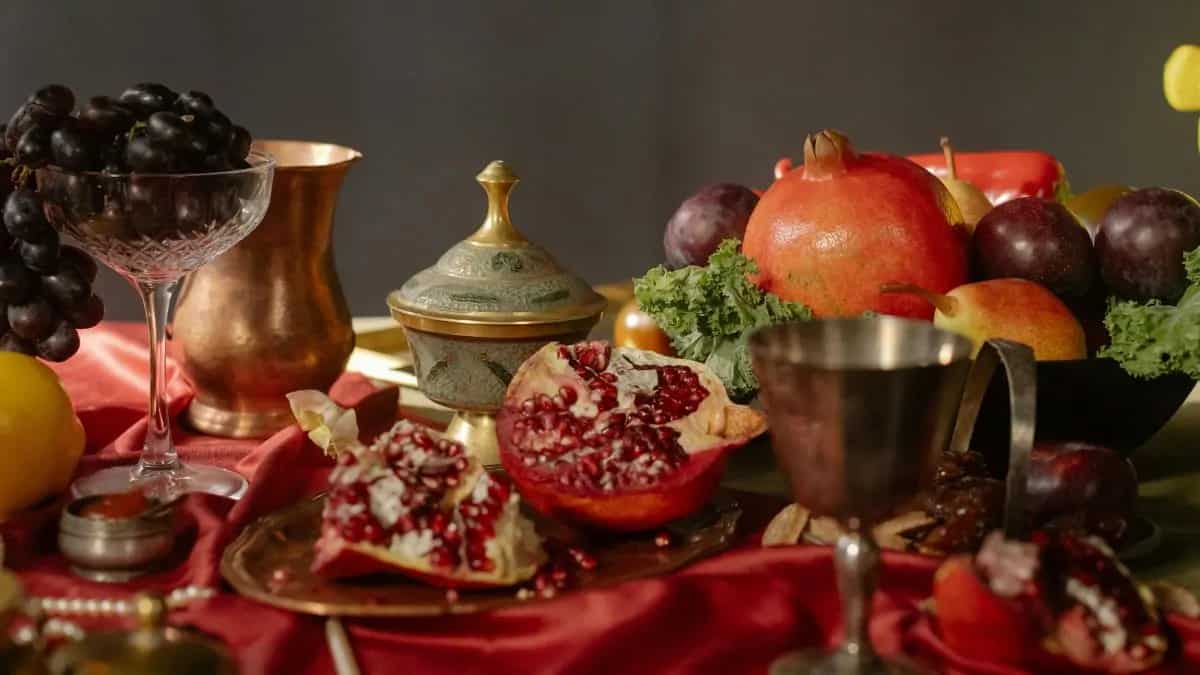
In Iran and parts of Central Asia, the winter solstice is celebrated as Yalda or Shab-e Yalda, a night-long gathering that explicitly acknowledges darkness before the return of light. Food plays a central role in these gatherings. Tables are set with pomegranates, watermelon, dried fruits, nuts, and sweets, many of them red in colour to symbolise life and dawn.
Image credit: Pexels
Unlike other solstice traditions that focus on hot food, Yalda emphasises preserved and symbolic ingredients. Families stay awake, read poetry, and eat slowly through the night. The act of eating itself becomes a way of passing time together until morning arrives.
Northern Europe: Hearty Food For Deep Winter
In Scandinavia and parts of Northern Europe, solstice traditions evolved into what later became Yule. Food during this period was built around preservation and abundance. Salted meats, cured fish, root vegetables, breads, and porridge formed the backbone of winter tables. Rice porridge, in particular, appears repeatedly across Nordic countries as a solstice and winter dish, valued for being filling, economical, and warming.
Image credit: Adobe Stock
These meals were often communal and extended, reflecting the need to gather and share resources during the harshest part of the year. Many elements of modern Christmas spreads across Europe can be traced back to these solstice feasts.
Britain And Western Europe: Drink, Bread, And Shared Rituals
In Britain, winter solstice traditions blended into later Christian and folk customs, but food and drink remained central. Wassail, a warm spiced drink made with ale or wine, was shared in both domestic and agricultural rituals. Bread-based foods, early forms of mince pies, and preserved fruits were common, particularly during communal gatherings.
Image credit: Adobe Stock
These foods were not indulgent in the modern sense but were designed to make use of stored ingredients and to offer warmth and energy during long winter nights.
Eastern Europe: Grain, Memory, And Continuity
In parts of Eastern Europe and Slavic regions, solstice customs became intertwined with later Christmas Eve meals. Dishes like kutya, made from wheat berries, poppy seeds, honey, and dried fruits, are still eaten in countries such as Ukraine and Poland. These grain-based dishes symbolise continuity, remembrance, and the agricultural cycle.
Image credit: Adobe Stock
Even as religious calendars changed, the structure of the solstice meal remained intact. The emphasis stayed on plant-based, preserved, and symbolic foods eaten together in a reflective setting.