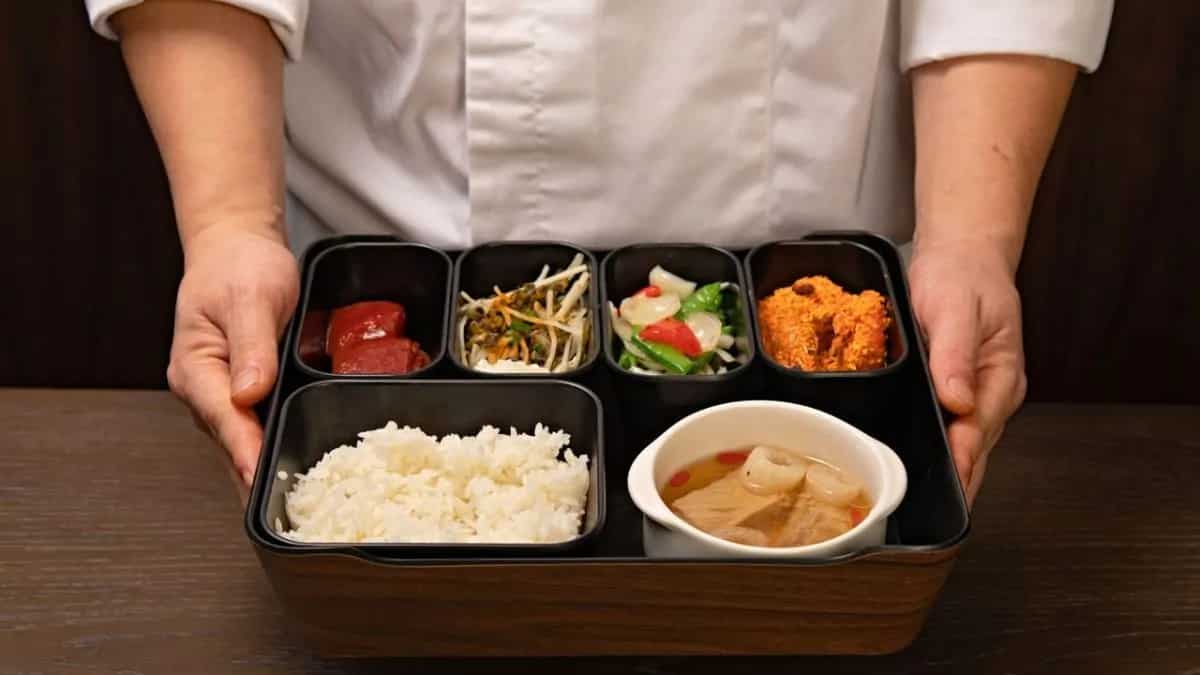
WALK into almost any Japanese restaurant outside Japan and you'll encounter a familiar tableau: a bowl of gleaming white rice, miso soup, grilled fish, pickles and a handful of carefully arranged side dishes. This, we're often told, is washoku—the traditional cuisine of Japan.
It is elegant, balanced, seasonal and deeply rooted in history.
Or so the story goes.
In 2013, UNESCO added washoku to its Representative List of the Intangible Cultural Heritage of Humanity, describing it as a traditional dietary culture closely associated with the Japanese New Year and based on rice, fish, vegetables and respect for nature. The designation elevated washoku from a common term into a global cultural brand. Suddenly, Japanese food wasn't merely popular; it was heritage.
The irony is that washoku, as many people imagine it today, is surprisingly new.
The word itself only became common during the Meiji era (1868–1912), when Japan opened itself to the world and found itself flooded with foreign influences. "Washoku" simply meant Japanese food, largely as a way of distinguishing it from newly fashionable Western cuisine, known as yoshoku. It was a practical label, not a sacred culinary philosophy. There was no universally agreed-upon menu, no fixed canon and certainly no single national meal.
For much of Japanese history, people ate according to geography rather than national identity.
A farmer in snowy Tohoku, a fisherman in Kyushu and a merchant in Osaka would have encountered very different foods. Before the postwar period, many households relied on mixtures of millet, barley and rice rather than the polished white rice that has since become synonymous with Japanese cuisine. Seasonal vegetables, preserved foods and one-pot meals formed the backbone of daily life. What constituted "Japanese food" varied enormously from region to region.
The image of the rice-centred Japanese meal emerged gradually through modernisation, state policy and economic growth.
During the wartime and immediate postwar years, food shortages and rationing transformed eating habits. Rice was scarce, often mixed with other grains and substitutes. Yet as Japan recovered economically in the 1950s and 1960s, white rice became increasingly available and aspirational. The nation's prosperity helped standardise eating patterns, and rice became not just a staple but a symbol of postwar abundance.
Ironically, just as rice solidified its status as the centrepiece of Japanese cuisine, people began eating less of it. Per-capita rice consumption peaked in the early 1960s before steadily declining as bread, meat and convenience foods became more common. By the twenty-first century, Japanese households were spending more on bread than rice, an outcome that would have seemed unthinkable a generation earlier.
Then there is ramen.
Few foods are more strongly associated with Japan today. Entire travel itineraries revolve around finding the perfect bowl. Tokyo Station hosts an entire "Ramen Street." Michelin inspectors evaluate ramen shops with the same seriousness once reserved for haute cuisine.
Yet ramen's story is also one of migration.
The dish emerged from Chinese noodle traditions brought to Japan by immigrants in the late nineteenth and early twentieth centuries. Early versions were sold in port cities and Chinatowns before gradually being adapted for Japanese tastes. What began as immigrant food eventually became a national obsession and, later, a global symbol of Japan itself.
Ramen is not an exception. It is the rule.
Food histories are rarely pure. They are stories of movement, exchange and adaptation. Tempura likely arrived through Portuguese influence. Curry came through British imperial trade routes. Even many ingredients now considered quintessentially Japanese travelled across borders before finding a home in the archipelago.
What UNESCO recognised in 2013 was therefore not a static collection of dishes but something more powerful: an idea.
The official nomination highlighted seasonal awareness, aesthetic presentation, local ingredients and the role of food in community rituals. In other words, washoku was framed less as a recipe book and more as a cultural worldview.
That distinction matters.
National cuisines often emerge not from ancient continuity but from modern storytelling. Italy's culinary identity was assembled from regional traditions. French cuisine was codified through restaurants, cookbooks and institutions. Japanese cuisine followed a similar path, transforming countless local practices into a coherent national narrative.
And it is a remarkably successful narrative.
Today, audiences around the world consume Japanese food not only through restaurants but through television, literature and streaming platforms. Series such as Midnight Diner and The Makanai invite viewers into intimate worlds where food carries memory, comfort and belonging. The appeal lies not merely in the dishes themselves but in the idea of a cuisine that feels timeless, harmonious and connected to the seasons.
Whether or not that image is historically accurate is almost beside the point.
Food traditions are often less about preserving the past than about deciding which parts of the past deserve remembering. Washoku's greatest achievement may not be that it represents an unbroken culinary lineage. It is that it transformed a vast, messy, constantly evolving collection of regional foodways into a story compelling enough for the world to embrace.
The next time someone describes a dish as "traditional," it may be worth asking a simple question.
How old is the tradition?
The answer is often far more interesting than the myth.