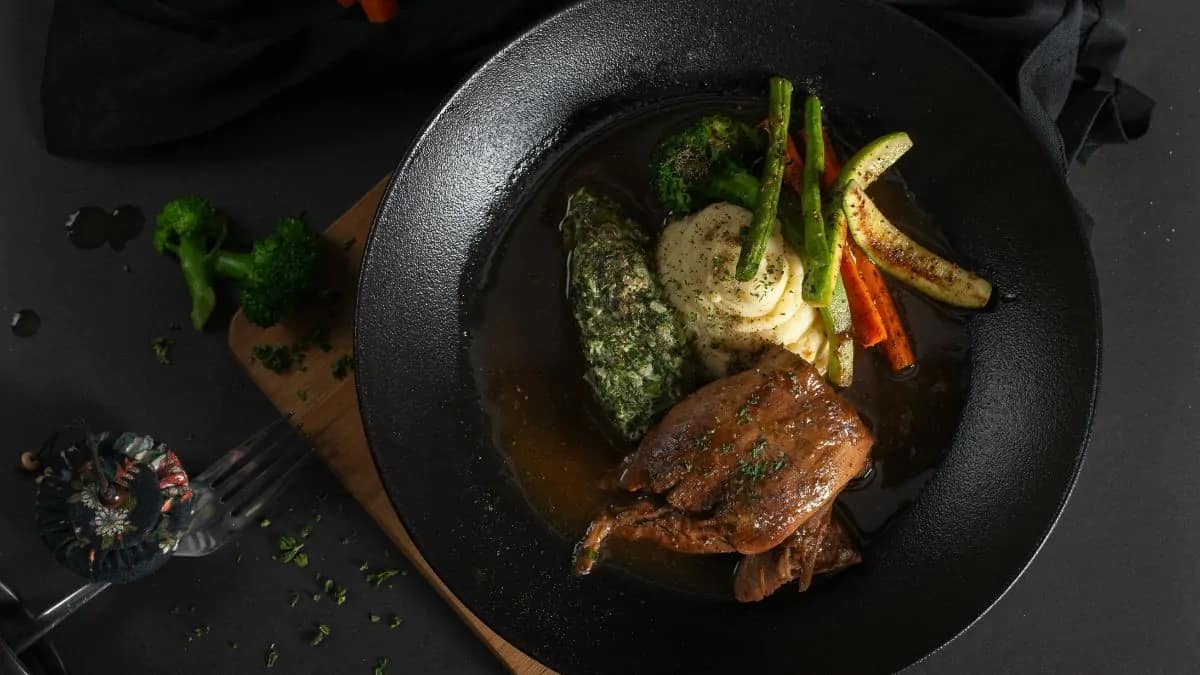
Holiday menus often include dishes that require patience, even heat and well-timed finishing, and sous vide offers a way to achieve these qualities through a simple setup. The method places seasoned ingredients in sealed pouches and cooks them in water held at a constant temperature, which produces results that remain uniform from edge to centre. The cooking technique works perfectly for festive menus because it allows home chefs to apply care and attention without keeping a constant watch over temperatures or timings. Dishes served during this time: roasts, seafood, winter vegetables and light desserts, benefit from the gentle environment created by the water bath, which encourages clarity of flavour and a consistent final texture.
Setting Up Sous Vide At Home
Sous vide at home follows a straightforward sequence, and the setup uses a few items that are easy to find. The process begins with an immersion circulator, which is a slim device that heats and circulates water. Most home models fit standard pots and containers, and a 6–8 litre pot is usually large enough for small families, while a 10–12 litre container works well when cooking several portions for Christmas or New Year gatherings. Many home cooks use deep stainless-steel pots, but heat-safe plastic containers also work as long as they can hold the circulator securely.
Image credit: Adobe Stock
The ingredients need to be placed in heat-safe pouches. These can be ordinary zip pouches made for cooking or dedicated vacuum-sealer bags. A small home vacuum sealer creates a firm seal, although zip pouches are equally effective when the air is removed by slowly lowering the pouch into water until most of the air escapes. Each pouch should be sealed only at the end, once the air has left, which helps the ingredients remain submerged.
Image credit: Adobe Stock
The immersion circulator clips onto the pot, and the pot is filled with warm tap water. The device is switched on and set to the desired temperature, which depends on the ingredient. Chicken breasts often require one to one and a half hours at a controlled temperature. Lamb dishes may require several hours, depending on the cut. Prawns need a shorter time, often twenty to thirty minutes, and fish fillets usually require thirty to forty minutes. Vegetables vary widely, with firm vegetables taking one to two hours and softer vegetables needing less time. These timings create a predictable rhythm for festive meals.
Image credit: Adobe Stock
Once the water reaches the set temperature, the sealed pouches are lowered into the pot. A trivet or small weight can keep the pouches fully underwater if they float. During cooking, nothing needs stirring or turning, and the temperature remains constant throughout. A pair of tongs is enough to remove the pouches once the timer ends.
Image credit: Adobe Stock
After removal, the ingredients often benefit from a finishing step. Chicken or lamb can be seared briefly in a hot pan for colour. Prawns can be tossed in a warm sauce. Vegetables can be glazed with spices or herbs. Desserts such as pears can be warmed lightly with a syrup. Each finishing step takes only a few minutes, and the main cooking has already been completed in the water bath.
The pot, pouches and circulator require little maintenance beyond drying and storage. The method becomes easy to repeat once these steps are familiar, and the entire process moves from preparation to cooking to finishing without confusion or clutter.
Image credit: Pexels
Holiday Dishes That Work Well With Sous Vide
Several festive dishes adapt naturally to sous vide. Roast chicken gains an even tenderness that remains consistent throughout the meal. Lamb dishes prepared for Christmas or New Year gatherings develop a softened interior that holds well during serving. Seafood plates featuring prawns or fish fillets maintain their shape and cook evenly without the risk of toughness. Winter vegetables such as carrots, sweet potatoes, beets and onions take on a calm depth that suits warm sides or salad components. Eggs for holiday brunch tables reach the ideal texture that remains uniform across batches. Pears and apples used in understated holiday desserts hold their form and absorb flavour with subtlety. Each preparation benefits from gradual cooking and emerges ready for finishing touches that match the mood of the season.
Image credit: Adobe Stock
Tips And Tricks For Home Cooks
A few simple steps make sous vide easy to integrate into festive routines:
- Ingredients can be seasoned and sealed a day in advance, which shortens preparation on the day of the gathering.
- The water bath should begin heating while other tasks start, ensuring that one part of the menu progresses without delay.
- Seasoning sparingly at the start prevents the flavours from becoming too intense during long cooking.
- Adding fresh aromatics such as citrus peel, bay leaves, cinnamon bark or crushed peppercorns gives the dish a quiet lift without overpowering it.
- Choosing uniform portion sizes helps each pouch cook evenly.
- For dishes that require crisp edges, drying the surface gently with a towel before searing produces a better crust.
- For desserts, keeping fruits slightly undercooked in the pouch and finishing them with a warm syrup or spiced reduction creates a measured sweetness suitable for holiday menus.