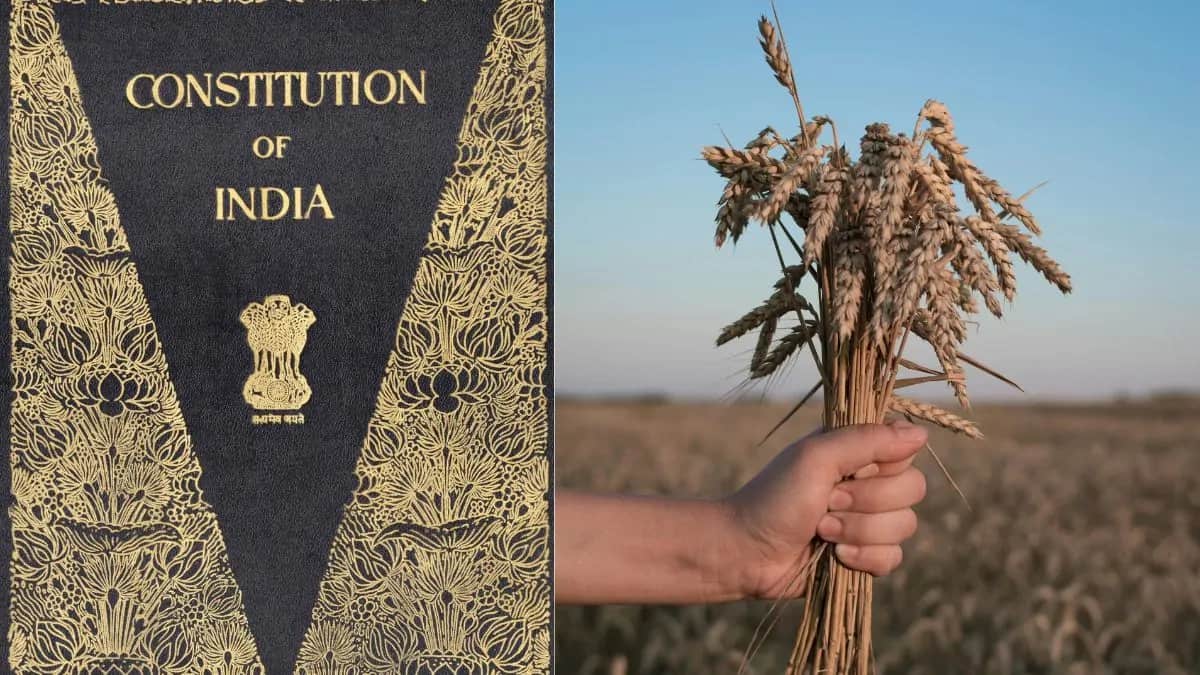
Republic Day is often marked by speeches, parades, and reflections on the Constitution as a legal and political document. Yet, the Constitution is also a deeply social text, one that shapes everyday life in ways we do not always notice. Food is one such everyday reality. From ration shops and school meals to questions of dignity, discrimination, and nutrition, food becomes a powerful lens through which to read the promises and limits of the Republic. In this Republic Day 2026 conversation, we speak to Rituparna Patgiri, Assistant Professor of Sociology at the Department of Humanities and Social Sciences, Indian Institute of Technology Guwahati. Her research spans food, culture, media, gender, and pedagogy, with a strong commitment to making academic knowledge accessible beyond universities. As a scholar who works closely on food systems and social inequalities, Patgiri helps us revisit the Constitution not only as a founding document, but as a living framework that continues to shape who eats what, how, and with what dignity.
Image credit: Rituparna Patgiri
Q. When you look at the Constitution today, what are your views on how seriously food and nourishment were taken when the Republic was first imagined?
India’s first Prime Minister, Jawaharlal Nehru, stated that the Constituent Assembly’s first task was to feed India’s starving people. But whether to include socio-economic rights like the right to food in the Indian Constitution was widely debated amongst the members of the Assembly. Some members favoured it, but in the end, these views were not considered. Ultimately, these concerns were framed as Directive Principles of State Policy. For instance, Article 39(a) states that the state shall ensure that citizens have the right to an adequate means of livelihood. Similarly, Article 47 declares that it is the state’s duty to raise the level of nutrition of its citizens.
In the early years of the Republic, the Directive Principles of State Policies were seen as separate from the Fundamental Rights by the judiciary. However, in the PUCL vs Union of India case in 2001, the right to food was explicitly recognised for the first time as a constitutionally protected fundamental right. The Non-Governmental Organisation People’s Union for Civil Liberties filed a writ petition alleging violation of the right to live with dignity under Article 21. It was argued that the state has an affirmative duty to provide citizens with food since it is a basic necessity for human sustenance. The demand was to effectively utilise the country’s food stocks to prevent hunger and starvation.
Image credit: Wikipedia
In the early years of the Republic, food and nourishment were seen as important issues, but legal enforcement did not exist. The right to food came into being only in 2001. The inclusion of food and nutrition within the Directive Principles of State Policy in the early years of independence could be seen as a material constraint of a newly independent nation.
Q. Article 21 has been interpreted to include the right to live with dignity. The right to food is often read into the right to life. What is your view on how effective that interpretation has been for people on the ground?
Unfortunately, the implementation of Article 21 on the ground needs improvement. While it advocates the right to live with human dignity and includes the right to food, this has not been the case in many situations. Both hunger and malnutrition continue to persist, affecting India’s most marginalised sections deeply.
The Aadhaar-related biometric connection drawn to the Public Distribution System affected many poor people who were unable to access their basic right to food. Similarly, people from Northeast India are discriminated against by landlords who refuse to rent houses to them, citing their food habits. There have also been numerous cases of Muslims being mob lynched on the suspicion of carrying beef.
Women continue to face nutritional deficits like anaemia because of socio-cultural barriers that view them as secondary human beings, and their nourishment is, in return, impacted. India also faces a severe adulteration problem, as well as the rise of non-communicable diseases, owing to changes in our traditional food habits and the flooding of the markets with ultra-processed and fast food. Food, in fact, is emerging as a significant site to observe how the social is being redefined, particularly in terms of intersections between nutrition, public health, and state policy.
Image credit: Wikipedia
Q. Article 47 speaks directly about improving nutrition. In your opinion, has the State treated nutrition as a real responsibility or more as a long-term goal that keeps getting pushed ahead?
Article 47 in the Constitution of India places the duty on the state to raise the level of nutrition, the standard of living, and improve public health. There have been several nutrition-related schemes and policies in place. However, regional, gendered, and socioeconomic nutritional disparities continue to persist.
Persistent child stunting, anaemia among women, and now the coexistence of undernutrition with overnutrition point to structural limitations in how much more needs to be done. This is clearly evident from the National Family Health Survey (NFHS-5) data from 2019–21. Issues of health and nutrition are not seen as public health emergencies and therefore continue to remain neglected.
Q. From your academic perspective, what do you think was the first food system after Republic Day that actually made a difference to people’s everyday meals?
The Green Revolution and the Public Distribution System are two of the most significant factors in influencing our everyday food habits. The Green Revolution introduced high-yield varieties of staples, particularly food grains like wheat and rice, which were distributed via the Public Distribution System.
It boosted calorie intake and met food security needs at one level, but at the same time, the dietary shift towards less diverse, grain-heavy patterns cannot be denied. Richa Kumar’s works have shown how the inclusion of certain food products as part of the PDS influenced Indian diets. What makes the PDS historically significant is that it entered the everyday domestic sphere, changing what people ate. The PDS privileged calories over nutrition, reinforcing a cereal-centric imagination of food security.
Image credit: Wikipedia
Q. The ration system touches millions of households. What are your views on how well the Public Distribution System has lived up to the Constitution’s promise around food?
One of the things that the Public Distribution System has done is provide food security to the poor. It is a significant functional tool of social policy. During the COVID-19 pandemic and the lockdowns, it was the backbone of India’s relief efforts.
At the same time, it has been constantly subjected to innovations, including cash transfer experiments, doorstep delivery to people’s homes, and technological impositions like Aadhaar-based biometric authentication. There are also studies which contend that providing and subsidising only rice and wheat has reduced dietary diversity. Adding sugar to subsidised food products has made it a household product, in turn increasing diseases like diabetes. These structural issues need to be addressed to live up to the constitutional promise of guaranteeing healthy and nourishing food.
Q. School meals and anganwadi food shape how children eat very early in life. In your view, have these programmes improved nutrition, or have they mostly focused on basic hunger?
The mid-day meal scheme, now known as the PM POSHAN Abhiyaan, has had a significant impact on nutrition. It is well-documented that providing school meals increases attendance. At the same time, it plays a social role. It becomes easier for girls to attend school when their families know that food will be provided.
The school meal programme has also brought people of different social identities together and employed locals, specifically women, in the schools. The function of the school meal programme is much more than only providing food.
Image credit: Noah Seelam / AFP
Q. India produces enough food, yet hunger and malnutrition persist. What do you think is the biggest reason for this gap?
Unequal access to food continues to shape the gap between food availability and hunger. While India has extensive food and nutrition programmes, their impact is uneven due to governance gaps, weak implementation at the local level, fragmentation across ministries, and exclusion errors.
At the same time, there are structural issues rooted in the socio-cultural context. Food is produced as a product or good, but nourishment and nutrition depend on care, social justice, and related factors. Social identities like caste, gender, religion, and ethnicity continue to play an important role in dictating access to resources.
Q. Many food schemes still focus on calories and staples. What are your views on the State’s understanding of food quality, diversity, and dignity?
One cannot understand nutrition only biologically. Sociological work has demonstrated that it has a strong social component. Therefore, the state and policymakers must understand how social and cultural factors guide people’s dietary preferences.
Certain sources of nutrition, such as protein, do not work in specific regional contexts because, socially and culturally, people do not eat certain foods. This is why controversies emerge around eggs in mid-day meals. Vegetarians refuse to eat them, not because of nutrition, but because of social and cultural meanings. My own work in Assam shows that serving meat and eggs is not an issue here because almost everyone eats them.
At the same time, foods like eggs and meat become tools of humiliation for marginalised communities. Migrants from Northeast India have faced racism in other parts of the country because of their food habits. Food from the Northeast gets characterised as dirty food and becomes a reason for exclusion from housing and public spaces.
When it comes to human dignity, foods eaten by Northeast Indians and Dalits are often erased from what the Indian food plate looks like. Several cases of mob lynching have also been reported due to suspicion of eating beef. These issues cannot be captured through a calorie-based narrative. Nourishment needs to be rethought from a social and cultural perspective.
Image credit: Pexels
Q. The National Food Security Act was seen as a turning point. In your opinion, did it truly change how people experience food as a right?
The National Food Security Act, 2013, made access to subsidised food grains a justiciable right tied to citizenship. It was not framed as a crisis response, but as part of routine, everyday state governance. The Act expanded the idea of nutrition across the life cycle instead of associating it only with hunger.
However, there are several issues in its execution. The Act promotes a homogeneous diet by associating nourishment with rice and wheat. This has been the fundamental problem with India’s food policy. Hunger and nutrition are not the same, which is why, despite welfare measures, we lag in nutritional outcomes. Local food habits need to be incorporated rather than replaced.
Image credit: Wikipedia
Q. From a humanities and social sciences perspective, what do you think the Constitution gets right when it comes to food and nourishment?
What the Constitution of India gets right is the legal provision to provide the right to food as part of the right to life under Article 21. Food is linked to life, not just survival. Providing good nourishment is recognised as a responsibility of the state.
Q. Where do you feel the Constitution or the State falls short the most on food today?
We are struggling to meet basic standards of nourishment. India has become a global hub of non-communicable diseases, largely linked to food habits. We focus on cheap, easily available, tasty food rather than healthy and nourishing food.
Adulteration has become a major issue. Reports from across the country show how adulterated food is flooding markets, including milk, paneer, fruits, and spices. The Constitution needs to recognise that food and public health are deeply interconnected.
Q. On Republic Day, when people reflect on the Constitution, what do you personally feel when you think about food as a measure of how the Republic has performed?
As I reflect on our history, I feel that our food history needs to be celebrated more for its diversity. Indian food cannot be reduced to regional stereotypes. Every region and community brings something unique to the table.
We have fallen short in appreciating local and traditional dietary diversity. Vegetarian food is not only paneer. In Assam, for instance, we eat a lot of vegetables along with meat, fish, and eggs. Labels like vegetarian and non-vegetarian are reductionist. It is time we appreciate India’s dietary diversity in all its complexity.