The month of Ramadan in India is a sensory explosion, but nowhere is it as nuanced and varied as in the coastal and mercantile state of Gujarat. While the global image of Iftar often revolves around heavy kebabs and rich biryanis, the Gujarati Muslim kitchen offers a sophisticated alternative. The Ramadan food of Gujarati Muslims is a testament to the state's pluralistic culture. It is a cuisine that respects its roots while embracing the influences of trade and migration. From the communal Thaal of the Dawoodi Bohras to the spice-heavy pots of the Memons and the refined palate of the Khojas, the food is a reflection of history, trade, and a deep love for hospitality.
The Dawoodi Bohras: The Art Of The Thaal
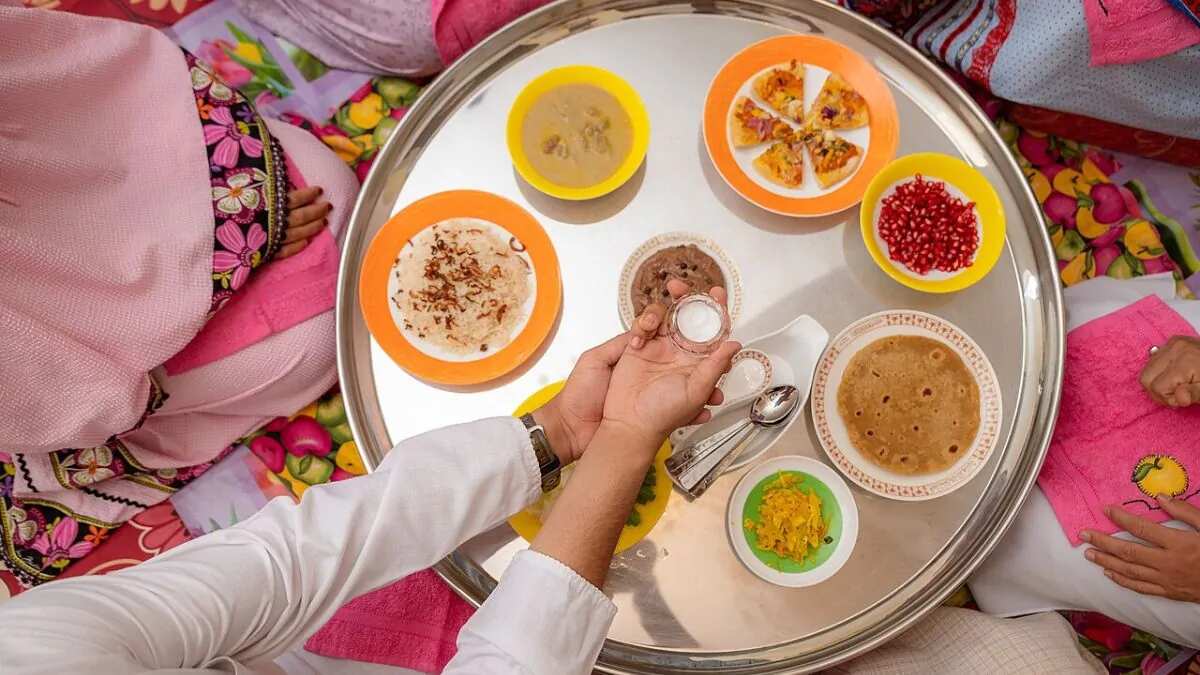
For the Dawoodi Bohra community, Ramadan is as much about spiritual discipline as it is about communal bonding. The defining feature of their dining experience is the Thaal, a large elevated metal plate where eight people sit together to share a meal. This practice fosters equality and ensures that no food is wasted.
The meal traditionally begins with a pinch of salt, believed to clear the palate and prevent diseases. A unique aspect of Bohra cuisine is the alternating sequence of sweet and savoury dishes, known as Mithaas and Kharaas. In a typical Ramadan Iftar, the fast is broken with dates and water, followed by a sweet dish like Kalamra, a chilled rice pudding enriched with yoghurt, pomegranate seeds, and dry fruits.
The Kharaas or savoury course often features the legendary Bohri Samosa. Unlike the thick-crusted Punjabi version, these are made with paper-thin patti pastry and stuffed with smoked minced meat or spring onions. Another staple is the Chana Bateta, a tangy preparation of chickpeas and potatoes in a spicy tamarind gravy, often topped with crunchy deep-fried flour bits. For the main course during Ramadan, many families prepare a wholesome Khichda, a slow-cooked mash of meat, lentils, and cracked wheat, garnished with fried onions and a squeeze of fresh lime.
Image credit: Wikimedia Commons
The Memons: Masters Of Spice And Soul
The Memon community, originally hailing from the Lohana background and spreading across the Kutch and Saurashtra regions, brings a robust and hearty flavour profile to the Ramadan table. Memon food is unapologetically bold, reflecting their history as adventurous traders.
One cannot discuss Memon Iftar without mentioning Khausa. While it has roots in the Burmese Khow Suey, the Memon version is a local legend. It consists of noodles served with a coconut milk curry, topped with spicy beef or chicken gravy, and garnished with an array of textures: fried garlic, green chillies, coriander, and crushed papdi. It is a complete meal that provides the necessary energy after a long day of fasting.
Memoni Akni is another Ramadan favourite. It is a one-pot fragrant rice dish, different from biryani in its preparation and spice levels. It uses potatoes and small, tender chunks of mutton, seasoned heavily with black pepper and cloves. For those who prefer something lighter, the community prepares various types of Vatanas (dried peas) sautéed with ginger, garlic, and green chillies. The meal usually ends with a glass of glass-paani, a refreshing drink made of jaggery, basil seeds, and lemon, which is excellent for digestion and cooling the body.
Image credit: Wikimedia Commons
The Khojas: A Coastal Influence
The Khoja community shares some similarities with the Bohras but maintains a distinct culinary identity influenced by their coastal settlements and historical links to East Africa and Iran. Their food tends to be less oily than typical Mughlai cuisine, focusing on the natural flavours of the ingredients.
During Ramadan, Khoja households often prepare Paya (trotter soup) for Sehri, the pre-dawn meal. The slow-cooked collagen-rich broth provides sustained energy throughout the day. For Iftar, Muthiya is a common sight. these are steamed or fried dumplings made from gram flour and fenugreek leaves, often tossed in a light tempering of mustard seeds and curry leaves.
A unique Khoja dish found during the holy month is the Masoor Pulav. Unlike the meat-heavy pulavs of the north, this version uses black lentils and is often served with a side of spicy fish fry or a cooling raita. The community also has a fondness for custards and jellies, a nod to the colonial influences on their pantry, often serving creamy fruit salads or caramel custards as a soothing end to the evening meal.
Image credit: Wikimedia Commons
The Surtis And The Konkani Touch
In the southern parts of Gujarat, particularly in Surat, the Muslim community has integrated local Surti flavours into their Ramadan traditions. Surat is famous for its bakeries, and during Ramadan, the demand for Lamba Pav (long bread) and Nankhatai sky-roots. The Surti Iftar is incomplete without the 12-handi, a slow-cooking method where different parts of meat are simmered in twelve separate pots to create a variety of stews like Nihari and Pichhota.
The Surti Ghari, though usually associated with Hindu festivals, is often adapted by Muslim families into a richer, meat-stuffed version or a very sweet mawa-based dessert to provide a quick glucose boost. The influence of the Konkan coast is also visible in the use of coconut and rice flour in snacks like Ghavane, which are lacy rice pancakes served with sweetened coconut milk.
Image credit: Wikimedia Commons
The Common Threads Of The Gujarati Iftar
Despite the sectarian differences, certain elements remain universal across all Gujarati Muslim homes. The use of jaggery instead of refined sugar in traditional drinks is a common trait that sets them apart from the North Indian palate. Tamarind and kokum are preferred over tomatoes for souring agents, giving the food a distinct tang.
Beverages play a vital role in the dry heat of Gujarat. While Rooh Afza remains a staple, local variations like Variyali Sherbet (fennel seed drink) and Falooda with a heavy dose of Tukmaria (basil seeds) are essential for their cooling properties. These drinks are often prepared in large batches to be shared with neighbours, regardless of their community or religion, embodying the spirit of Ramadan.
Image credit: Wikimedia Commons
The street food culture of Gujarat also transforms during this month. Areas like Bhatiyar Gali in Ahmedabad or the Chowk area in Surat become hubs of nocturnal activity. Here, one can find Malpua being fried in giant kadhais and served with thick rabri, alongside skewers of seekh kebabs and boti.