Share
Share

As the holy month of Ramadan approaches, the air across the Middle East and the Indian subcontinent begins to hum with the spirit of devotion, community, and tradition. For many in India, Iftar is synonymous with a refreshing glass of Rooh Afza or a bowl of creamy fruit custard. However, across the Red Sea in the bustling streets of Cairo and the historic alleys of Makkah, another drink reigns supreme: Sobia. Sobia is more than just a beverage; it is a cultural icon that signals the start of Iftar. It is a thick, milky, and immensely satisfying drink that provides an instant energy boost after a long day of fasting. For the Indian palate, which celebrates the richness of dairy and the warmth of spices, Sobia offers a familiar yet exotic alternative to the usual Iftar staples.

Image credit: Egyptian Recipe
The Historical Roots Of Sobia
The origins of Sobia are as rich and layered as the drink itself. While it is widely associated with Egypt today, many culinary historians point to the Hejaz region of Saudi Arabia as its ancestral home. In the ancient cities of Makkah and Madinah, Sobia has been prepared for centuries using local grains and natural fermentation processes.
In Egypt, the drink evolved differently, taking on a more dessert-like quality. During the Mamluk and Ottoman periods, Sobia became a staple in Cairo, often sold by street vendors who would carry large glass jars or leather pouches. The Egyptian version leaned heavily into the use of rice and coconut, while the Saudi version remained rooted in the use of bread and barley. Despite these regional shifts, the core purpose of the drink remained the same: to soothe the stomach and hydrate the body during the heat of the desert.
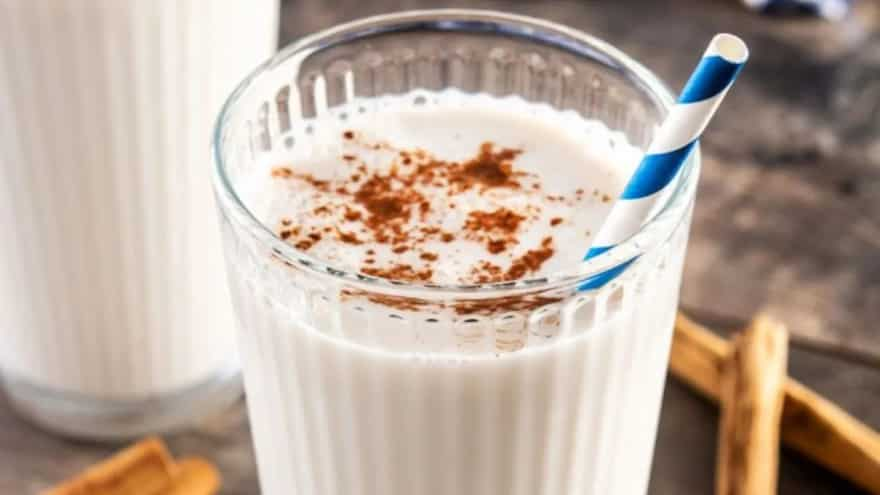
Image credit: Chez Nermine
Regional Variations: Egypt Vs Saudi Arabia
Understanding the difference between the two main types of Sobia is essential for anyone looking to recreate the experience at home.
The Egyptian Sobia
In Egypt, Sobia is primarily a coconut-based drink. It is exceptionally sweet, creamy, and white. The texture is reminiscent of a thin milkshake or a liquid version of the Indian rice pudding, Kheer.
• Key Ingredients: Powdered rice, coconut milk, sugar, and vanilla.
• Appearance: Pure white and frothy.
• Taste Profile: Dominant coconut flavour with a silky mouthfeel.
Image credit: Wikipedia
The Saudi Sobia
The Saudi version, particularly the Hijazi Sobia, is a complex, fermented beverage. It is often made from a base of brown bread or barley. This version undergoes a short fermentation period, which gives it a slight tang and a unique depth of flavour that is entirely different from the Egyptian variety.
• Key Ingredients: Barley or brown bread, sugar, cinnamon, cardamom, and sometimes yeast.
• Appearance: It comes in three distinct colours. The White Sobia is the natural barley version. The Red Sobia is infused with hibiscus or strawberry. The Brown Sobia is flavoured with tamarind or cinnamon.
• Taste Profile: Spicy, slightly tangy, and deeply aromatic.