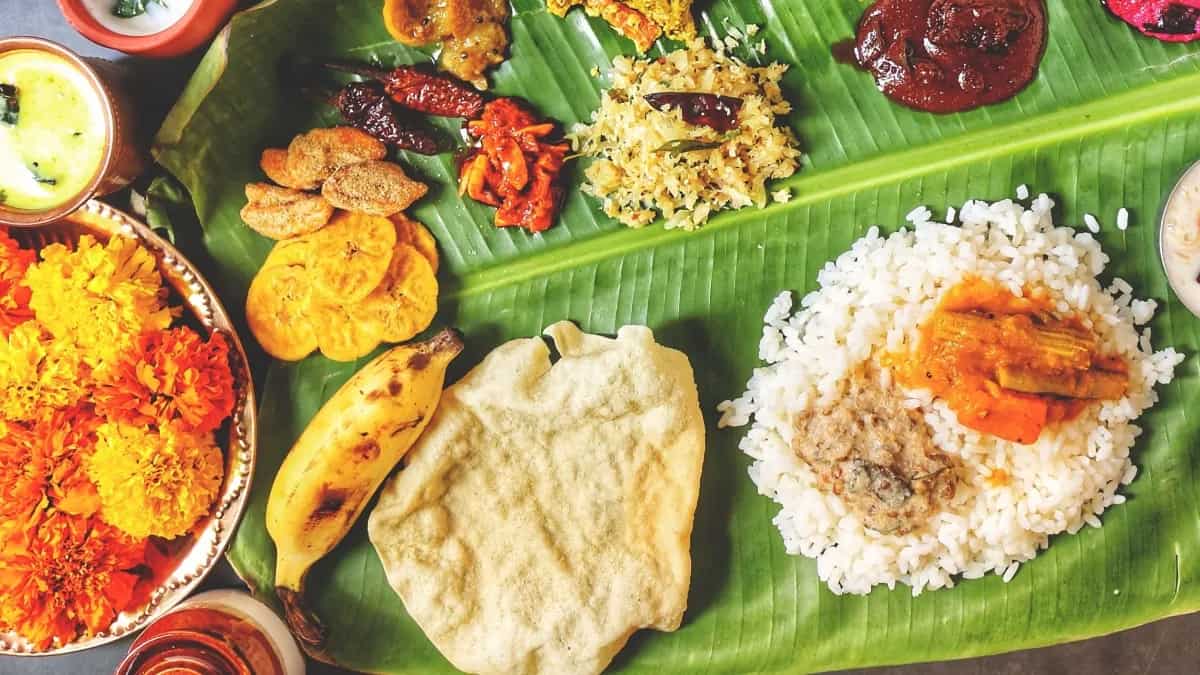
There are plenty of reasons to look forward to Onam: the beautiful pookkalams blooming outside homes, the anticipation of Thiruvonam, new clothes, family gatherings and, of course, the enormous banana leaf waiting to be filled with nostalgic food. In Kerala, the festival is deeply connected with the legend of King Mahabali and his annual return to visit his people. Thiruvonam, the most important day of the ten-day celebration, falls on Wednesday, August 26, this year.
While Onam is a festival of devotion, prosperity and togetherness, the Onasadhya has become one of its most recognisable culinary expressions. This festive vegetarian feast (which can also be non-vegetarian in certain households or regions, but is less popular) can bring together more than two dozen preparations, from avial and olan to sambar, parippu, pickles and payasam in a traditional sequence.
Yet before the rice and curries take over the leaf, there is another category quietly demanding the attention of your taste buds: the crisp, fried accompaniments. And honestly, a sadhya without them would feel a little like Onam without the lovingly crafted pookkalam.
Why Fried Foods Matter On A Sadhya Leaf
Look at a traditional sadhya, and you will notice something interesting about the way it is constructed. Much of the meal consists of soft, moist or creamy preparations, be it parippu, avial, olan, erissery, kaalan, pachadi, kichadi, or the several rice-based combinations. And the fried accompaniments provide the opposite experience. Popular fried foods such as upperi, sharkara varatti and pappadam sit among the dry accompaniments, usually towards the upper-left portion of the banana leaf.
They are the good neighbours of your various pickles, chammanthi and condiments that reside pretty close to them, while your rice occupies the lower or central area. Exact serving arrangements can vary by household and region, but the positioning of these little fried foods remains an essential part of the familiar visual grammar of a sadhya. So, even if they may look like snacks, they are much more than decorative extras.
Essential Fried Accompaniments For A Traditional Sadhya Feast
Kaya Varuthathu: The Essential Banana Chip
Image credit: Unsplash
If there is one fried food that immediately announces its regional identity, aka Kerala, it is kaya varuthathu, the classic raw banana chip. Traditionally, firm raw bananas, particularly the Nendran variety, are sliced thinly and fried until crisp. The chips are usually seasoned simply with salt, allowing the flavour of the banana and the quality of your coconut oil to do most of the culinary talking. The ideal banana chip should snap when you bite into it, instead of bending sadly between your fingers. It has a delicate sweetness beneath the savoury seasoning and a characteristic coconutty aroma. As a result, nobody seems to be satisfied with just a few of them. One chip becomes five. Five becomes, ‘Who finished the bowl?’
Sharkara Varatti: When Banana Chips Go Sweet
Then comes sharkara varatti, which takes the same broad idea of fried banana, while moving decisively towards dessert territory. Firm banana pieces are fried before being coated in a thick jaggery mixture. Then, depending on the preparation, cardamom, dry ginger, or other warm, aromatic spices may be added to them. Once coated and allowed to cool, the pieces develop a crisp, slightly sticky exterior with a deep caramel-like sweetness. This simple variation of the traditional banana chip is particularly good at breaking up the savoury rhythm of the meal, especially till payasam is served. Take one bite of sharkara varatti after a spicy dab of pickle, and suddenly your palate has travelled somewhere completely different in the delicious land of flavours and textures.
Pappadam: The Crunch Everyone Waits For
Image credit: Unsplash
No discussion of sadhya's fried accompaniments can be complete without pappadam. Made from lentil flour and usually dried before being fried, pappadam expands dramatically in hot oil, before becoming thin, blistered and wonderfully crisp. But the real joy is what happens once it reaches your plate. Many diners crush pappadam into rice and parippu, while others save it for a particular curry. Some simply eat it between mouthfuls because the crunch is too tempting to ignore. So, there is no complicated or universal eating technique here. Its appeal lies in its simplicity and texture.
Mulaku Kondattam: A Fiery Little Surprise
If you enjoy your sadhya feast with a little extra heat, then mulaku kondattam is worth looking out for. This preparation uses chillies that are traditionally soaked in curd, sun-dried and then fried, producing something smoky, crisp and mouthwateringly spicy. It is served in tiny quantities, which is probably sensible, unless you are a seasoned spicy food eater. A little piece alongside rice and a mild curry can transform the entire mouthful. It is also a good reminder that the fried section of a sadhya does not need to be limited to banana and pappadam only.
Chakka Upperi: A Seasonal Jackfruit Crunch
Image credit: Pexels
Kerala's love affair with jackfruit should naturally find its way into festive cooking. Chakka upperi, or fried jackfruit, simply uses jackfruit pieces that are sliced and fried until crisp. Its flavour is more distinctive than your standard banana chip: fruity, slightly nutty and naturally aromatic. It also has an unmistakable connection with Kerala's fresh, seasonal produce. Not every sadhya will feature it, as preferences, immediate availability and household traditions differ. But when it appears, it is one of those regional touches that make a festive leaf feel particularly special and familiar.
Chena Upperi: A More Earthy Variation
Image credit: Pexels
Another comparatively less universal but interesting variation is chena upperi, made from elephant foot yam. The yams are sliced into thin pieces, seasoned and fried until crisp. And compared to the usual banana chips, it has a more earthy flavour and a slightly denser bite that many enjoy. Such variations are worth seeking out because the Onam sadhya is not a rigid menu replicated identically across Kerala. Recipes, ingredients and the number of dishes do vary according to region, household and occasion. As a result, contemporary and traditional sadhya menus can look rather different despite having the same underlying spirit.
Even The Fried Foods Have A Job To Do
The genius of a sadhya lies in contrast. For instance, a mouthful of creamy avial needs something crisp beside it, or a rich rice-and-parippu combination becomes more interesting when followed or interrupted by salty banana chips. Or perhaps, your tangy mango pickle feels even sharper against the sweetness of sharkara varatti. This is why anyone who removes fried accompaniments from their Sadhya, simply because they look like unimportant fried snacks, shall miss this entire, essential experience. This is because fried accompaniments contribute texture and rhythm to a meal that could otherwise become overwhelmingly rich, creamy, or saucy. From mopping up excess gravy to adding crunch, these fried foods can easily adapt and multitask, proving their merit while remaining underrated and humble.