


 Share
Share

THE UNUSUAL SIMULTANEITY of Onam and Teacher’s Day this year invites us to reconsider food not merely as sustenance but as pedagogy. Onam, Kerala’s harvest festival, venerates King Mahabali’s reign of justice and plenitude through the Sadya, a ritual banquet of between 24 and 28 dishes laid on a banana leaf. Teacher’s Day, marked on 5 September to honour Dr Sarvepalli Radhakrishnan, philosopher-president and exponent of Vedantic thought, celebrates knowledge as both gift and responsibility. The coincidence suggests a profound insight: food and teaching are parallel rituals of transmission, memory, and renewal.
Food as Archive and Teacher

Food has long carried epistemic weight. The Onam Sadya is a living manuscript of Kerala’s agrarian and maritime history. Pepper — “black gold” — recalls the Malabar Coast’s pivotal role in global trade; tamarind, carried from Africa into South Asia, speaks of transcontinental botanical flows; jaggery, central to ada pradhaman, is the sacralised by-product of sugarcane domestication. The UN’s Food & Agriculture Organisation has emphasised that such biodiversity in cuisine enhances ecological resilience and cultural continuity (Sustainable Diets and Biodiversity; 2010) The Sadya thus educates not only the palate but the imagination: it is a lesson in interdependence and plurality.
Food has also been seen as pedagogy beyond India. Plato’s Symposium employed the banquet as a metaphorical classroom, where knowledge was shared as wine was poured, each speech on love a different course in the philosophical feast. Confucius, in the Analects (Book X), associated ritual dining with ethical cultivation, insisting that the manner of eating reflected the integrity of one’s character. Both traditions recognise what the Sadya enacts: that a meal can be a model of harmony, discipline and discourse.
Dr Radhakrishnan: The “Teacher’s” Ascetic Palate
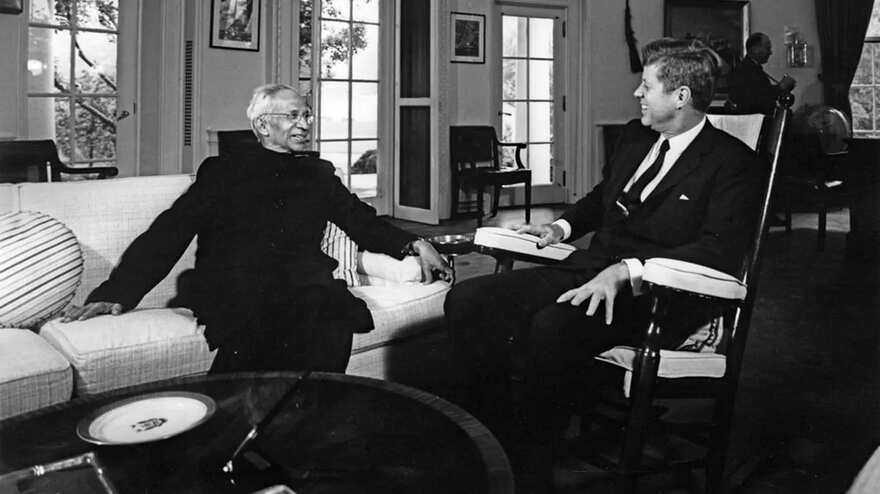
Dr Radhakrishnan, remembered for his simplicity in diet, preferred curd rice, rasam, and light vegetarian fare — a reflection of his Vedantic orientation. The Taittiriya Upanishad identifies food (anna) as the first of the five sheaths (koshas) enveloping the self, and as prana, the life-force itself. Moderation in food, Radhakrishnan argued, was indispensable for clarity of mind, echoing both the Yogic principle of mitahara (measured eating) and the Sadya’s lesson in proportion.
His pedagogical philosophy mirrored his dietary practice: just as flavours are orchestrated in the Sadya without one overwhelming the rest, so too must education harmonise plurality of thought into integrative wholeness.
Comparative Convergences Across Cultures
Across cultures, food and pedagogy are intertwined —

In the Greek tradition, Plato’s Symposium frames philosophical dialogue as a banquet; i.e. teaching as convivial sharing.
In the Chinese tradition, Confucius saw ritual dining as moral education, where moderation, decorum, and gratitude cultivated virtue.
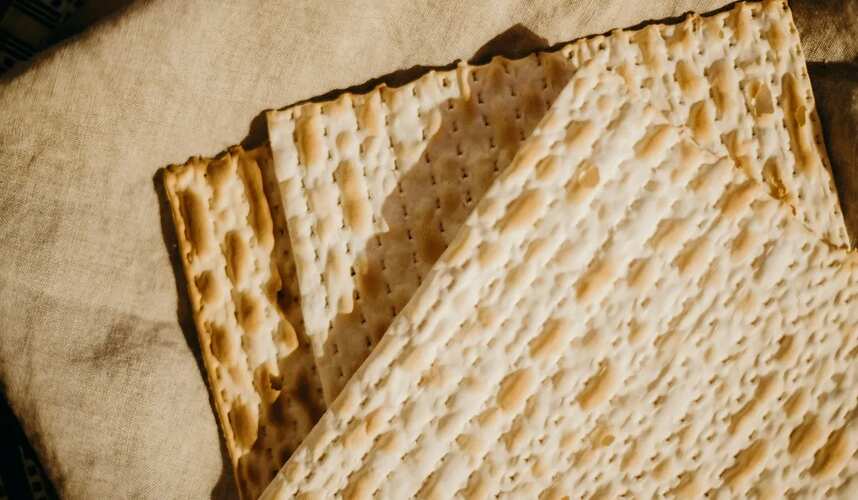
In Abrahamic traditions, the Passover Seder is pedagogy in ritual form: a meal designed to transmit memory and theology across generations.
In the Indian tradition, the Sadya functions as both celebration and instruction — teaching plurality, balance, and ecological intimacy.
These convergences affirm that meals are mnemonic devices, carrying forward knowledge not through blackboards alone but through ritual, repetition and taste.
Transmission and Intangible Heritage
UNESCO’s recognition of cuisines such as the Mediterranean Diet (2010) and Mexican (2010) as intangible cultural heritage underlines the pedagogical role of food. Recipes and rituals are not just cultural artefacts; they are syllabi of continuity. Teachers transmit knowledge as cooks transmit sustenance: both offer gifts whose full consequences may unfold only in unseen futures.
Parting Note
To partake in an Onam Sadya on Teacher’s Day is to encounter food as pedagogy. Each dish becomes a text, each flavour a footnote in the ongoing conversation between body, culture, and cosmos. Dr Radhakrishnan’s ascetic rasam, Plato’s symposium wine, Confucius’ ritual meal, the Passover matzah — all affirm a single truth: that to eat is to learn, and to feed is to teach.
Thus, as lamps are lit for Onam and classrooms echo with gratitude, we bow to the manifold teachers of our lives — professors and parents, algorithms and ancients, and food itself, whose lessons in patience, balance, humility and gratitude continue to shape us. The banana leaf becomes a blackboard, the Sadya a scripture, and the act of eating a sacred pedagogy of the human condition.
References:
FAO. Sustainable Diets and Biodiversity. Rome: Food and Agriculture Organization of the United Nations, 2010.
Mintz, Sidney. Sweetness and Power: The Place of Sugar in Modern History. New York: Viking, 1985.
Plato. Symposium. Trans. Nehamas & Woodruff. Hackett, 1989.
Confucius. The Analects. Trans. Edward Slingerland. Hackett, 2003.
Radhakrishnan, Sarvepalli. The Hindu View of Life. London: Allen & Unwin, 1927.
Taittiriya Upanishad, II.1–5.




