


 Share
Share

There is a particular moment during Onam when a Malayali home stops smelling like an ordinary kitchen and begins smelling unmistakably festive yet strikingly nostalgic. Coconut is being grated, curry leaves are crackling in coconut oil, ginger and chillies are being chopped, raw mangoes are being handled with the seriousness they deserve, and somewhere nearby a pot of something sweet and sour or fiery is quietly simmering. By lunchtime, the banana leaves are laid out, and the dining room becomes the centre of the cultural celebration.
Though Sadhyas are becoming commercialised and modernised according to the 21st-century demand, their origin is far more logical and scientific compared to modern food trends. Renowned chef and Sadhya connoisseur Marina Balakrishnan beautifully summarises the fact, “I've read it in texts and Ayurvedic texts also, that they feel that because all the tastes are prevalent in this banana leaf, like all your six rasas, the six tastes that Ayurveda talks about, like your sweet, salty, tangy, bitter, spicy, and astringent, all that is there on that banana leaf. So Ayurveda says that, you know, for a complete lesson on taste, you have to see Kerala Sadya. The real Kerala Sadya will have everything.”
In 2026, Thiruvonam, the final day of the Onam festival, falls on Wednesday, 26 August, according to their festive calendar. It is the tenth and most significant day of Onam, associated with the legendary homecoming of King Mahabali and celebrated with floral pookalams, new clothes, cultural traditions and the grand Onasadhya. Though Onam is much more than a feast, culture and food sit beautifully at the heart of the celebration.
During the festive banquet, while rice, avial, sambar and payasam may receive most of the attention, a Sadhya without its sharp, spicy, sour and coconut-rich accompaniments would feel strangely incomplete. And those little portions of pickles, chammanthi, inji puli and other relishes are doing considerably more work than their portion size suggests.
The Little Dishes That Wake Up A Sadhya
A traditional Sadhya is an elaborate vegetarian feast served on a plantain leaf, with the exact number and selection of dishes varying between regions, households and occasions. It can include around 28 dishes, while some traditional descriptions put elaborate feasts at 40 or more. Preparations such as parippu, sambar, avial, thoran, olan, erissery, pachadi, kichadi, pickles, ginger curry, banana chips and payasam are among its familiar components.
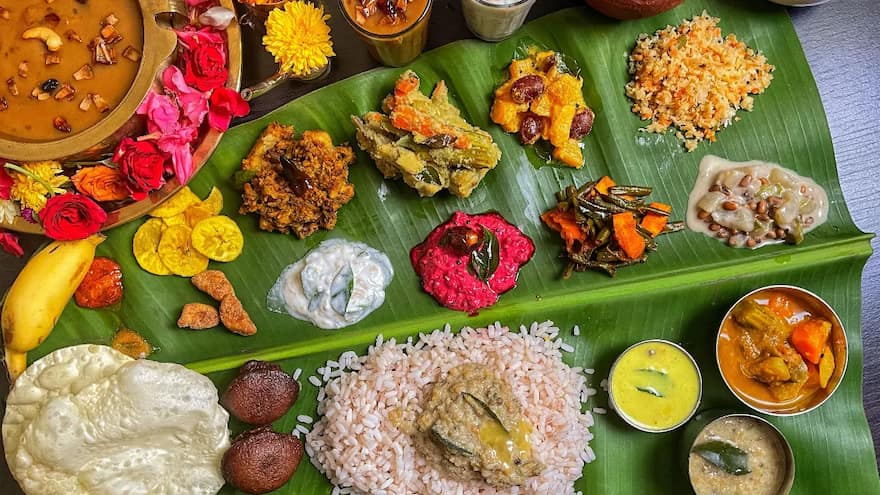
Image credit: Pexels
The accompaniments are particularly fascinating because they provide taste and texture contrast. For example, a spoonful of rice with mellow parippu can be followed by a little mango pickle, and suddenly the palate is wide awake. Or a creamy or mildly sweet preparation can be sharpened when accompanied by lime pickle. Or even coconut-heavy dishes can be interrupted by the heat of ginger and chilli. In other words, these are not ornamental spoonfuls placed around the leaf simply to make it look abundant. They are flavour punctuation.
First, Get The Banana Leaf Right
A Sadhya begins before the first bite. Traditionally, the banana leaf is placed with its tapering end towards the diner's left, while rice is served towards the lower portion of the leaf and the accompaniments occupy the upper section. This arrangement is basic, though individual serving traditions can naturally differ. Thanks to this framework, the upper portion of your plant-based plate can become a wonderfully busy little landscape: banana chips, pappadam, pickles, pachadi, kichadi and other side dishes sitting in their designated spaces. And that is where the smaller, stronger flavours come into their own.
Inji Puli: The Sweet-Sour Firecracker
If any Sadhya accompaniment can demonstrate how much personality can fit into a tiny serving, it is Inji Puli. Ginger, tamarind, jaggery, and chilli come together in a relish that is sweet, sour, and hot, with the ginger leaving a lovely warmth behind. This balance matters. You want your ginger to remain the main character rather than ending up with an ordinary tamarind chutney.
But Inji Puli serves a greater purpose, according to chef Marina Balakrishnan’s experience. While it is a refreshing palate cleanser, the ginger in it is believed to imbue the preparation with digestive properties. While ginger does have multiple health benefits and has a well-researched influence on digestive wellbeing, there is no solid evidence for Inji Puli per se. However, go to any Sadhya feast and look for the most seasoned eater. You will find him or her indulging their taste buds with dabs of Inji Puli after every alternate mouthful, for maximising their appetite and capacity.
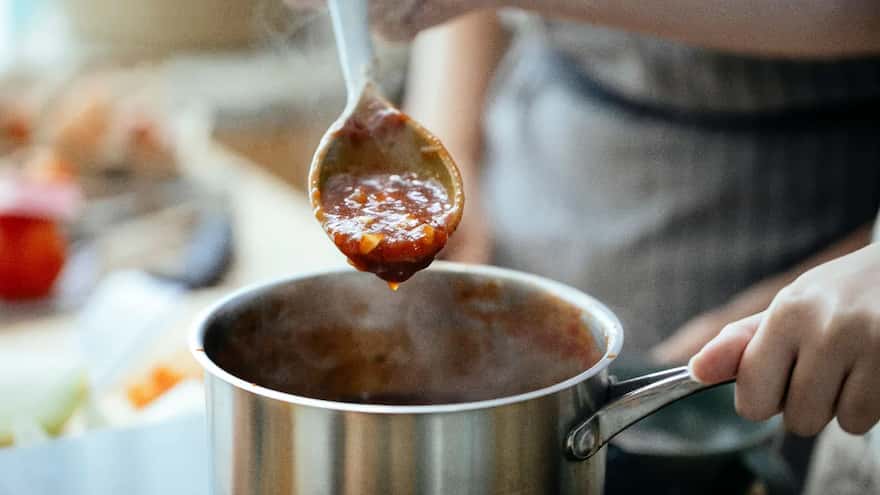
Image credit: Pexels
Easy Inji Puli Recipe
Ingredients (Serves 6-8)
- 100g fresh ginger, finely chopped
- 2 tbsp coconut oil
- 1 tsp mustard seeds
- ¼ tsp fenugreek seeds
- 2 dried red chillies
- 50ml thick tamarind extract
- 80g grated jaggery
- ¼ tsp turmeric
- Salt, to taste
- 100ml water
Method
- Heat coconut oil and crackle your mustard seeds. Add fenugreek and dried chillies, followed by the ginger. Fry gently until softened.
- Then add turmeric, tamarind, water, and salt. Simmer until the ginger is tender, then stir in jaggery. Cook until glossy and slightly thick. Cool before serving.
Also read: Onam 2026: Best Restaurants Across India Offering An Authentic Sadhya Experience
Sadhya Manga Achar: The Classic That Belongs On The Leaf
Raw mango pickle needs little introduction, but the Kerala-style version has its own character, with mustard, fenugreek and chilli creating the familiar punch. Fresh sadhya Manga Achar is an Onam must and is traditionally prepared at home the night before. Coconut oil remains a faithful ingredient, while finely-cut raw mangoes absorb maximum flavour. Chef and culinary expert Marina Balakrishnan says, “Because it is freshly made, it tastes so different from the taste of a bottled pickle.” But that does not mean every Sadhya pickle is made the night before and cannot be prepared a week or two in advance.
Simple Kerala-Style Mango Pickle
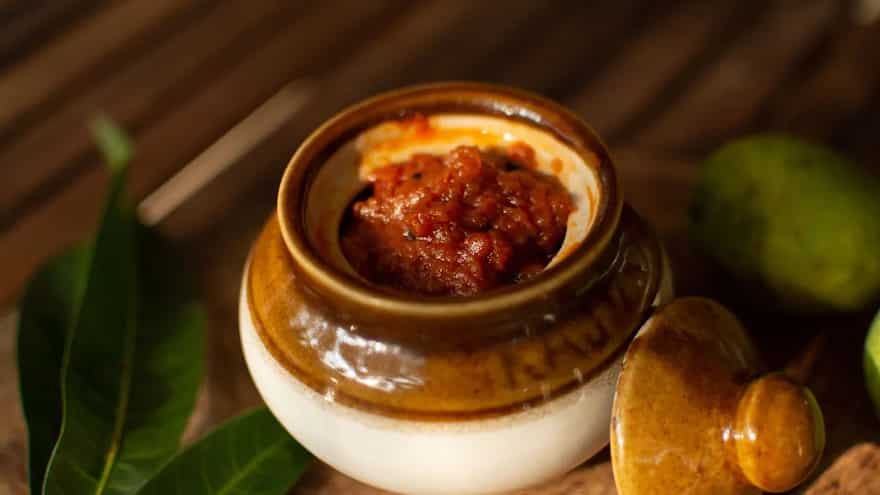
Image credit: Pexels
Ingredients (Serves 6-8)
- 1 medium sour raw mango, diced
- 1½ tbsp chilli powder
- ½ tsp turmeric
- 1 tsp mustard seeds
- ¼ tsp fenugreek seeds
- 2 tbsp coconut oil
- Salt, to taste
Method
- Toss the mango pieces with salt, turmeric and chilli powder.
- Then heat your oil, add mustard seeds and fenugreek before allowing them to crackle. Let the tempering cool slightly before mixing it properly with the mango.
- Leave the pickle to rest for a few hours so the flavours settle.
Chammanthi And Its Versions
The essential ingredient in a Chammanthi is coconut, according to chef Marina Balakrishnan. She further highlights its versatile nature by explaining how seasonal variations such as “mango” or “kulith” (horse gram) chammanthi are a common part of Malayali households. But coconut remains the focal and OG ingredient for the preparation. And most traditional households “roast their coconut” along with their red chillies. Chef Balakrishnan elaborates on the adaptability of the recipe; the fact that many households use smoked shallots or small onions as part of their Chammanthi is not astonishing, just different from her own personal recipe.
The most crucial part of Chammanthi is its texture, and that occurs due to its making process. Chef Marina Balakrishnan emphasises the key role hand-grinding plays as the condiment’s rustic, coarse texture is its identity. Using hand blenders can turn your Chammanthi into a chutney-like consistency or finer particles that cannot lay a justifiable claim to the culinary name. And freshly grated, high-quality coconut can be your game-changer, as it influences your condiment’s overall flavour and aroma profile.
Chef Balakrishnan explains that there is no jaggery in Chammanthi, but there are chillis and tamarind in it that add a brilliant spicy-acidic profile to the preparation. Freshly-milled coconut oil is essential here, as it helps tie the entire condiment together and mix everything properly into a sizeable ball. Then it is divided into individual servings. Marina Balakrishnan showcases her culinary expertise by identifying instinctual differences between a chutney and a Chammanthi. The former has a softer mouthfeel while the latter has a coarse texture.
For an interesting, modern variation, there is chammanthi podi, a dry-roasted coconut-and-spice mixture that can be stored and served as a compact accompaniment. It is particularly useful when you want the flavour of chammanthi without the moisture of freshly grated coconut or wish to use it as a part of weekend meals as well. A typical podi version uses roasted coconut, dried red chillies, curry leaves, coriander or other spices, tamarind, and salt, all ground into a coarse powder.
Quick Chammanthi Podi
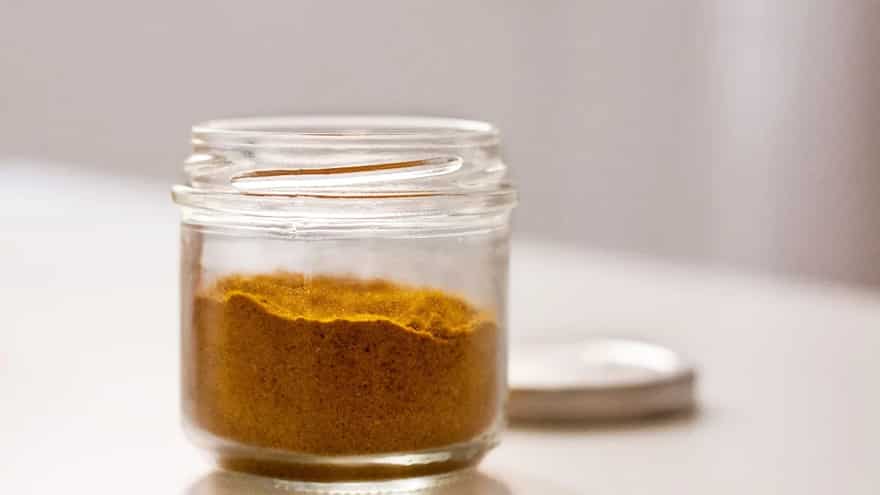 Image credit: Pexels
Ingredients (For servings, measure with your heart)
- 1 cup grated coconut
- 5 dried red chillies
- 1 tbsp coriander seeds
- 1 tsp cumin seeds
- ½ tsp black pepper
- Small piece of tamarind
- Salt, to taste
- 8-10 curry leaves
Method
- Dry-roast everything separately over low heat until fragrant. Cool completely, then grind to a coarse powder.
- Do not over-grind it into a paste. Store in an airtight container and serve in small portions.
Also read: Onam 2026: How To Savour The Traditional Sadya Feast Without Any FOMO
Why These Tiny Portions Matter
The genius of a Sadhya is not simply the impressive number of dishes. It is the relationship between them. For example, mild olan tastes different after pickle, avial feels different alongside a sharper relish, rice and parippu become richer with a tiny spoonful of inji puli, while crunchy upperi provides yet another texture.
Even elaborate Sadhya traditions contain a remarkable variety of these concentrated accompaniments such as inji, kadumanga, uppumanga, naranga, pachadi, kichadi and chammanthi podi among dozens of dishes. Therefore, the pickles and relishes are definitely not side characters. They keep the palate moving.
The Feast Is About More Than Food
Onam is deeply rooted in the story of King Mahabali and the idea of a prosperous, harmonious Kerala, while Thiruvonam remains the central day of celebration. The festival is a time of unity, joy, and communal celebration, with Onasadhya forming an important part of Thiruvonam. And that is why the Sadhya is best understood as much more than a large lunch. It is a communal experience in which the banana leaf holds an extraordinary amount of culinary history. The number of dishes may vary, recipes may change between families, and one person's perfect inji puli may be another person's argument waiting to happen.
But that is precisely what makes it special. So, when the 2026 Sadhya feast happens on 26 August, do not rush towards the rice and payasam alone. Instead, look closely at those little portions around the leaf. Take some mango pickle. Try the uppumanga. Add a little chammanthi to your rice. Let the ginger, tamarind and chilli of inji puli wake up your palate and contribute to your digestion. And then return to the gentler curries and other gravies. Because on a Sadhya leaf, the smallest spoonfuls often have the loudest voices.




