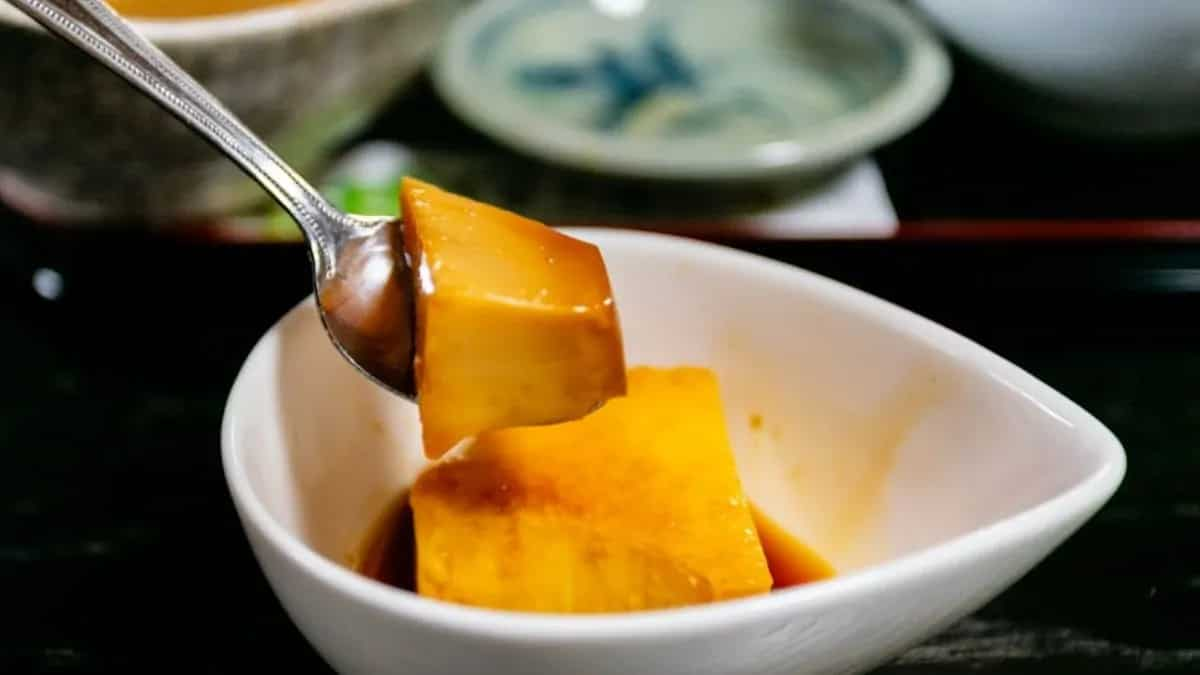
Kalimpong is a treasure store with a rich cultural legacy. Its varied food captures the tastes of Nepali, Bhutia, Lepcha, and Tibetan groups. These cooking customs have moulded a distinctive cuisine steeped in the history of the area. The local agriculture, influenced by the hilly terrain and cool climate, yields produce like maize, millets, cardamom, and oranges, which are staples in Kalimpong’s diet. European influences, a reminder of its colonial past, define the dynamic food scene. Exploring the street food in Kalimpong is an experience in itself. Among them is a local dish called fumbi. Also called phambi or phumbi, this is a soft, bouncy yellow mung bean jelly mixed with a fiery red chilli sauce. The origin and making of fumbi is quite interesting.
Image Credit: Phumbee/Facebook
Mung beans are essentially the original superfood in Ayurvedic and Yogic culinary traditions. They have been prized for their nourishing properties for millennia, dating back to 1500 BC in the Indian subcontinent. A study by the National Health Institutes in 2019 mentions that mung beans are rich in magnesium, iron, zinc, potassium, folate, and protein, which is beneficial for boosting immunity and is frequently suggested for pregnant women due to their nutritional value. Whole green grams, split mung beans, and yellow mung dal are the three main varieties that are readily available in nearby supermarkets. Because of their versatility in cooking, mung beans are used extensively throughout Asia and are a mainstay in Indian and Nepali families. Moong dal may be utilised in virtually any way, from salty to sweet, which is why this popular street delicacy made from mung beans merits special recognition.
The Road From Tibet
When Tibetan refugees arrived in Kalimpong in the late 1950s and early 1960s via the Jalepla Pass, an ancient East Sikkim trade route that formerly linked Lhasa with India, the popular snack arrived from Tibet. Along with several street sellers throughout the town, the hill station hosted a weekly market, or haat, every Wednesday and Saturday, where fumbi was sold. Fumbi is particularly well-liked by students in schools and universities, and vendors are frequently spotted in the vicinity of these establishments across Kalimpong. Many wonder if fumbi is sold anywhere outside of Kalimpong. Most probably not, but when anyone gets to know about it, they keep on eating more and more.
Image Credit: Phumbee/Facebook
Making Of Fumbi
The Tibetan term for it is bhang-pheek, which describes a soaked jelly extract that eventually became known as phangbi or fumbi. Anywhere Tibetan cuisine flourishes, you’ll find fumbi there. Phing, a glass noodle created from mung dal, is the source of fumbi. The glass noodle, derived from mung dal, is exported extensively both domestically and beyond. As a side dish, the noodles are prepared with either meat or veggies. It is frequently consumed as a salad with churpi, a local cheese.
Many of the region's ethnic populations place a high culinary significance on these noodles. At any celebration, a phing dish is a must-have. Phing is a dish that is typically served for lunch or on rare occasions in homes, but its byproduct, fumbi, is a street food! No home in Kalimpong will serve you fumbi for dinner. Turmeric is used to colour the remaining water, producing a yellow colour after it has been boiled down. This thick, oozy liquid is put onto a flat plate and allowed to cool when it begins to boil.
It becomes a jelly as it sets and is then cut into cubes. Fumbi gets its famous spicy taste from lightly frying these cubes with garlic and red chilli sauce. Fumbi used to be served on sal leaves, but these days it's generally served on paper plates. A plate of fumbi costs about INR 20 these days; it's inexpensive, nostalgic, and a local staple.
In northern China, fumbi is referred to as liangfen and is served on the street. Many Tibetan refugees currently reside in Kalimpong, and Tibetan food is greatly influenced by the district town's cuisine. In addition to establishing phing factories on the fringes of the town, Tibetan families have begun producing noodles. Actually, the town is currently well-known nationwide for exporting several types of noodles. Gyalo Thondup, the brother of the Dalai Lama, wrote a book titled The Noodle Maker of Kalimpong that masterfully depicts the town's noodle-making customs.