Winter months frequently bring an abundance of veggies into our kitchens–warm sabzis boiling on the stove, bright produce filling our baskets and tastes that vary by location and home. But have you ever pondered what individuals living in extreme weather conditions eat or rely on? Food options drastically decrease in areas where winter is marked by temperatures that drop well below freezing rather than just a little chill. Villagers at higher elevations have limited space to plant more than a few varieties of crops that can withstand the bitter cold. Typically, villages are compelled to grow only a few simple, hardy crops that can withstand the cold. Imagine, however, a region where people have managed to cultivate produce virtually all year round, where a perfect environment is created for various crops, and the yield is included in daily eating practices. And in Kesar, where winter once meant empty plates and limited choices, it’s the women who have rewritten that reality.
Image Credit: Pexels
When you arrive in Kesar in the middle of the day, you will enter a setting that is immediately homey and friendly. Seated on loose wooden planks arranged like informal floor mats on the grey, sandy ground in someone's backyard, the entire town is made up of 17 women and a few children. The women drink hot tea from pink-and-white ceramic cups while wearing salwar suits layered with scarves, socks, slippers, and sweaters. Thermoses are parked close by to keep the tea flowing. The majority of the males are in Leh, driving or doing whatever labour they can find, returning home only on rare occasions. As a result, women are in charge of raising children, caring for their farms, and ensuring that Kesar's farming system survives the harsh high-altitude winter. This story is one for the books for sure. Let’s dig into the interesting elements of the story of Kesar and its women.
Where Winter Hits At -30C, Food Options Shrink
Situated almost 4,000 meters above sea level on the Changthang Plateau, Kesar is a dry, frigid desert that remains uninhabited for the majority of the year. Wintertime temperatures in excess of -30°C are common. From May to September, a small growing period opens up, and the community's women cultivate wheat, barley, and potatoes. After being harvested, the wheat is washed and either dry-roasted into sattu or ground into atta. For the remainder of the year, these simple rotis with dal for meals and sattu stirred into tea became the foundation of their nutrition. That's about it. Until recently, the only way to obtain fresh vegetables was by taking a weekly bus to Leh, which is 180 km away; an alternative that most families could hardly afford.
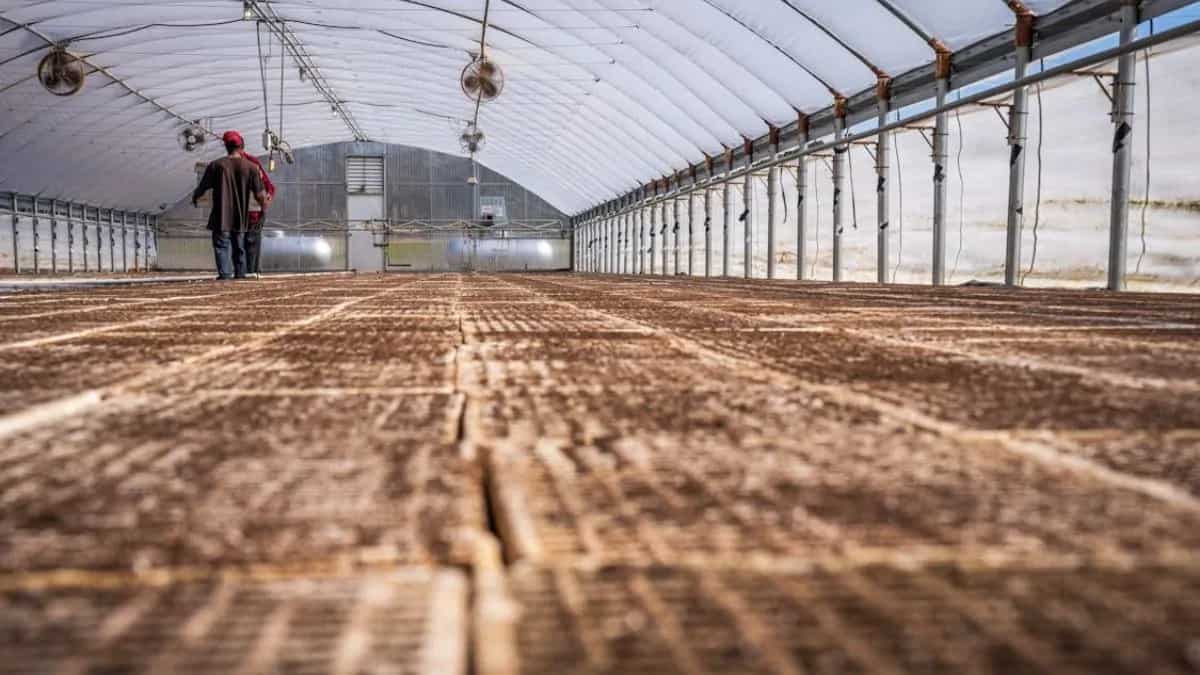
Now, this is where it gets interesting. There is a solution to this problem in Kesar village. This particular discovery really opens the window for growing crops around the year in such harsh weather. It’s called polyhouse farming. The Sher-e-Kashmir University of Agricultural Sciences and Technology (SKUAST, Jammu) trained the village women in controlled-environment agriculture and brought polyhouse farming to Kesar in 2023. With their brick walls, plastic roofs, and solar heat-trapping architecture, polyhouses are essentially next-generation greenhouses that allow crops to flourish even in freezing weather.
What Is Polyhouse Farming?
Kesar's polyhouse is designed to withstand high altitudes. The roof is composed of a durable triple-layer polycarbonate sheet that diffuses more light than glass and lasts longer than ordinary plastic. Three sides have mud-brick walls to retain heat. The air trapped between its layers acts as natural insulation, and the sheet faces south to absorb as much sunshine as possible. The inside remains warm enough to support crops throughout the year, even in extremely cold temperatures.
Image Credit: Pexels
For Kesar, polyhouses have changed everything. Nearly all of the vegetables on the villagers' plates now originate from their own polyhouse plots, while they still purchase pulses from Leh. The women cultivate cabbage, spinach, cauliflower, carrots, tomatoes, radish, coriander, and even leafy greens that would perish in the cold outdoors inside these warm, sheltered areas. This change seems nearly unbelievable to locals who live there. While there used to be a terrible food shortage, things are different now. The village now has everything, including grains and vegetables. It’s the simple things that have made polyhouse farming a green flag for Kesar and the women who are single-handedly looking after each little detail.
Image Credit: Wikimedia Commons
Their everyday lives have completely changed for the better. Meals used to be simple; rotis and dal every day. The year-round availability of fresh vegetables has led to a rapid increase in colour, flavour, and choice. They now cook twice a day, try new sabzi varieties, and figure out how to include veggies produced nearby during every meal. With ingredients created from their own harvest, even their momos, the ultimate comfort food, get entertaining twists.
A Support Circle For Each Other
The mountains, the sky, the ground, and even the resilient small plants all merge into one enormous mixture of brown and grey around Kesar. Although it is breathtaking, there are moments when it seems deserted and nearly silent. So the women here have created their own support circle that farms together, cooks together, and basically turns every night into a rotating group hangout with polyhouse farming.
It's a place where they can talk, try new things, and encourage one another while determining what grows best. It's more than simply a food fix. Yes, they've mastered the standard items like potatoes, lettuce, and cucumbers, but they've also succeeded in growing tiny watermelons at a height of 4,000 meters. And their curiosity about what strange and entertaining crops they may try next is only growing. The sisterhood will joyfully shout, "Juley! Juley! Juley!" if you walk by. Juley is used to convey a variety of messages, including hello, welcome, please, and thank you, all with a friendly tone.
Image Credit: Pexels
Although building a polyhouse may seem costly at first, for these women, it's turning out to be one of the best investments they've ever made. They are at last receiving consistent, high-quality fruit thanks to managed farming, and to be honest, they are enjoying the process. This feels lighter, smoother, and far more manageable than the hard work of traditional farming. Additionally, state governments and horticulture departments are providing subsidies to encourage more farmers to transition to polyhouse farming, making the process even more affordable.